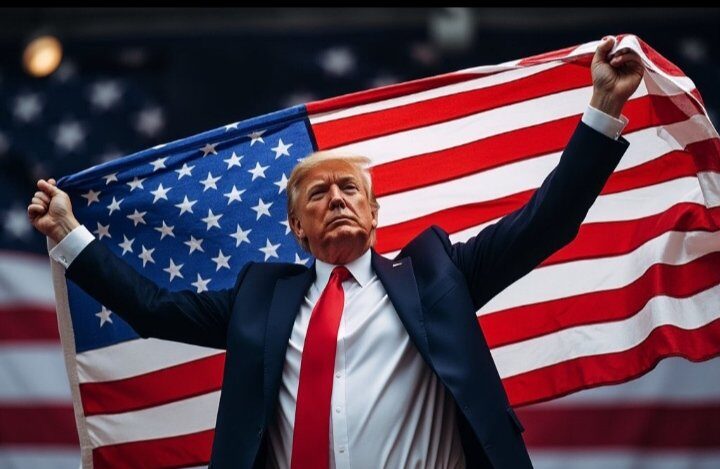
Donald Trump’s return to the White Home because the forty seventh President of america, following a dramatic victory over Kamala Harris, brings new questions for Nigeria’s {economic} outlook.
Trump’s {economic} insurance policies, constructed round “America First,” prioritize home vitality manufacturing, tariffs on imports, and pushing for low rates of interest.
These insurance policies might have a big affect on Nigeria’s economic system, notably within the areas of trade charges, capital flows, inflation, and immigration. Under is an evaluation of how these shifts might have an effect on Nigeria’s {economic} panorama.
Trump’s insurance policies might result in a stronger U.S. greenback, notably if his administration imposes tariffs that improve demand for domestically produced items and companies.
Traditionally, Trump has favoured a low-interest-rate atmosphere, pushing the Federal Reserve to keep up a free financial coverage even in periods of {economic} progress.
From 2016 to 2020, Nigeria attracted roughly $58.1 billion in capital importation, with 2019 seeing the very best inflows at $23 billion.
Trump’s give attention to lowering U.S. vitality prices by growing home oil manufacturing and drilling on federal lands might imply sustained low international oil costs. In his first time period,
Trump’s return to workplace raises issues for Nigerians relating to U.S. immigration coverage. His administration beforehand imposed journey restrictions on Nigeria, citing nationwide safety dangers, which disrupted the motion of scholars, professionals, and members of the family.
Underneath Trump’s “America First” overseas coverage, navy help and growth help to African nations had been deprioritized in favour of lowering abroad commitments.
Trump’s “Purchase American” coverage has typically centered on lowering imports and growing tariffs, which might affect Nigeria’s commerce relationship with the U.S.
The African Progress and Alternative Act (AGOA), which was launched by Republican President George W. Bush to permit African exports into the U.S. duty-free, is about to run out in 2025, and there are restricted indications {that a} Trump administration will renew it.
In reality, throughout his earlier time period, Trump acknowledged that he wouldn’t assist its renewal, casting uncertainty on the way forward for tax-free entry for African exports to the U.S.


