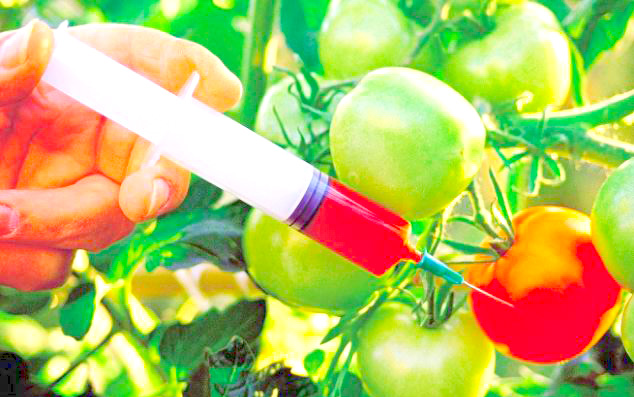
Amid rising concern and controversy, meals security specialists are actually divided on Genetically Modified Organisms (GMO) meals.
Whereas some are issuing warnings in regards to the security of GMO meals, others have declared them protected for consumption.
The {groups} in opposition to GMO meals are urging the federal authorities to undertake a complete ban on its industrial use.
The disagreement comes amid a number of considerations, together with what some describe as dangers to public well being, environmental hazards, threats to meals safety, and the affect of multinational seed firms on Nigeria’s seed sovereignty.
GMO crops at present permitted in Nigeria embody Bt cowpea – a pest-resistant selection; TELA maize – a drought-tolerant and insect-resistant selection, and Bt cotton – a pest-resistant crop necessary to Nigeria’s textile trade.
Nevertheless, months after their launch into the market, the dialog surrounding GMOs continues to stir debate among the many neighborhood of researchers, with some specialists calling on the federal authorities to put money into natural, heirloom, and domestically tailored crop varieties as alternate options.
Nevertheless, proponents of GMO crops argue that their adoption would enhance yields, enhance farmers’ profitability, and deal with meals insecurity.
Critics have joined the decision for a important analysis of GMOs’ advantages and potential dangers as a part of Nigeria’s broader coverage on meals safety.
In keeping with the World Well being Organisation (WHO), GMOs at present out there on the worldwide market have handed security assessments and usually are not prone to threat human well being or the atmosphere.
In July 2024, the federal authorities allayed fears about GMO crops in Nigeria, insisting that they’re protected and pose no hurt to people, animals, or the atmosphere.
A coalition of Nigeria’s agricultural analysis our bodies led by the Agricultural Analysis Council of Nigeria (ARCN) stated there was no trigger for alarm over the crops.
Backed by Nigeria’s Biosafety Act of 2015, two authorities officers, ARCN government secretary Prof Garba Sharubutu and director-general of the Nationwide Biotechnology Analysis and Improvement Company (NBRDA) Prof Abdullahi Mustapha, maintained that GM expertise in Nigeria was developed after stringent security assessments to enhance crop productiveness, resilience to local weather change and different farming challenges.
Regardless of these assurances, opposition to GMO consumption stays sturdy amongst some stakeholders.
The Home of Representatives lately referred to as for a suspension of GMOs till a complete investigation into potential well being dangers is accomplished.
Chatting with LEADERSHIP, Prof Qrisstuberg Amua, a outstanding determine in biotechnology and a fellow at Hubei Bio-Tech, Wuhan, China, maintained a balanced but cautious stance on GMOs, particularly their use in meals manufacturing.
Prof Amua, who can also be the manager director of the Centre for Meals Security and Agricultural Analysis (CEFSAR), warned that with most GMO seeds patented by multinational firms, Nigerian farmers must depend on these corporations for seeds every season, doubtlessly escalating prices, decreasing farmers’ autonomy, and placing Nigeria’s meals sovereignty at stake.
“CEFSAR emphasises that GMOs ought to solely be launched after thorough, impartial scientific testing to make sure they’re protected for human consumption and don’t pose adversarial well being results or environmental hurt.
“GMO cultivation might affect biodiversity. CEFSAR advocates for practices that protect Nigeria’s wealthy agricultural range,” Prof Amua informed LEADERSHIP, including that farmers and governments of different nations have beforehand used them and are actually reversing their adoption and use due to resistance to pests (which additionally comes with a excessive collateral value to human well being).
He stated GMOs may not totally deal with the broader systemic points.
One other professional, Prof Uche Amalu, a professor of agronomy from the College of Calabar, expressed concern over Nigeria’s adoption of GMOs. He warned that these might threaten the nation’s agricultural sovereignty, environmental security, and public well being.
Prof Amalu confused that Nigeria’s agricultural heritage stays threatened as foreign-produced seeds achieve floor whereas urging the federal authorities to prioritise indigenous crops for meals safety.
He identified that many genetically modified seeds usually are not reusable, forcing farmers to buy new seeds every planting season, which he described as exploitative.
Amalu really helpful different options with roots in Nigeria’s agricultural historical past, comparable to enhancing indigenous crop varieties.
He urged the federal government to put money into analysis and improvement centered on bettering conventional crops and supporting indigenous seed multiplication strategies, like these used with yam varieties, to bolster yield and resilience.
He stated, “The federal authorities ought to watch out for GMO meals and put money into our native seeds and seedlings to protect our well being and agricultural independence.
The one different is to discover a method of decreasing the consumption of GMO meals, avoiding GMO seeds and seedlings, and going again to our indigenous crops”.
In the meantime, Nigerian farmers seem more and more supportive of GMO adoption.
President of the All Farmers Affiliation of Nigeria (AFAN), Kabir Ibrahim, described GMOs as
“scientifically licensed and protected for human consumption.”
Noting their potential to handle important meals safety challenges.
Ibrahim informed LEADERSHIP that conventional, non-GMO alternate options stay broadly out there for farmers preferring standard crop choices.
“GMOs have high-yield attributes, comparable to resistance to illness and drought, making them a recreation changer in our quest for sustainable meals safety. Nigeria’s meals safety drive requires an optimum push, which might come by means of GMO crops”, Ibrahim stated.
The director of the Agricultural Biotechnology Division, Nationwide Biotechnology Improvement Company
(NABDA), Dr Rose Maxwell Gidado, informed LEADERSHIP that with the applying of biotechnology in agriculture, farmers profit from elevated productiveness or diminished prices.
She stated GMO seeds enhance yield, enhance safety from bugs and illness, and enhance crops’ tolerance to warmth, drought, and different environmental stress. She added that different advantages embody bettering the standard and content material of animal feed, meals, and power sources.
Dr Gidado, who stated client advantages are advantageous, added that GMO meals include the wanted vitamins, opposite to what some persons are saying.“Consuming GMO meals elevated protein and more healthy oils (Find out about Vistive Gold soybean oil),” she stated, including that the environmental advantages assist scale back agriculture’s affect on the land.
“The GMO seeds preserve soil and power, scale back greenhouse gases, minimise using poisonous herbicides, preserve soil fertility and pure sources,” she stated.On the advantages of GMOs to farmers, Dr Gidado stated they enhance productiveness and scale back prices by rising yield, bettering safety from bugs and illness, and rising crops’ tolerance to warmth, drought, and different environmental stress.