The world is transferring in the direction of electrical automobiles at an accelerating fee in a bid to cut back carbon emissions from combustion engines that rely upon fossil fuels.
The adoption of EVs, particularly by developed economies is in step with the Paris Settlement Agenda to attain Internet Zero emissions by 2050.
Then again, it’s a reflection of the {economic} energy of nations as struggling or creating economies take the again seat within the world drive for the transition to Electrical Autos.
Nigeria has additionally subscribed to the worldwide agenda to decarbonise highway transportation via the adoption of EVs. In accordance with Nigeria’s Power Transition Plan (ETP), launched in 2022, the nation is formidable to have a 100% transition to EV by 2060, whereas Lagos pledged to attain this by 2050.
The Federal Authorities had earlier instituted a Nationwide Motion Plan for the Improvement of Electrical Autos (EVDP) to speed up the nation’s transition to EVs. Other than decreasing the carbon footprint of highway transportation, the plan can also be anticipated to assist scale back Nigeria’s reliance on imported automobiles. It targets at the least 30% of EVs in native manufacturing by 2032.
Whereas the Nigerian authorities is extremely mainstreaming the adoption of Compressed Pure Gasoline for automobiles, little effort is being made to encourage the usage of EVs and transfer in the direction of attaining the nation’s Power Transition Plan.
In the meantime, non-public corporations have launched Electrical automobiles to the Nigerian automotive market, not solely via gross sales but in addition by opening automobile manufacturing crops within the nation. Listed below are some electrical automobiles assembled and bought in Nigeria based on their value ranges:
The Electrical Motor Automobile Firm(EMVC), an indigenous Nigerian automobile firm, unveiled its electrical automobiles in 2022 with two fashions – an electrical tricycle which it tags the ‘Adoja M1’ and an electrical automobile, the Adoja M2.
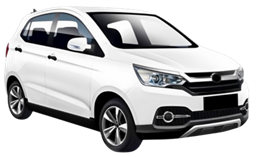
The corporate, based by Prince Mustapha Audu, says it offers “environmental and sustainable mobility expertise options by offering a full vary of electrical automobiles and complementary companies to the electrical mobility worth chain market,” based on its web site. It has added new EVs to its catalogue together with bikes, tricycles, small cargo automobiles, and automobiles, complementing them with trackers and a few with photo voltaic panels, as ad-ons. Among the manufacturers and specs it sells embrace:
The corporate’s manufacturing unit is alongside Abuja-Lokoja Specific Approach, Gwagwalada, Abuja.

Innoson Automobile Manufacturing Firm, Nigeria’s first indigenous automobile firm, established in 2007, joined the EV revolution in September 2024, when it launched its first electrical automobiles. Days after the launch, the corporate’s Director of Communication, Cornel Osigwe stated the primary batch of electrical automobiles assembled had all been bought out.
Osigwe instructed the media that a number of the uncooked supplies utilized in producing the automobile have been sourced domestically.
In accordance with its web site, the corporate has three fashions of EVs together with a 5-seater IVM Hyperlink (201-230KM Vary), IVM EX02 (330-400KM Vary), and the IVM EX01 (201-230KM Vary). Final 12 months, in the identical month it launched, the corporate introduced that its 5-seater IVM EX02 bought for N38.4 million.
When contacted for the present costs of IVM electrical automobiles, Osigwe said that they’re priced from N18 million upward relying on the fashions and specs.
The corporate has its manufacturing plant in Nnewi, Anambra State, and showrooms in Lagos, Abuja, and Enugu.
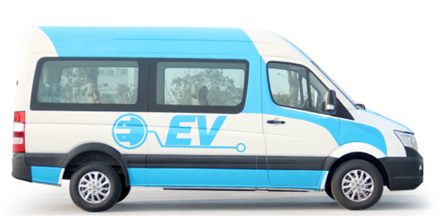
Jet Motor Firm is without doubt one of the largest Indigenous automobile producers in Nigeria, producing a fleet of automobiles together with passenger buses, pick-up vans, luxurious government buses, utility automobiles like ambulances, and just lately electric-powered buses often known as Jet Ev.
In 2020, the corporate introduced elevating $9 million as analysis capital, from Canadian-based Africa Improvement Capital (ADC), Greatman Legend, and a variety of Asian traders, to construct Africa’s first all-electric automobile. It pledged to construct the “Tesla of Africa”.
It started the assemblage of EVs in 2021 at its manufacturing plant situated alongside Lekki-Epe Expressway, Lagos.
Its electrical automobiles have been purchased by the federal and state governments in addition to ministries and armed forces. The corporate additionally enjoys the patronage of logistics corporations equivalent to GIG Logistics, one among Nigeria’s main transport and logistics corporations.
Among the specs of JET EVs embrace a MAX TOQUE (most rotational drive) of 600 NM (larger than most SUVs.) and a high-capacity lithium iron phosphate battery.
Mr Sanjay Rupani, the Chief Working Officer of the JET MOTOR Firm instructed Nairametrics that the JET EV sells for roughly N145 million to N150 million, excluding Worth Added Tax (VAT). He famous that the value is commonly influenced by the alternate fee.
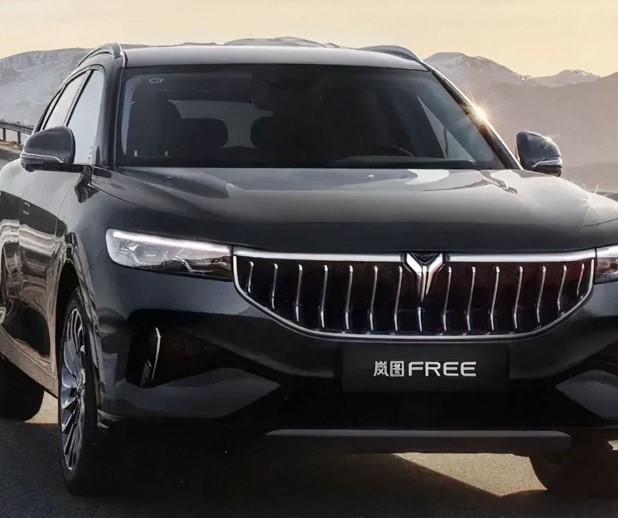
SAGLEV INC is an American-incorporated firm with distribution centres and showrooms in African nations, notably Nigeria and Ghana.
The corporate had been promoting and advertising completely different manufacturers of electrical automobiles in Nigeria for years and final 12 months it opened an meeting plant within the ta space of Ikorodu, Lagos State. Among the manufacturers it assembles on the Imota Plant embrace:
In accordance with the SAGLEV Inc brochure, there are three fashions of YOYAH assembled and bought in Nigeria – VOYAH PASSION with a battery capability of 37.5/105 Killowat-hour (KWH), and a driving vary of 580 – 730 kilometers; VOYAH FREE with a driving vary of 210KM-1201KM and a battery capability of 37.5KWM; and VOYAH DREAM with a driving vary of 605KM and a battery capability of 108.7KWH.
In accordance with the SAGLEV Inc brochure, there are three fashions of YOYAH assembled and bought in Nigeria – VOYAH PASSION with a battery capability of 37.5/105 Killowat-hour (KWH), and a driving vary of 580 – 730 kilometers; VOYAH FREE with a driving vary of 210KM-1201KM and a battery capability of 37.5KWM; and VOYAH DREAM with a driving vary of 605KM and a battery capability of 108.7KWH.
SAGLEV, based by Sam Faleye, says it’s “targeted on accelerating the conversion of Fossil Gas Autos to Zero-Emission Autos in rising markets by partnering with rideshare and fleet operators.”