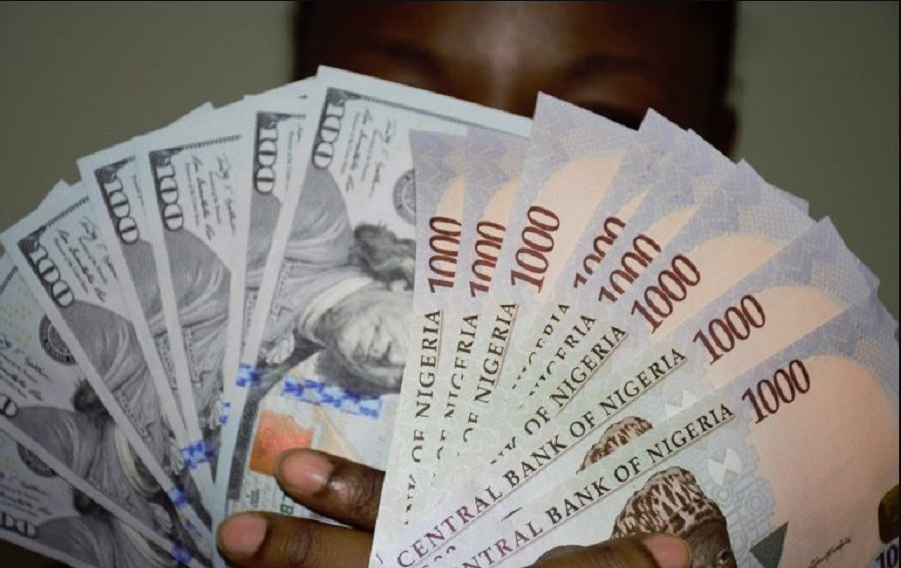
The Nigerian foreign money confirmed some power within the Nigerian international change market, whereas the haven foreign money dipped to its lowest degree since February 2022 within the international foreign money market.
The Nigerian naira strengthened to N1,527 in opposition to the U.S greenback on the official Nigerian Overseas Change Market, the CBN’s buying and selling window for foreign exchange.
CBN knowledge present the speed improved from N1,532 on Monday, a modest achieve of N5.
This constructive improvement on the Nigerian official market coincides with a decline within the nation’s exterior reserves, which fell $3.05 billion within the first half of 2025.
Particularly, the reserves decreased from $40.88 billion on the finish of 2024 to $37.37 billion on the finish of final month. Nonetheless, on the black market, the Nigerian foreign money declined to N1,585/$ on Tuesday after closing at N1,570/$ on Monday.
The nation’s debt inventory elevated primarily on account of a weak naira over the long run. Nigerian public borrowing rose by N27.72 trillion over twelve months to N149.39 trillion, due to a weaker naira inflated international liabilities.
The Debt Administration Workplace famous that debt is now 22.8 % larger than it was a 12 months in the past, when the whole was N121.67 trillion.
President Bola Tinubu lately accredited 4 main tax payments aimed toward attracting buyers, increase income, and growing the nation’s tax-to-GDP ratio.
The federal authorities depends extra on concessionaire financing and public-private partnerships to scale back dependence on exterior borrowing. However, fiscal pressures proceed to pressure the funds
The US greenback stays close to its weakest degree since February 2022, as merchants contemplate dovish remarks from Federal Reserve Chair Jerome Powell and potential impacts of Donald Trump’s new spending proposal.
Merchants are carefully watching headlines about Trump’s expansive tax-and-spending plan, a bundle consultants say may add one other $3.3 trillion to the nationwide debt.
The measure is now headed again to the Home for ultimate approval or rejection after passing the Senate. Trump’s ongoing criticism of Fed Chair Jerome Powell has raised questions concerning the central {bank}’s independence, including political stress that weighs on the US greenback.
Trump confirmed Powell a chart of key international rates of interest, annotated together with his notes, suggesting that US borrowing prices ought to be between Japan’s 0.5 % and Denmark’s 1.75 %.


