AZA MSUE, NONYE EKWENNUGO, GODWIN ENNA, ALO ABIOLA and FRANCIS OKOYE write on the increasing number of children of popular politicians throwing their hats into the political ring ahead of the 2027 elections.
As Nigeria inches toward the 2027 general elections, a quiet but unmistakable rhythm is building across its political landscape—one shaped not just by ambition, but by legacy. From the sunburnt plains of the North to the lush corridors of the Middle Belt and the vibrant towns of the Southwest, a new generation is stepping forward. They carry familiar names, but with aspirations they insist are distinctly their own.
In Kaduna State, the air is already thick with anticipation. Bello El-Rufai, son of former governor Nasir El-Rufai, is quietly preparing for what could be his second term representing Kaduna North in the House of Representatives.
Though his political platform remains uncertain, his presence is not. His father, now a key figure in the African Democratic Party, casts a long shadow—one that both guides and challenges the younger El-Rufai.
Not far away, another name resonates with influence and expectation. Mubarak Gumi, son of respected Islamic scholar Sheikh Ahmad Gumi, is charting his own course. His ambition is grounded in grassroots politics, as he eyes a seat in the Kaduna State House of Assembly. For him, legacy is not a ladder but a foundation—one he hopes to build upon in service of his constituency.
Further south, in Benue State, the pattern repeats itself, though with its own local colour. Fidelis Unongo, son of the late elder statesman Paul Unongo, has declared his intention to contest for the Benue North East senatorial seat. His voice joins a chorus of younger politicians who seek to reinterpret the legacies they inherit.
Alongside him stands Blessing Onuh, daughter of former Senate President David Mark. Though she has yet to formally declare her intentions, her political trajectory suggests that her story is still unfolding—one that could further entrench the presence of established families in Nigeria’s democratic process.
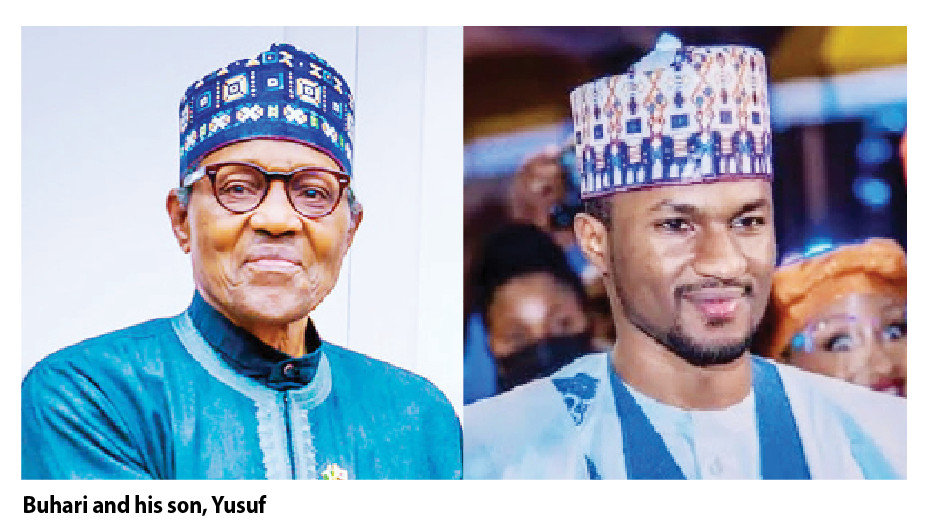
In Katsina State, the narrative takes on a quieter tone. Here, the emergence of political heirs is only just beginning. Yusuf Muhammadu Buhari, son of the late former President Muhammadu Buhari, has stepped into the spotlight. His declaration to contest for a House of Representatives seat marks a symbolic moment—one that hints at the enduring influence of political families in constituencies where history runs deep.
Observers note that while Katsina has produced towering figures like Aminu Bello Masari and Ibrahim Shehu Shema, their political legacies have not yet translated into a wave of familial succession. For now, Yusuf Buhari stands alone—a solitary figure at the frontier of what may become a broader movement.
In the Southwest, in Ekiti State, the story carries a different energy. Boluwatife Fayose, son of former governor Ayodele Fayose, has already secured the backing of his party for a State House of Assembly seat. Yet, his journey is marked by a deliberate departure from his father’s political path. Aligning with the All Progressives Congress, he frames his ambition as a personal choice, shaped by conviction rather than inheritance.
“I came on my own,” he has said, drawing a line between legacy and individuality. It is a sentiment that echoes across the country, even as the surnames remain familiar.
Meanwhile, in Borno State, the pattern deepens into a tapestry. Kaumi Umara Zulum, brother of Governor Babagana Umara Zulum, is seeking a federal constituency seat. Karta Maina Ma’aji Lawan, son of a former governor, is extending his legislative reach. And Grema Terab, heir to another political legacy, is positioning himself for national office.
Together, they form a mosaic of ambition shaped by heritage—each story distinct, yet interconnected.
Across Nigeria, the emergence of these political heirs raises questions that go beyond individual contests. Is this the rise of a new political dynasty, or simply the natural evolution of leadership in a society where mentorship often begins at home? Are these candidates beneficiaries of privilege, or products of early exposure to governance and public service?
The answers are neither simple nor uniform. What is clear, however, is that the 2027 elections may not only determine who governs, but also how power is inherited, shared, and transformed.
For now, as party primaries loom and alliances shift, Nigeria watches. The names may be familiar, but the outcomes remain unwritten—waiting, like the nation itself, on the edge of possibility.
In the Southwest, the unfolding story in Ekiti State adds texture and nuance to this broader narrative of legacy and ambition. Here, Boluwatife Fayose is not merely stepping into the arena—he is doing so with the formal blessing of his party and the expectations of a closely watching constituency.
At a gathering in Iworoko Ekiti, leaders of the All Progressives Congress in Irepodun/Ifelodun State Constituency 2 ratified his emergence as their consensus candidate for the 2027 State House of Assembly election. The decision followed internal zoning arrangements that returned the ticket to his Afao ward, from where he was presented to the wider party structure.
Yet, what makes his candidacy particularly compelling is not just his lineage as the son of former governor Ayodele Fayose, but his insistence on charting an independent political identity. Standing before party faithful, Boluwatife conveyed both gratitude and distance—acknowledging his father’s goodwill while emphasising that his entry into the APC was a personal decision, shaped by his own convictions.
He spoke of inspiration drawn from Governor Biodun Oyebanji, citing leadership style and connection to the people as defining influences. But beyond personal motivations, his message carried a strategic undertone: unity, inclusion, and an unwavering focus on the immediate political battle ahead.
For Boluwatife, the road to 2027 begins not with his own ambition but with strengthening the party’s chances in the forthcoming governorship election. It is a pragmatic stance—one that reflects an understanding that political success, especially for those carrying well-known names, often depends on collective momentum rather than individual prominence.
Meanwhile, in Borno State, the pattern of legacy-driven participation deepens into a more intricate web. Kaumi Umara Zulum, brother to Governor Babagana Umara Zulum, is positioning himself for the Konduga–Mafa–Dikwa federal constituency seat. His ambition reflects not just familial proximity to power, but also the increasing normalisation of political continuity within influential circles.
Alongside him is Karta Maina Ma’aji Lawan, already a sitting member of the state assembly and son of former governor Maina Ma’aji Lawan. His sights are now set on a broader stage—the National Assembly—where he hopes to represent a cluster of constituencies stretching across northern Borno.
Completing this triad is Grema Terab, whose political inheritance traces back to his late father, a former governorship candidate and senior government official. His pursuit of a federal seat underscores how legacy, while inherited, must still be actively translated into political relevance.
Together, these stories—spanning Ekiti’s party halls and Borno’s evolving power structure—fold seamlessly into Nigeria’s larger democratic journey. They illustrate a nation at a crossroads, where the past continues to shape the future, and where the next generation must decide whether to simply inherit influence or redefine it.
In the Southwest, the unfolding story in Ekiti State adds texture and nuance to this broader narrative of legacy and ambition. Here, Boluwatife Fayose is not merely stepping into the arena—he is doing so with the formal blessing of his party and the expectations of a closely watching constituency.
At a gathering in Iworoko Ekiti, leaders of the All Progressives Congress in Irepodun/Ifelodun State Constituency 2 ratified his emergence as their consensus candidate for the 2027 State House of Assembly election. The decision followed internal zoning arrangements that returned the ticket to his Afao ward, from where he was presented to the wider party structure.
Yet, what makes his candidacy particularly compelling is not just his lineage as the son of former governor Ayodele Fayose, but his insistence on charting an independent political identity. Standing before party faithful, Boluwatife conveyed both gratitude and distance—acknowledging his father’s goodwill while emphasizing that his entry into the APC was a personal decision, shaped by his own convictions.
He spoke of inspiration drawn from Governor Biodun Oyebanji, citing leadership style and connection to the people as defining influences. But beyond personal motivations, his message carried a strategic undertone: unity, inclusion, and an unwavering focus on the immediate political battle ahead.
For Boluwatife, the road to 2027 begins not with his own ambition, but with strengthening the party’s chances in the forthcoming governorship election. It is a pragmatic stance—one that reflects an understanding that political success, especially for those carrying well-known names, often depends on collective momentum rather than individual prominence.
Meanwhile, in Borno State, the pattern of legacy-driven participation deepens into a more intricate web. Kaumi Umara Zulum, brother to Governor Babagana Umara Zulum, is positioning himself for the Konduga–Mafa–Dikwa federal constituency seat. His ambition reflects not just familial proximity to power, but also the increasing normalization of political continuity within influential circles.
Alongside him is Karta Maina Ma’aji Lawan, already a sitting member of the state assembly and son of former governor Maina Ma’aji Lawan. His sights are now set on a broader stage—the National Assembly—where he hopes to represent a cluster of constituencies stretching across northern Borno.
Completing this triad is Grema Terab, whose political inheritance traces back to his late father, a former governorship candidate and senior government official. His pursuit of a federal seat underscores how legacy, while inherited, must still be actively translated into political relevance.
Together, these stories—spanning Ekiti’s party halls and Borno’s evolving power structure—fold seamlessly into Nigeria’s larger democratic journey. They illustrate a nation at a crossroads, where the past continues to shape the future, and where the next generation must decide whether to simply inherit influence or redefine it.