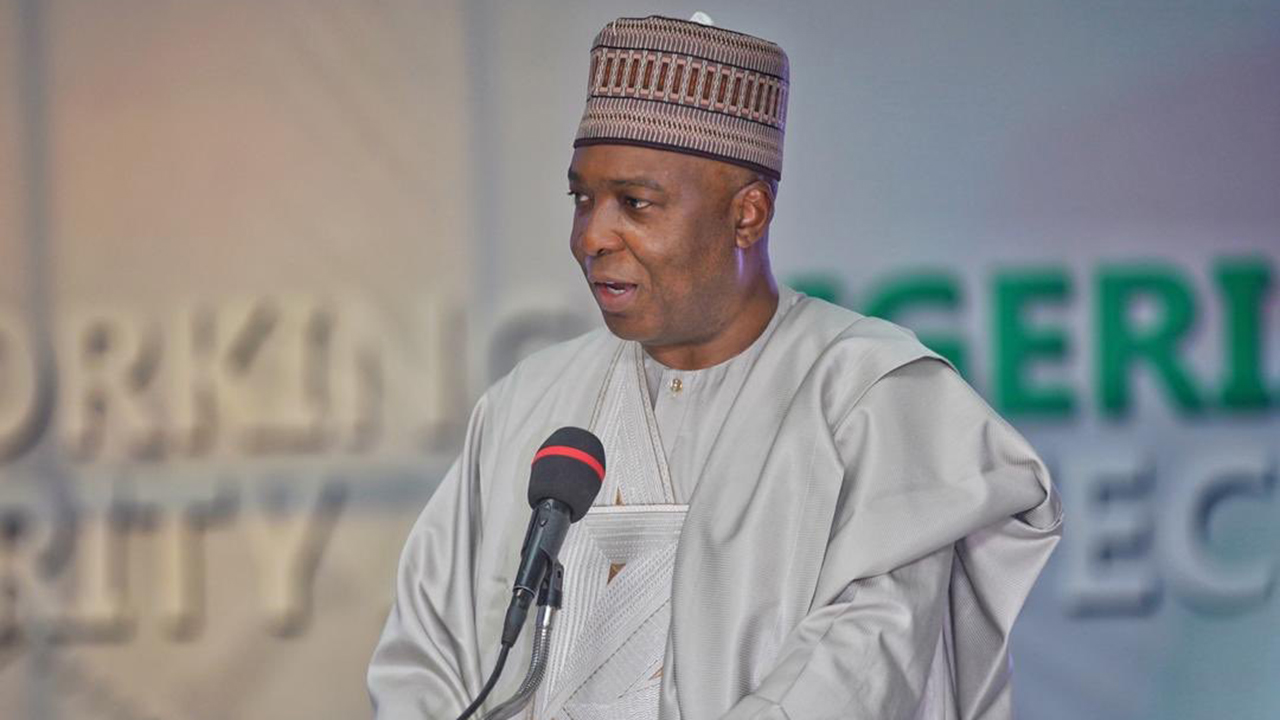
Governor Ahmadu Umaru Fintiri of Adamawa State is the first, and, so far, the only governor to have deliberately designed and deployed a well-structured, highly organized local campaign architecture for the re-election of President Bola Ahmed Tinubu. This effort goes beyond routine politics; it reflects a calculated and early strategic alignment aimed at consolidating electoral advantage well ahead of the 2027 general elections.
The uniqueness and sophistication of Fintiri’s approach lie in its clearly defined two-part structure, which blends party consolidation with grassroots mobilization in a way rarely seen in contemporary Nigerian politics.
First, the APC party’s framework itself has been fundamentally reconfigured. It now comprises a fusion of the PDP structures that moved with Fintiri into the APC and the existing legacy APC structure in Adamawa. This merger is not merely symbolic; it represents a deliberate harmonization of political networks, influence blocs, and grassroots machinery across party lines.
Notably, Adamawa stands out as the only state where a sitting PDP governor defected to the APC without triggering any grievances, factional crises, or prolonged internal disputes from all sides. This relative stability has provided a rare foundation for unity, enabling the consolidation of political capital that would otherwise have been dissipated through intra-party conflicts. In practical terms, it means that Fintiri is operating with a broadened base that cuts across former party loyalties, an advantage that could prove decisive in a tightly contested national election.
The second component of this strategy is the ARH266M; the Adamawa Renewed Hope Movement 2026. This is not just a political slogan or a loose support group; it is conceived as a structured, grassroots-driven mobilization platform. Its primary objective is to galvanize voter support for President Tinubu while simultaneously strengthening the electoral prospects of all APC candidates across the state.
By separating the formal party structure from a broader political movement, Fintiri effectively creates two complementary channels of influence: one institutional and the other populist. This dual approach enhances reach, allowing for both elite coordination and mass engagement, particularly at the ward and polling-unit levels where elections are ultimately decided.
Love him or hate him, Ahmadu Umaru Fintiri remains a politician deeply rooted in the realities of Adamawa’s local politics. His strength lies not only in formal structures but also in his ability to connect with, and sustain, organic support from the grassroots. This combination of institutional control and popular appeal places him in a uniquely influential position within the state’s political landscape.
Widely regarded for his calculated political moves and his ability to read the terrain with precision, Fintiri is not merely preparing to deliver votes for President Tinubu in a conventional sense. Rather, he appears to be engineering a comprehensive political system, one designed to minimize uncertainty, neutralize opposition, and secure a decisive electoral outcome.
In essence, what is unfolding in Adamawa may well serve as a template for subnational political strategy in national elections: an early, deliberate fusion of party structures, complemented by a disciplined grassroots movement, all driven by a clear and coordinated objective.
We’ve got the edge. Get real-time reports, breaking scoops, and exclusive angles delivered straight to your phone. Don’t settle for stale news. Join THISTIMES on WhatsApp for 24/7 updates →
Join Our WhatsApp Channel