I never imagined a moment like this would come, yet here we are—confronted by it so openly that it stares at us like the midday sun. Nearly three decades after it was established, the Arewa Consultative Forum (ACF), an organisation composed of some of the North’s most respected voices across various sectors of human endeavour, is mired in a bitter, deeply embarrassing leadership crisis.
More disturbing is the unfolding drama that has exposed the depth of the disorder and confusion into which northern Nigeria has descended. The crisis has degenerated into a public spectacle, with accusations and counter-accusations flying from different camps.
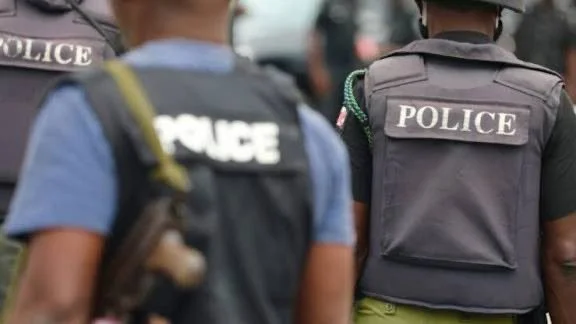
At some point, the Forum’s office was sealed off by the police, which prevented the National Executive Council (NEC) from holding its scheduled meeting there. However, the meeting was eventually held at an alternative venue. Shortly afterwards, the NEC announced the suspension of the chairman of the Board of Trustees (BoT), elder statesman Bashir Dalhatu.
Predictably, the issue did not end there. Shortly after NEC’s statement suspending Dalhatu was widely circulated, another statement was issued by 66 members of the BoT, dismissing the action outright. They described the suspension as unlawful and accused the NEC of exceeding its authority. According to them, “the NEC lacks authority whatsoever to make any legal pronouncement on the leadership of the BoT.”
Things fall apart
For the ACF, things have fallen apart, and the centre cannot hold. What is even more troubling is the silence from those who ordinarily should have stepped in to calm nerves and seek reconciliation. There appears to be no serious or sincere effort from any quarter to halt this disgraceful public confrontation. And if this continues, the next destination may well be the courtroom. This is unfortunate.
The Forum was established to serve as a rallying point for the North. It was meant to provide direction, shape ideas, and develop strategies to confront the numerous social, economic, and political problems facing the region. It was also expected to serve as a moral compass for the more than 100 million people of northern extraction, both at home and in the diaspora. Beyond that, the ACF was supposed to offer constructive guidance to governments at all levels and consistently advocate policies that genuinely protect the interests of the North.
But to what extent has the Forum lived up to these expectations? How have the northern citizens felt the impact of the ACF? Whose interests is the Forum genuinely protecting? And what exactly is the cause of the current crisis tearing the ACF apart? More importantly, are there still respected voices within the region capable of preventing this shameful scenario before it causes even more serious damage?
Now more than ever, the North must unite. The region faces crises on several fronts and urgently requires collective thinking and coordinated leadership. In virtually every major development index, the region continues to lag behind the rest of the country.
Damning Data
Using healthcare delivery as an example, northern Nigeria faces a concerning shortage of healthcare personnel, especially doctors and specialised professionals. According to the 2025 State of the Nation’s Health Report, numerous northern states struggle with a critical shortage of medical staff, leaving healthcare facilities to rely heavily on community health workers for even the most basic services.
The figures are alarming. Available data shows that Kebbi, Borno, Adamawa, Niger, Zamfara, and Yobe States each have only one doctor for about 10,000 patients. Even more worrying is that Yobe, Kebbi, Zamfara, and Jigawa have the lowest ratios, with just 0.5 doctors per 10,000 people.
The consequences are predictable. Healthcare systems become overstretched, quality declines, and preventable deaths increase. The shortage of personnel, combined with inadequate medical equipment and poor infrastructure, continues to worsen the quality of life across the region.
The situation is equally worrying in the realm of nutrition. Northern Nigeria has the highest number of malnutrition cases among children. According to the International Federation of Red Cross and Red Crescent Societies (IFRC), the North-East and North-West remain the most severely affected regions, with millions enduring various forms of malnutrition and food insecurity.
Education in the region exposes another harsh reality. At the risk of sounding repetitive, I must emphasise that the North still has the highest number of out-of-school children in the country. Currently, about 16 million children are not attending school. Many wander the streets daily, becoming vulnerable to exploitation and abuse. These children represent not just a social crisis but also a severe warning about the region’s future. A society that leaves millions of its children uneducated is putting its own future at risk.
On security, the situation remains the same. From Adamawa to Zamfara, communities continue to endure relentless attacks by terrorists, bandits, and kidnappers. Villages are repeatedly raided, citizens are killed or abducted, women are raped, and families are displaced. Communities live in constant fear. The ACF was set up to address some of these issues. However, instead of focusing on solving these fundamental problems, the ACF leadership is preoccupied with internal power struggles.
Sadly, while millions of citizens continue to sink deeper into poverty due to poorly thought-out government policies, the ACF itself appears distracted. At a time when the country is borrowing heavily, struggling with rising debt, and failing to effectively implement budgets despite unprecedented revenues, one would expect the Forum to stand firm and provide guidance to governments at both the national and sub-national levels. Instead, the ACF has become embroiled in a dispute between the NEC and the BoT. Sad!
Way Out
The crisis within the ACF raises key questions about the quality of leadership in the region and how seriously it faces the North’s own challenges. If the Forum cannot handle its internal disagreements responsibly, how can it inspire trust in its ability to guide the region through more complex issues? The current situation indicates that the organisation may no longer hold the moral authority to mediate even minor disputes among pro-North groups.
Those responsible for this crisis need to understand the extent of the harm they are causing. Their actions not only embarrass the ACF but also weaken the collective image of the North itself. The region must openly condemn this behaviour and ensure those accountable are held responsible. It is even more concerning that respected stakeholders, including traditional rulers and elder statesmen, have largely remained silent.
One thing is certain. The frosty relationship between the Forum’s BoT and NEC shows they have outlived their usefulness. The North cannot continue to watch this public disgrace unfold endlessly. Perhaps it is time to consider transitional leadership options for the Forum. The two bodies have clearly demonstrated that they cannot collaborate for the region’s progress. I believe the best course of action is for them to resign immediately. This disgrace must be contained, and there is no more time to waste.
Okowa, Bello’s Senate Bids
Former Delta State Governor, Ifeanyi Okowa, and former Kogi State Governor, Yahaya Bello, have some things in common. Both served as governors for eight years and are now facing probe/prosecution by the EFCC over alleged multi-billion-naira corruption-related offences. Despite these ongoing cases, both are reportedly seeking seats in the Senate under the ruling APC. It is surprising that the APC screened and approved them for the Senate race while their corruption cases are still pending in court. While they are presumed innocent until proven guilty, and this principle must be upheld, allegations of corruption on such a large scale raise moral and political questions for a party that claims to be committed to fighting corruption.