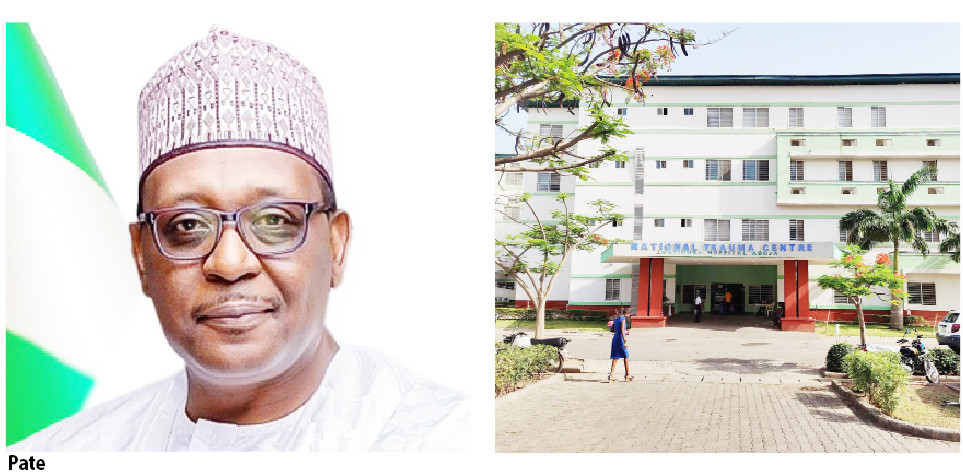
For kidney patients across Nigeria, the Federal Government’s 2023 promise to subsidise dialysis to N12,000 per session remains a mirage. At teaching hospitals, patients are still charged N40,000 to N50,000 per session. With three sessions required weekly, many simply stop coming. Doctors say they watch patients die in waiting rooms, cash in hand, but not enough, writes PATIENCE IVIE IHEJIRIKA
When the federal government announced in early 2025 that the cost of kidney dialysis in selected federal hospitals would drop from about N50,000 to N12,000 per session, thousands of Nigerians living with chronic kidney disease breathed a sigh of relief. For the first time, many believed they could finally afford the life-saving treatment required at least twice a week to stay alive.
However, a few months later, that hope thinned out, replaced by frustration, long queues, broken machines and in some cases, avoidable deaths.
The subsidy, approved under President Bola Tinubu’s health sector reforms, was designed to cushion the financial burden on renal patients and expand dialysis access nationwide.
The intervention was hailed as a breakthrough and a long-awaited relief, but patients said the reality never lived up to the announcement. A patient at the National Hospital Abuja, Edwarie Victory Crown, who has been on dialysis for two years now, said he spends about 200,000 weekly for dialysis and diet.
“I’ve been on dialysis for two years now. I was diagnosed in January 2024 at the University of Benin Teaching Hospital (UBTH). Once a week at first… until last year when I came to Zenith Hospital for transplant evaluation and moved my dialysis to National Hospital Abuja. Now it’s twice a week,” he said.
Edwarie, a senior registration officer with the Independent National Electoral Commission (INEC), said the struggle is not only physical. It is financial, psychological and deeply personal.
At UBTH, Edwarie recalled that while the subsidy programme was on, “They brought just two machines. Two machines for over 400 patients. If you use the federal government machine today, you may not get your turn again for four weeks.”
At the National Hospital in Abuja, the situation is no better. “With about 500 patients, they have just five functional machines. By 7 a.m today, only three machines were working; the others had broken down. Without functioning machines and consumables, the subsidised rate exists only “on paper,” he said.
Edwarie told LEADERSHIP Sunday that aside from dialysis, patients also buy blood-boosting injections such as erythropoietin. “Recumor is almost N20,000. You take two a week, which amounts to N40,000,” he explained.
Between dialysis, drugs, special diet, and transport, Edwarie said he spends about N200,000 every week, exactly what he earns monthly.
“So, you depend on people. And you don’t even have the energy to work or diversify income. You end up selling the little you have just to live,” he said.
Also lamenting, a protocol officer at the National Assembly, Mr. Boniface Ugwu, said he has watched his wife fight kidney disease for nearly five years.
Expressing his frustration, Mr Ugwu said, “The government said dialysis was subsidised. It was a lie. They only did it for a few months.
Even within these few months, patients still paid more than the announced N12,000.
He told LEADERSHIP Sunday that each dialysis session costs his family N50,000 to N60,000, two sessions per week, for almost five years. “I have sold many of my properties. People die here because they cannot buy consumables. If you don’t buy all items, the machine cannot work,” he said.
“For years, health insurance has not existed here at the National Hospital, Abuja. They collect N25,000 from patients under health insurance coverage and still ask them to pay again. It is wrong.
“Yesterday, people died here. People die every day. We need help,” he said.
Waiting in the queue for her son’s turn, Mrs Cindy Nabanachan said her 23-year-old son has been on dialysis for two years.
“I beg every week. I buy consumables N60,000 every Monday and every Thursday. Minus drugs.”
She told our correspondent that she benefited from the subsidy scheme for a brief period. “The first phase stopped in April, then they started again in July, and it stopped in September.”
She said that since then, she has been paying full price again. “We need help. If the government can help us with consumables or perform transplants for people twice a month or once a year, we would appreciate it. This load is too much,” she pleaded.
LEADERSHIP Sunday recalls that on 20 August 2025, the Federal Ministry of Health, in a statement, reaffirmed the subsidy, saying sessions now cost N12,000 in selected federal hospitals.
The ministry said 11 federal tertiary hospitals were implementing the scheme, adding that more facilities would be added over time.
The hospitals are: Aminu Kano Teaching Hospital — Kano, Kano State, University of Maiduguri Teaching Hospital — Maiduguri, Borno State, Abubakar Tafawa Balewa University Teaching Hospital — Bauchi, Bauchi State, University of Jos Teaching Hospital — Jos, Plateau State, National Hospital, Abuja — Abuja, FCT, and Federal Medical Centre, Ebute Metta — Lagos, Lagos State.
Others include University College Hospital, Ibadan, Oyo State, University of Benin Teaching Hospital, Benin City, Edo State
Federal Medical Centre, Yenagoa — Yenagoa, Bayelsa State, Federal Teaching Hospital, Owerri — Owerri, Imo State, and Federal Medical Centre, Abakaliki, Ebonyi State.
Yet, patients said that even during the programme’s ongoing period, access was limited by broken or insufficient machines, unavailability of consumables, inconsistent implementation, and additional charges not covered by the subsidy.
For Edwarie, Boniface, Cindy and hundreds like them, survival depends not just on medical treatment, but on government decisions and the speed at which those decisions translate into real, working machines, real consumables, and real relief.
According to Edwarie, “If the federal government said they have subsidised dialysis, let it not be on paper. Let it be real.”
A Consultant Nephrologist and Clinical Lead at the Pilot Centre in the National Hospital, Abuja, Dr Habibu Galadanchi, said a key problem with the subsidy programme is the irregular supply of government-provided consumables.
“There is no fixed schedule. When supplies finish, we wait for the next batch. We’ve been out of stock for months now,” he said.
During these gaps, patients revert to paying full cost, a setback for many fragile households.
Dr. Galadanshi called for better logistics management. “Suppliers should project usage and begin to replenish before stock runs out. Not after. These things are imported, so delays are long,” he said.
He also urged the government to increase the number of beneficiary centres, noting that one hospital cannot serve all Abuja patients, let alone those coming from other states.
Even with nine machines, National Hospital struggles to serve the rising number of patients. On some days, all machines run from morning until night, yet dozens still wait for their turn, he said.
The nephrologist explained why dialysis remains one of the most expensive treatment options in the country, how limited machine availability affects patient access, and why government subsidies, though helpful, are not reaching everyone in need.
According to Dr. Galadanshi, dialysis is required when the kidneys can no longer remove waste and excess water from the body, a situation that leads to life-threatening accumulation of toxins.
“When the kidneys fail, the body accumulates waste. Patients freeze, swell up, and become very ill because the waste level becomes intolerable,” he said.
He said that during dialysis, blood is filtered through a machine for about four hours per session to remove this buildup.
The nephrologist explained that there are two types of kidney failure: Acute kidney injury, which is often reversible after a few weeks, and Chronic kidney failure, which is permanent and requires lifelong dialysis or a kidney transplant.
Most dialysis patients fall into the chronic group, he said. “Chronic kidney disease affects about 10 per cent of our population. The number of patients reaching kidney failure is increasing. Many die because they cannot afford treatment,” he noted.
Research, he added, showed that up to 90 per cent of Nigerian kidney patients do not survive one year on dialysis, largely due to cost.
Dialysis requires a combination of large machines and single-use consumables, both of which drive up costs. “A dialysis machine costs between N15 million and N30 million. Consumables such as filters, tubing, dialysate water, and bicarbonate must be used fresh for each session.
Other costs include electricity, water, staff, bandages and general medical supplies, machine maintenance,” he explained.
According to him, these costs mean that each dialysis session in the country ranges between N40,000 and N60,000. Ideally, chronic kidney patients should undergo dialysis three times a week, amounting to N180,000–N200,000 per week, N720,000–N800,000 per month. But most Nigerians cannot afford it.
“Very few Nigerians can pay for three sessions a week. Many do twice, some once, and some only when they enter an emergency. That is why mortality is high,” he said.
To ease the burden, the federal government selected pilot centres nationwide and supplied dialysis consumables to them free of charge. National Hospital Abuja is one of the centres, Dr. Galadanshi said.
Under the scheme, patients pay N12,000 per session, instead of the standard N40,000 or more. “The subsidy brought the cost down by over N30,000 and helped many patients access care,” he said.
He said the hospital received one machine from the government for the programme, while the Chief Medical Director added four more, bringing the centre’s total to nine, although only about seven are operational at any given time due to breakdowns.
The subsidy also led to patient overflow. “People came from other regions. Our wards became full. It is much easier for a patient to bring N12,000 than N40,000,” he said.
Despite the subsidy’s impact, many patients interviewed complained that they received only one or two subsidised sessions before the programme stopped.
Dr. Galadanshi confirmed that the centre had to ration access. “We have a roster. We run morning, afternoon, and night sessions, but even then, we cannot take everyone,” he said.
To ensure fairness, the hospital limited subsidised dialysis to two sessions per week and prioritised patients already on the roster.
“We initially considered giving everyone six sessions and dropping them. But we decided it was better to treat those on the programme consistently, rather than dilute the benefit,” he added.
Speaking on emergency cases, he said they are attended to even when the roster is full, but continuation is not guaranteed once they are discharged.
“We have too many patients for the number of machines. In other government hospitals in Abuja, patients also need dialysis. When they all come here, we cannot cope,” he said.
Dr. Galadanshi’s account underscores a growing national health crisis, one where demand far exceeds capacity, and where the cost of staying alive is beyond the reach of many Nigerians.
While the government subsidy has offered relief, its inconsistency, limited coverage and the overwhelming number of patients continue to threaten access to lifesaving care.
“Kidney failure is becoming more common. Patients are dying because they cannot afford dialysis. The government support must continue and expand,” he added.
More concerning is the fact that access to a kidney transplant, the only long-term solution for end-stage renal failure, remains far beyond the reach of most patients.
The Medical Director of Alliance Hospital, Dr. Christopher Otabor, told LEADERSHIP Weekend that financial barriers remain the biggest obstacle facing Nigerians who require the life-saving procedure.
According to him, while dialysis is already a major financial strain, the cost of a kidney transplant is even more overwhelming.
“Many Nigerians need transplants but cannot afford them. The high cost is mainly due to medications. Previously, some of these drugs were manufactured locally, but the companies have shut down, forcing us to import expensive immunosuppressive medications,” he said.
After a transplant, patients must take daily immunosuppressive drugs to prevent the body from rejecting the new organ. Dr. Otabor explained that some patients spend up to N300,000 monthly in the early stages, while others manage with N100,000, depending on the brand prescribed.
The financial struggle does not end with the surgery. “Many rely on crowdfunding or loans to afford the transplant, but after a few months, they run out of money and stop taking their medications. This exposes the new kidney to immune attacks, leading to rejection and, ultimately, failure,” he said.
Beyond affordability, finding a suitable donor remains another critical challenge. “We had to cancel a transplant because the patient’s blood did not match, and they couldn’t find another donor. Finding a matching live donor is not easy,” he added.
A kidney transplant in the country costs an average of N25 million to N30 million, including related expenses. In some cases, Dr Otabor noted, the cost of medication alone can reach N10 million when the full protocol is followed.
Meanwhile, efforts to get an official response from the Federal Ministry of Health and Social Welfare on the status of the federal government’s subsidised kidney dialysis programme have been unsuccessful. An official letter dated 15 April, addressed to the ministry’s Head of Media, has gone unanswered for four weeks.
The lack of affordable care and donor shortages continues to leave many Nigerians with kidney failure stranded, emphasising the urgent need for policy intervention and more government support.
We’ve got the edge. Get real-time reports, breaking scoops, and exclusive angles delivered straight to your phone. Don’t settle for stale news. Join THISTIMES on WhatsApp for 24/7 updates →
Join Our WhatsApp Channel