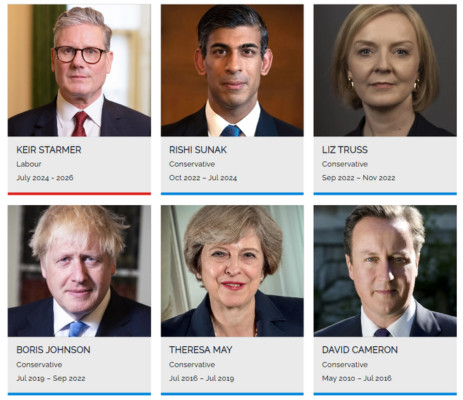
The resignation of Keir Starmer as British Prime Minister on Monday has capped a decade of unprecedented political change in the United Kingdom, where six leaders have occupied No. 10 Downing Street in just 10 years.
From the fallout of the Brexit referendum to the COVID-19 pandemic and a series of economic and political crises, successive governments have faced challenges that reshaped the country’s political landscape.
Starmer’s departure in 2026 added another chapter to a period marked by leadership turnover, internal party battles and national uncertainty.
In announcing his resignation, Starmer said he had “heard the answer” from his party on whether he remained the best person to lead Labour into the next general election and accepted the verdict “with good grace.”
As the search for a new leader begins, hereunder is a look at the six prime ministers who have led Britain over the past decade.
David Cameron (2010–2016)
David Cameron served as Prime Minister from 2010 until 2016, initially leading a coalition government with the Liberal Democrats before securing a Conservative majority in the 2015 general election.
His administration pursued austerity policies to reduce Britain’s budget deficit following the 2008 global financial crisis. However, Cameron’s legacy remains closely tied to the 2016 referendum on Britain’s membership of the European Union.
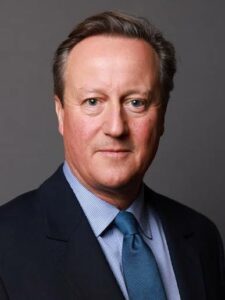
Having campaigned for the UK to remain in the bloc, Cameron resigned after voters backed Brexit, saying the country needed new leadership to guide it through the withdrawal process.
Theresa May (2016–2019)
Theresa May succeeded Cameron in July 2016 and inherited the difficult task of delivering Brexit.
Her premiership was dominated by negotiations with the European Union and efforts to secure parliamentary approval for a withdrawal agreement. However, repeated defeats in Parliament exposed deep political divisions and weakened her authority.
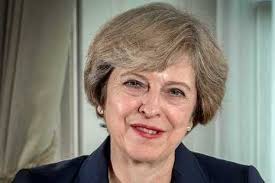
After months of political deadlock and mounting pressure from within her Conservative Party, May announced her resignation in 2019.
Boris Johnson (2019–2022)
Boris Johnson took office in July 2019 with a promise to “get Brexit done.”
Under his leadership, the United Kingdom formally left the European Union in January 2020. Johnson also led the country through the COVID-19 pandemic, overseeing lockdown measures, vaccination programmes and economic support packages.
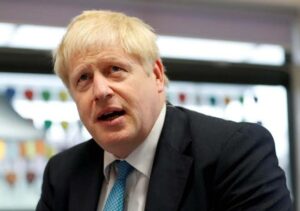
His government was later engulfed by controversy, including the “Partygate” scandal involving gatherings held during pandemic restrictions. The backlash eroded support among Conservative lawmakers, eventually forcing his resignation in 2022.
Liz Truss (2022)
Liz Truss became Prime Minister in September 2022 after winning the Conservative Party leadership contest.
Her tenure was overshadowed by economic turmoil following a controversial mini-budget that triggered market instability and raised concerns about the country’s fiscal direction.
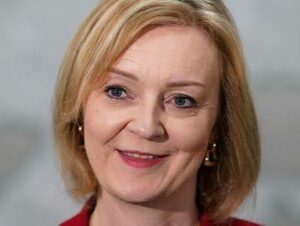
The crisis severely damaged confidence in her leadership, leading to her resignation after just 45 days in office, the shortest premiership in British history.
Rishi Sunak (2022–2024)
Rishi Sunak succeeded Truss in October 2022, taking office amid economic uncertainty and political instability.
His administration focused on tackling inflation, restoring confidence in the economy and managing public finances. Sunak also faced challenges, including immigration pressures, industrial strikes and the cost-of-living crisis.
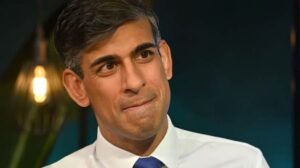
Despite efforts to stabilise the government, the Conservatives lost the 2024 general election, bringing an end to their 14-year hold on power.
Keir Starmer (2024–2026)
Keir Starmer became Prime Minister in 2024 after leading Labour to victory in the general election.
His government prioritised economic reforms, improvements to public services and efforts to rebuild trust in government following years of political turbulence.
However, his tenure came to an abrupt end in 2026 when he announced his resignation, saying he had “heard the answer” from his party regarding his leadership and would step aside “with good grace.”
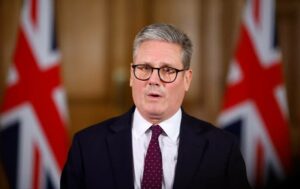
His exit marks the latest leadership transition in a decade that has transformed British politics and left the country searching once again for a new direction.
With the race to succeed Starmer now underway, attention is turning to who will become Britain’s seventh prime minister in just over a decade.
We’ve got the edge. Get real-time reports, breaking scoops, and exclusive angles delivered straight to your phone. Don’t settle for stale news. Join THISTIMES on WhatsApp for 24/7 updates →
Join Our WhatsApp Channel