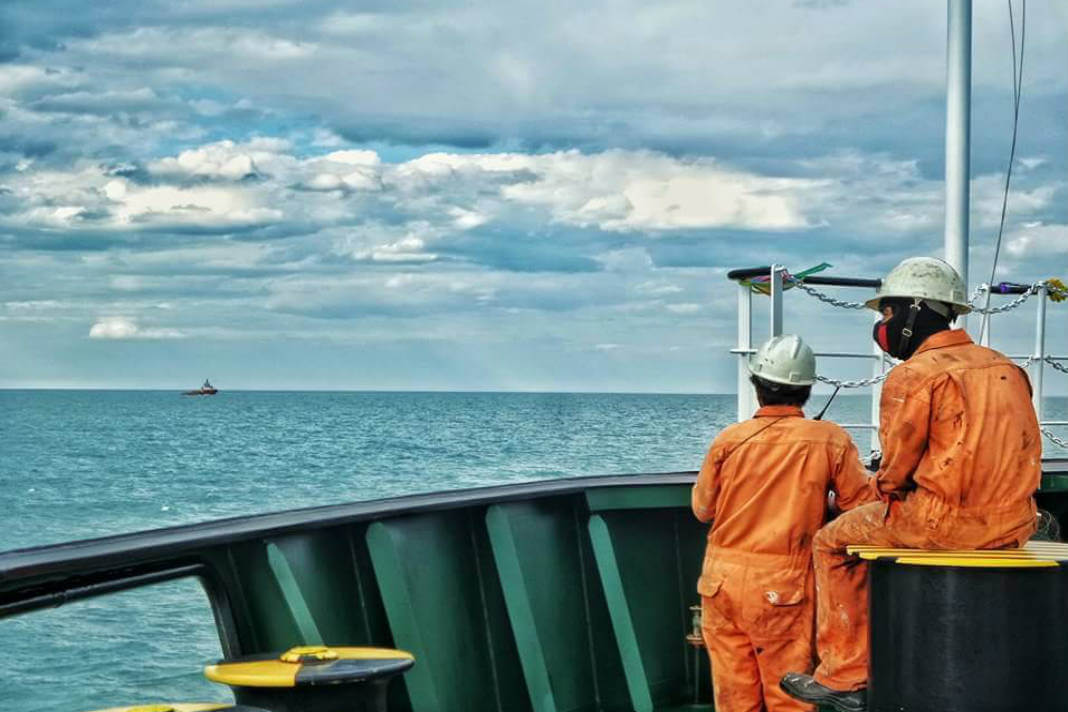
A maritime expert and Ambassador of the International Seafarers’ Welfare and Assistance Network (ISWAN), UK, Ladi Olubowale, has said Nigeria cannot achieve its ambition of becoming a leading maritime nation without making deliberate investments in seafarers, maritime leadership and human capital development.
Olubowale made the assertion in his message marking the 2026 Day of the Seafarer, celebrated globally on June 25 under the International Maritime Organisation (IMO) theme, “Carrying World Trade. Carrying the Risks.”
According to him, seafarers remain the backbone of global trade and national prosperity, noting that more than 80 per cent of global trade by volume is transported by sea.
He said while seafarers ensure the smooth movement of goods, energy resources, agricultural products and essential supplies across the world, their contributions often go unnoticed despite the risks and sacrifices associated with the profession.
“Ships may carry the cargo, but seafarers carry the future of maritime nations,” Olubowale stated.
He added: “No maritime nation has ever achieved maritime greatness without investing in its seafarers. The future of Nigeria’s Blue Economy will not be determined solely by the ships we acquire, the ports we modernise or the policies we formulate, but by the people we train, protect, empower and elevate to leadership within the maritime sector.”
The maritime stakeholder stressed that the success of Nigeria’s Blue Economy agenda would depend largely on the availability of skilled maritime professionals capable of creating value across shipping, offshore energy, fisheries, marine logistics, coastal tourism and maritime security.
He argued that countries such as Norway, Singapore, Greece, Japan and South Korea built their maritime success on sustained investments in maritime professionals rather than infrastructure alone.
“The lesson is clear. Ships alone do not create maritime nations. Ports alone do not create maritime nations. Policies alone do not create maritime nations. People do,” he said.
Olubowale called for increased investment in maritime education and training, including the modernisation of maritime institutions, expansion of simulation facilities, stronger certification systems and enhanced digital and green shipping competencies.
He also highlighted the persistent challenge of sea-time training opportunities for Nigerian cadets, describing it as a major obstacle to indigenous maritime manpower development.
“Every year, many Nigerian cadets complete their academic studies but struggle to obtain the sea-time experience required for certification and career progression. This challenge must be addressed through coordinated efforts involving government, regulators, shipowners and industry stakeholders,” he noted.
The former president of the African Shipowners Association (Nigeria) advocated the development of a comprehensive National Seafarers Development Strategy to align maritime education, sea-time opportunities, employment creation, welfare standards and leadership development.
He further emphasised the need to strengthen indigenous shipping capacity, arguing that seafarer development and shipping growth are inseparable.
“A nation without ships cannot effectively train seafarers. A nation without maritime jobs cannot retain maritime talent,” he said.
On welfare, Olubowale urged stakeholders to prioritise fair employment opportunities, decent working conditions, healthcare access, mental health support and career advancement for seafarers.
“As reflected in this year’s IMO theme, seafarers carry risks every day. Their wellbeing should not be viewed as a welfare issue alone; it is a strategic economic issue and a national competitiveness issue,” he stated.
He also advocated greater inclusion of experienced seafarers in leadership and policy-making positions within the maritime sector, saying maritime governance would be more effective when driven by professionals with practical sea-going experience.
Looking ahead, Olubowale expressed hope that maritime professionals, including master mariners, marine engineers, naval architects, maritime lawyers and shipping experts, would occupy a significant proportion of technical and strategic positions within the Federal Ministry of Marine and Blue Economy.
“A nation that seeks maritime leadership must deliberately build maritime leadership. The future of Nigeria’s maritime sector will be strongest when those who understand the sea and have served at sea are given meaningful opportunities to help steer the nation’s maritime destiny,” he said.
He urged policymakers, regulators, investors and industry stakeholders to use the Day of the Seafarer as a platform for reflection and action towards strengthening maritime human capital development.
According to him, Nigeria’s aspiration to become a leading maritime and Blue Economy powerhouse will only be realised through sustained investments in the training, welfare, empowerment and leadership development of its seafarers.
We’ve got the edge. Get real-time reports, breaking scoops, and exclusive angles delivered straight to your phone. Don’t settle for stale news. Join THISTIMES on WhatsApp for 24/7 updates →
Join Our WhatsApp Channel