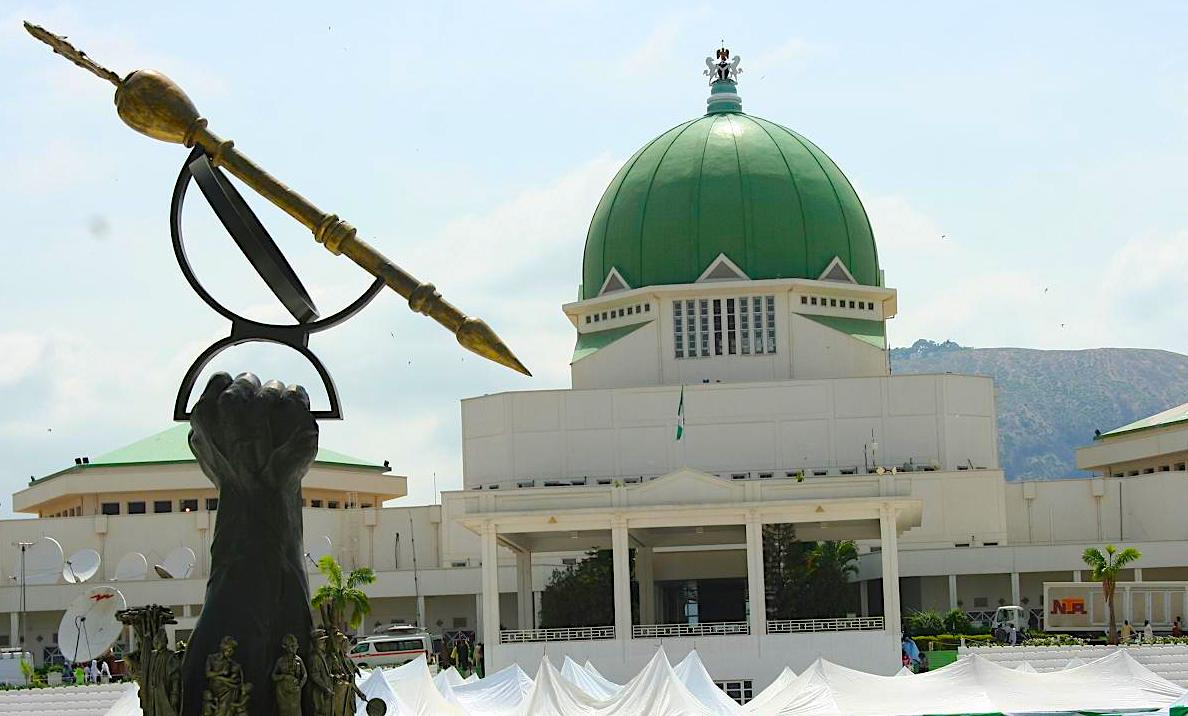
The National Assembly resumes plenary on Tuesday, with the Senate and the House of Representatives set to constitute a joint harmonisation committee to reconcile differences in their separately passed versions of the proposed State Police Bill.
The conference committee will review areas of divergence in the constitutional amendment bills approved by both chambers before producing a unified version for transmission to the 36 State Houses of Assembly, where approval by at least 24 legislatures is required before the amendment can be forwarded to President Bola Ahmed Tinubu for assent.
The House of Representatives passed its version of the bill on 10 June, while the Senate approved the Executive Bill transmitted by the President on 24 June.
Although both chambers support the creation of state police, their versions differ in scope and in the amendments required.
The Senate’s version contains 26 clauses, compared to the House’s 18. It also amends additional sections of the Constitution and introduces seven transitional provisions for the establishment of state police, alongside broader changes to the Second, Third and Fourth Schedules to the Constitution.
By contrast, the House made fewer constitutional alterations and did not include transitional provisions.
The Senate passed the bill after considering the report of its Committee on the Review of the Constitution, chaired by Deputy Senate President Barau Jibrin.
Senate President Godswill Akpabio announced its passage after more than two-thirds of senators present voted in favour through a manual voice and hand count. Eighty-seven senators attended the sitting, surpassing the constitutional requirement of a two-thirds majority needed to pass such an amendment.
Two-thirds of the Nigerian Senate, or 73 votes, is required for constitutional amendments.
Leading the debate on the bill, Senate Leader Opeyemi Bamidele (Ekiti Central) described the proposal as a critical response to Nigeria’s growing security challenges. The legislation seeks to establish a dual policing structure, allowing state police services to operate alongside the existing Federal Police Service.
Under the proposed framework, each state’s police service will be headed by a Commissioner of Police appointed by the governor and confirmed by the State House of Assembly.
While governors may issue lawful policy directives on public safety and order, the bill includes safeguards to prevent state police from being used against political opponents or critics except in accordance with the law.
The legislation also provides that a state Commissioner of Police cannot be suspended or removed except on the recommendation of the National Police Council and with the approval of two-thirds of the members of the State House of Assembly.
In addition, disputes over directives issued to state police may be referred to the appropriate Police Service Commission, while the courts retain oversight.
The bill further establishes State Police Service Commissions responsible for the appointment, promotion, discipline and oversight of officers, except for Commissioners of Police, whose appointments would require the involvement of the National Police Council.
To prevent abuse, the proposed law empowers the Federal Police Service to intervene temporarily in a state’s policing operations under clearly defined circumstances, including a breakdown of public order, administrative incapacity, gross violations of fundamental rights or threats to national security.
Any intervention must be authorised by the President, limited in scope and duration, and remain subject to judicial review.
The bill also bars existing regional and community security outfits, including Amotekun, Ebube Agu and Hisbah, from automatically transforming into state police services or exercising police powers, including the power to bear firearms, unless expressly authorised by the Constitution and an Act of the National Assembly.
Also, Deputy Speaker of the House of Representatives and Chairman of the House Committee on Constitution Review, Benjamin Kalu, said the harmonisation committee would be constituted immediately after the House resumes, expressing confidence that only minor drafting issues remain between the two versions.
According to him, the proposal enjoys broad national consensus following extensive consultations with the Executive, governors and other stakeholders.
“There is nothing fundamental. What remains is to cross the t’s and dot the i’s so that both chambers can produce a single version for transmission to the states,” Kalu said.
He added that President Tinubu had given full backing to the bill and expressed optimism that the harmonisation process would be concluded quickly, allowing immediate transmission to the state legislatures.
Support for the proposal has continued to grow, with the Conference of Speakers of State Houses of Assembly pledging to give the bill expeditious consideration once it is transmitted.
Lagos State Governor Babajide Sanwo-Olu has also declared that the state is prepared for state policing, saying Lagos would leverage the expertise of retired security professionals if the legislation becomes law.
Meanwhile, Senate Leader Opeyemi Bamidele has criticised opposition parties for politicising the debate over state police, insisting that the legislation is a national security initiative rather than a partisan project.
Responding to criticism from some opposition figures, Bamidele argued that the bill underwent extensive scrutiny in both chambers and secured bipartisan support.
“The proposal to create state police is one of urgent public importance and should not take a back seat because of anyone’s political aspirations,” he said.
He maintained that the Nigeria Police Force submitted recommendations that helped lawmakers incorporate accountability and oversight mechanisms to guard against abuse, adding that more than three-quarters of senators voted in support of the measure after detailed clause-by-clause consideration.
Following harmonisation, the unified bill will be transmitted to the 36 State Houses of Assembly, where approval by at least two-thirds of the legislatures will determine whether Nigeria moves closer to adopting a constitutional framework for state policing.
We’ve got the edge. Get real-time reports, breaking scoops, and exclusive angles delivered straight to your phone. Don’t settle for stale news. Join THISTIMES on WhatsApp for 24/7 updates →
Join Our WhatsApp Channel