By Muttaka Turaki Gujungu
There was a time when the silence inside the laboratories of the Jigawa Research Institute in Kazaure told a different story. The hum of scientific equipment had faded, opportunities for meaningful research had become scarce, and years of neglect had left their mark on a facility established to serve as a bridge between science and agriculture in one of Nigeria’s most agrarian states.
Today, the atmosphere is markedly different.
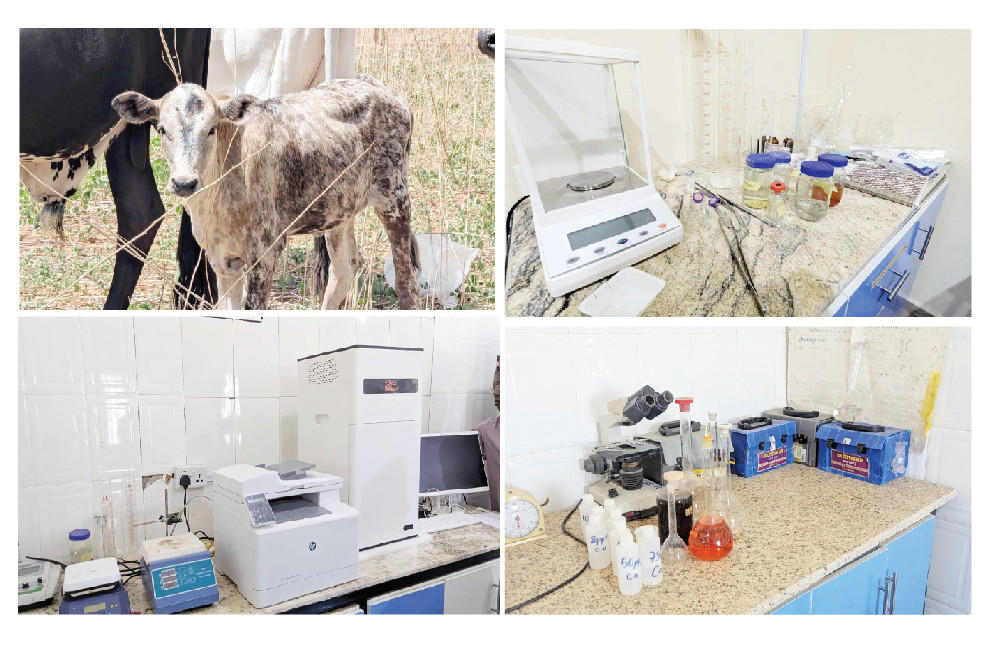
Researchers move between laboratories equipped with modern facilities. Experimental fields stretch across carefully managed plots. Students on industrial attachment gather around microscopes and laboratory benches. A constant supply of electricity powers equipment that once sat idle. In many ways, the story of the institute is one of revival—a story that mirrors the determination of scientists who refused to allow years of decline to define the future.
For Dr. Sulaiman Rufa’i Babura, the Director General of the institute, the journey has been both challenging and rewarding.
“The Jigawa Research Institute was established by the Jigawa State Research Institute Law No. 2 of 2003,” he recalled. “Its mandate is to promote agribusiness development through applied research and to transfer the technologies and innovations developed by our scientists for the benefit of Jigawa farmers.”
Situated about 231 kilometres from Dutse, the institute occupies a unique position in Nigeria’s scientific landscape. It remains the only research institute owned by a state government.
“This makes Jigawa State unique,” Babura said. “Most other research institutes are federally owned. Ours exists specifically to conduct research for the benefit of our people.”
Yet, uniqueness alone could not shield the institute from difficult years.
“Before the present administration, the institute had suffered from about sixteen years of inadequate infrastructure, low research output, and limited partnerships,” Babura said. “Equipment and facilities had deteriorated significantly.”
The picture he painted was one familiar to many public institutions—dilapidated laboratories, ageing infrastructure, and declining research capacity.
But change began to take shape in 2023.
“Since the coming of this administration, the institute has been repositioned as a centre of innovation and agricultural research,” he explained. “Substantial investments have been made in state-of-the-art laboratories and research infrastructure, creating an enabling environment for quality research and improved productivity.”
The transformation is visible throughout the premises. Six laboratories and sixteen offices have been completely renovated. New departments dedicated to Molecular Biology and Plant Pathology have been established, expanding the frontiers of scientific inquiry within the institute.
“As you have witnessed during your tour, the institute has experienced remarkable improvements,” Babura said.
Among all the achievements recorded over the past three years, one stands above the rest in his estimation.
“One of the most outstanding achievements is the installation of the 60 KVA solar power system,” he said.
For years, power supply had been a crippling challenge. By the time the present management assumed office, the institute had remained disconnected from the national grid for almost six years following the vandalisation and theft of electrical infrastructure.
“When we assumed office, research activities depended on unstable power,” Babura recalled. “Most of our scientific equipment and laboratory machines require stable electricity to function efficiently.”
Today, the institute enjoys electricity from three independent sources—a restored connection to the national grid, a 60 KVA backup generator, and a solar system powered by nearly one hundred panels and sixty batteries.
“Researchers can now work day and night without interruption,” he said. “This achievement has become a source of pride not only for the institute but also for the people of Kazaure and Jigawa State at large.”
But beyond infrastructure lies the real purpose of the institute.
In a state where agriculture remains the backbone of the economy and nearly eighty-five percent of the population depends on farming, the challenge has always been how to improve productivity and strengthen food security.
“One of our key responsibilities is to develop technologies that enhance agricultural productivity and transfer these technologies to farmers,” Babura explained.
The institute focuses on five mandate crops—rice, wheat, millet, sorghum, and hibiscus. Scientists are also involved in conserving indigenous and exotic germplasm, improving crop varieties, and developing techniques for preserving agricultural products.
Collaboration, Babura insists, has been central to these efforts.
“Research cannot operate in isolation,” he said. “Scientific advancement is best achieved through partnerships.”
Those partnerships now extend to institutions such as the Lake Chad Research Institute, the Institute for Agricultural Research at Ahmadu Bello University, the International Rice Research Institute, and Bayero University’s Centre for Dryland Agriculture.
The results are beginning to emerge.
One of the institute’s most celebrated breakthroughs is in rice production.
“Through collaboration with Contact Seeds in India, we have introduced hybrid rice varieties capable of producing up to eleven tonnes per hectare,” Babura said. “These varieties have performed exceptionally well under the climatic conditions of Jigawa State.”
He smiled while recounting the reaction of some of the institute’s foreign partners.
“Some of our Indian partners even remarked that the varieties perform better here than in India.”
Researchers have also made remarkable progress with Basmati rice, a variety once considered unsuitable for local conditions.
“Traditionally, Basmati rice has not been widely cultivated in Nigeria due to adaptation challenges,” Babura explained. “However, through our research efforts, we have demonstrated that it performs very well in Kazaure.”
Following successful trials, the programme has expanded to Hadejia, Ringim, Gwaram, and Guri.
Perhaps nowhere is the power of science more evident than inside the Molecular Biology Laboratory.
Date palm cultivation traditionally demands patience. Farmers often wait two decades before trees begin bearing fruit, and even then there is no certainty whether the trees are male or female.
“Through modern molecular technologies, we have been able to reduce the gestation period to about three to four years,” Babura said.
He continued, “Through molecular marker technology, DNA extraction, and PCR analysis, we can identify male and female seedlings when they are only two to three months old.”
The implications for growers are enormous.
“This breakthrough allows farmers to select female seedlings early and optimize their plantations for higher productivity,” he said.
The institute’s work extends beyond crops.
“We recognize that Jigawa State is one of the leading livestock-producing states in Nigeria,” Babura said.
To improve cattle breeds, scientists have embarked on artificial insemination programmes using exotic semen imported from South Africa.
“In 2024, we conducted about thirty artificial insemination procedures,” he said. “One of the pregnancies has already resulted in the successful delivery of a healthy calf.”
The programme has since expanded to private farms around Kazaure and neighbouring communities.
“Our ultimate goal is to produce animals with higher body weight, better milk production, and greater resilience to local environmental conditions,” he explained.
For Babura, however, perhaps the greatest investment is not in buildings or equipment but in human capital.
“We are committed to identifying and nurturing talented researchers within and beyond Jigawa State and supporting them to become world-class scientists,” he said.
The institute currently sponsors postgraduate students pursuing master’s and PhD programmes, while students from Kano, Katsina, Sokoto, and Jigawa continue to receive practical training in biotechnology, agronomy, soil, and mineral analysis.
Looking ahead, the Director General sees even greater possibilities.
One of the institute’s flagship initiatives is the Jigawa Soil Mapping Project.
“This project will help farmers understand the nature of their soils and determine the appropriate types and quantities of fertilizers required for optimum crop production,” he said.
Researchers are also working on what he describes as the “Jigawa Poultry Breed.”
“We hope to combine the resilience of local birds with the superior characteristics of exotic breeds,” he said. “The improved breed will deliver better meat yield and increased egg production while retaining the ability to thrive under local environmental conditions.”
Throughout the conversation, Babura returned repeatedly to one idea—the importance of practical science.
“We remain committed to developing practical, science-based solutions that will enhance food security, improve farmers’ livelihoods, and strengthen agricultural development in Jigawa State,” he said.
And perhaps that is the enduring story of the Jigawa Research Institute.
Not merely a story of renovated buildings or sophisticated equipment, but one of renewal itself. A story of how an institution that once struggled under the weight of neglect is finding new purpose through science, partnerships, and the quiet determination of men and women working in service of the soil and the millions whose lives depend on it.
– Gujungu is the Special Assistant to the Jigawa State Governor on Social Media.
We’ve got the edge. Get real-time reports, breaking scoops, and exclusive angles delivered straight to your phone. Don’t settle for stale news. Join THISTIMES on WhatsApp for 24/7 updates →
Join Our WhatsApp Channel