By Ejike Ejike, James Kwen and Samson Elijah, Abuja
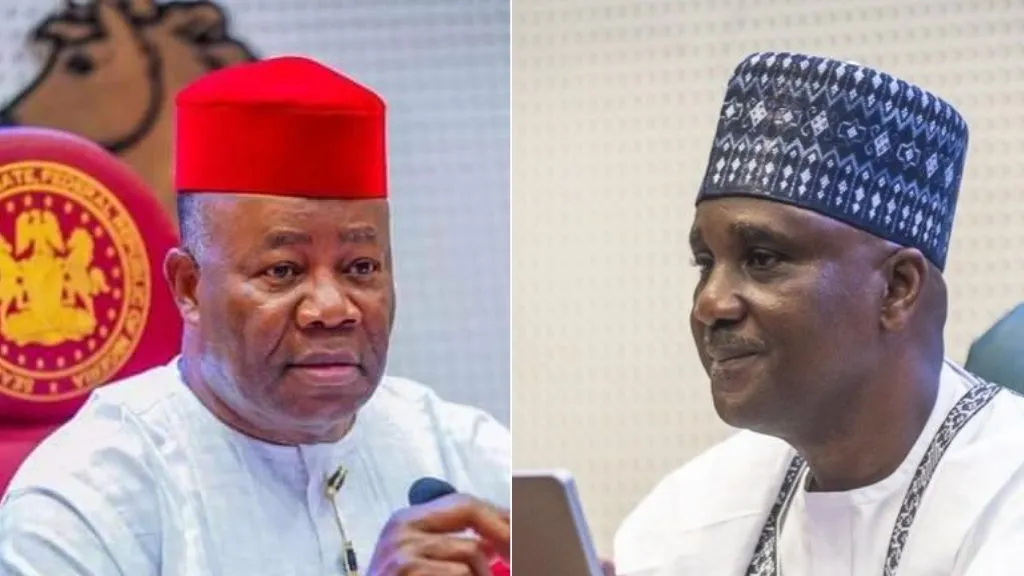
Speaker of the House of Representatives, Hon. Tajudeen Abbas, and Senate Leader Opeyemi Bamidele on Wednesday outlined constitutional, operational and financial safeguards they said are essential to ensuring the success of state police, insisting that no state should establish a police force without meeting nationally prescribed standards while its funding must be protected from political interference.
Speaking at the Security Roundtable of the 2026 National Assembly Open Week in Abuja, Abbas said the executive bill seeking to establish state police had anticipated concerns that governors or political actors could hijack state police formations and incorporated constitutional safeguards to prevent such abuse.
He said fears that state police could become “the private army of a governor or a political godfather” were legitimate but had been addressed in the proposed constitutional amendment.
“I understand the concern that many people bring to this discussion, and it is a reasonable one. It is the fear that the State Police could become the private army of a governor or a political godfather. The people who drafted this Bill had the same fear, and they answered it,” Abbas said.
According to him, the bill provides that a state’s Commissioner of Police would be appointed on the recommendation of the National Police Council and confirmed by the State House of Assembly, while removal would require a two-thirds majority of the Assembly and only for good cause.
He added that the Constitution would also empower the Federal Police to intervene temporarily where a state police service breaks down or is compromised, subject to strict legal conditions, written authorisation, notification to the governor and the National Assembly within 48 hours, and judicial oversight.
Abbas stressed that no state police service would begin operations until the State House of Assembly enacted the enabling law and the state met the minimum national standards prescribed by the National Assembly.
“A State Police cannot begin to operate until the State House of Assembly creates it by law and until it meets the national minimum standards set by the National Assembly. Until that time, the Federal Police will continue to serve that state,” he said.
He explained that the proposed law clearly separates responsibilities between the Federal Police Service and state police, with the Federal Police retaining responsibility for terrorism, border security, federal offences and policing the Federal Capital Territory, while state police would handle routine law enforcement within their respective states.
Abbas said the bill also establishes an independent State Police Service Commission with direct funding and prohibits the use of police powers for political, ethnic, religious or personal purposes.
Arguing that Nigeria’s centralised policing structure could no longer adequately address the country’s security challenges, Abbas said banditry, kidnapping, farmer-herder conflicts and attacks on schools require locally driven policing backed by local knowledge and accountability.
He, however, maintained that effective state policing must evolve gradually.
“First, the National Minimum Standards Act must come before the first State Police issues a single directive: standards first, structures after.
“Second, we should move step by step, State by State, learning as Germany and Canada learned, rather than switching on thirty-six new forces on the same day.
“Third, we must settle the question of money from the very beginning, whether through a dedicated policing fund, shared services or federal support tied firmly to standards,” he said.
The Speaker also urged lawmakers and stakeholders to address questions surrounding sustainable funding, inter-agency intelligence sharing, certification of state police services and the role of vigilante groups before the legislation is passed.
He commended President Bola Tinubu for transmitting the executive bill to the National Assembly, describing it as the first concrete presidential effort in three decades to establish state police.
Also weighing in, Senate Leader Opeyemi Bamidele said the proposed state police system must enjoy financial independence through a constitutional first-line charge to shield it from undue influence by governors, political actors, business interests and criminal organisations.
Bamidele, who is also vice chairman of the Senate Committee on the Review of the 1999 Constitution, acknowledged that public concerns over the possible misuse of state police were legitimate, given the experience of the regional police during the First Republic.
He said the National Assembly was incorporating safeguards to ensure state police remain professionally managed, financially independent and accountable.
According to him, lawmakers are proposing that the funding of state police be recognised as a first-line charge in the Constitution, similar to the funding arrangement for the judiciary.
“The Commissioner of Police and the State Police Service Commission must have a guaranteed source of funds provided for in the Constitution in a way that the police chief will not be subject to the whims and caprices of a state governor,” he said.
He explained that states would also be required to allocate a specified percentage of their annual budgets to policing to prevent governors from starving the institutions of funds.
Warning that financial dependence could undermine the effectiveness of state police, Bamidele said wealthy individuals, criminal groups and other vested interests could exploit the system if sustainable funding was not guaranteed.
“The business class can also abuse it. Some other organisations, even criminals or cabals, can abuse state police service because it is a question of ‘he who pays the piper dictates the tune,’” he said.
He added that the constitutional amendment seeks to move policing from the Exclusive Legislative List to the Concurrent Legislative List, enabling states to establish and operate their own police services alongside the Federal Police Service.
Other speaker at the roundtable also advocated broader security reforms.
House Leader Julius Ihonvbere called for the formal integration of traditional rulers and community-based organisations into Nigeria’s security architecture, arguing that they possess invaluable grassroots intelligence.
Former Chief of Defence Staff, Gen. Lucky Irabor (retd), urged greater investment in intelligence, stronger inter-agency collaboration and the responsible deployment of technology, saying intelligence must become Nigeria’s first line of defence against evolving security threats.
Kaduna State Governor Uba Sani advocated intelligence-led policing, integrated criminal databases, joint command centres and greater deployment of artificial intelligence, forensic science and biometric technologies to strengthen national security.
The Etsu Nupe and Chairman of the Niger State Council of Traditional Rulers, Brig.-Gen. Yahaya Abubakar (retd), endorsed the establishment of state police, saying a properly structured and adequately funded system would significantly improve community security.
Executive Secretary of the National Assembly Library Trust Fund, Henry Nwawuba, urged lawmakers to anchor security reforms on research, evidence and global best practices, while Secretary-General of the Conference of Speakers and Presidents of African Legislatures, Ambassador Dapo Oyewole, called for stronger collaboration among legislatures, governments, security agencies and citizens to address emerging security threats.
Also speaking, the Head of Development Cooperation at the UK’s Foreign, Commonwealth and Development Office, Cynthia Rowe, described the dialogue as a significant national conversation and welcomed the inclusion of civil society organisations in deliberations on the proposed legislation.
Security Experts Back Abbas’ Call For National Standards On State Police
Security experts have thrown their weight behind the call by the Speaker of the House of Representatives, Rt. Hon. Tajudeen Abbas, for nationally prescribed standards to guide the establishment of state police, describing the framework as a necessary safeguard against abuse, politicisation and uneven policing across the country.
The experts also supported Abbas’ proposal for a phased implementation of state police, arguing that a gradual approach would allow for proper institutional development, effective oversight and the resolution of operational challenges before nationwide adoption.
A security analyst and retired Commissioner of Police, Adewale Falaju, said a national framework would help ensure professionalism, uniform standards and effective coordination between federal and state policing institutions.
He warned that allowing states to operate under different recruitment, training and operational standards could create serious security challenges.
If every state operates under different recruitment, training and operational standards, it will create serious coordination challenges and could undermine national security. A common national benchmark is essential. This is where the national framework comes into play to ensure proper coordination,” Falaju said.
He added that a phased rollout would enable authorities to assess challenges, strengthen institutions and address weaknesses before expanding state police across the country.
Similarly, security consultant and Managing Director of Beacon Security and Intelligence Limited, Kabiru Adamu, said minimum national standards would help prevent the politicisation of state police and protect citizens’ rights.
“State police can strengthen community policing and improve local security, but there must be clear constitutional safeguards, independent oversight, and nationally accepted standards for recruitment, training, discipline and accountability,” he said.
Adamu noted that gradual implementation would also allow states to demonstrate the required institutional capacity and financial readiness before taking full responsibility for policing.
Public affairs analyst and security expert, Dr Ona Ekhomu, also backed the phased approach, saying it would reduce implementation risks and provide room for adjustments based on practical experiences.
“Nigeria should avoid rushing into a major security reform without adequate preparation. A pilot phase in states that meet clearly defined criteria would provide valuable experience before nationwide implementation,” Ekhomu said.
The experts’ positions align with Abbas’ argument that state police must not be established without national minimum standards, strong accountability mechanisms and safeguards to prevent the system from being hijacked by political interests.
We’ve got the edge. Get real-time reports, breaking scoops, and exclusive angles delivered straight to your phone. Don’t settle for stale news. Join THISTIMES on WhatsApp for 24/7 updates →
Join Our WhatsApp Channel