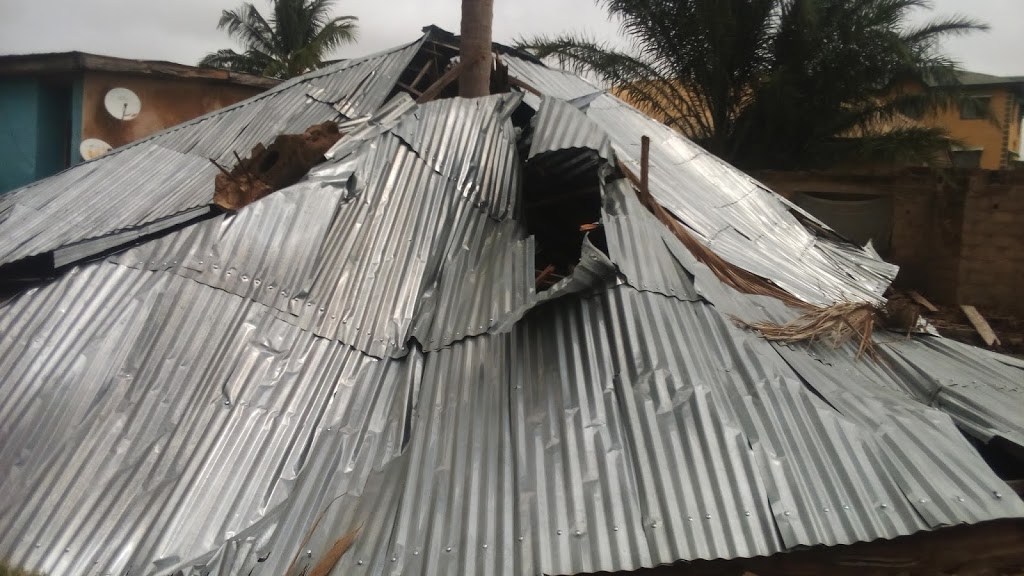
No fewer than 25,012 people have been affected by tropical windstorms and heavy rains across Yobe State since the onset of the 2026 rainy season, with seven persons killed and 209 others injured, according to the Yobe State Emergency Management Agency (SEMA).
Data obtained by Yobe Watch from SEMA showed that the disasters, recorded between 8 May and 13 July, affected 6,683 households across 13 of the state’s 17 local government areas.
The agency’s assessment indicated that 17,101 shelters and rooms were either damaged or destroyed, while the disasters displaced 67 households comprising 257 persons.
The affected local government areas are Bade, Bursari, Damaturu, Fika, Gujba, Gulani, Jakusko, Karasuwa, Machina, Nguru, Tarmuwa, Yunusari and Yusufari.
According to the report, the latest wave of windstorms and heavy rainfall between 3 July and 13 July alone affected an additional 5,105 households, representing 16,907 people, highlighting the worsening impact of severe weather across the state.
Bade Local Government Area recorded one of the highest levels of destruction after heavy rainfall and strong winds inundated Gashua town and surrounding communities.
The disaster affected 1,321 households, damaged 2,553 shelters and rooms, left 35 people injured, claimed two lives and displaced 31 households.
SEMA said floodwaters submerged residential areas while powerful winds ripped off rooftops and weakened mud houses, leaving many families without shelter and disrupting livelihoods.
The report also revealed that 21 public facilities sustained varying degrees of damage during the period under review.
The affected facilities include schools, hospitals, primary healthcare centres, markets, religious centres, telecommunication infrastructure and government buildings.
Among the damaged facilities are the NUJ Secretariat and Township Stadium in Damaturu, the Federal University Gashua, the General Hospital Yunusari, the Gulani Primary Health Care Centre, the Mohammed Inuwa Yahaya Modern Market in Ngalda, and several primary and secondary schools across the affected local government areas.
SEMA said it had been working with the National Emergency Management Agency (NEMA), the Northeast Development Commission (NEDC), Action Against Hunger, Plan International and other humanitarian organisations to provide relief to affected communities.
So far, 1,281 households in six local government areas have received assistance, including food items, shelter materials, hygiene kits and other non-food items.
Despite the interventions, the agency said thousands of affected families still require emergency shelter materials, food assistance, healthcare, water, sanitation and hygiene services, as well as support to rebuild damaged homes and public infrastructure.
The report noted that communities in Fika, Bade, Karasuwa, Bursari, Yunusari and Jakusko remain among the worst affected and require urgent humanitarian intervention.
SEMA called on the National Emergency Management Agency, the Northeast Development Commission, United Nations agencies, humanitarian organisations, the private sector and other development partners to complement the Yobe State Government’s response.
The agency also recommended strengthening early warning systems, scaling up public sensitisation on disaster risk reduction, rehabilitating damaged schools and health facilities, and conducting a comprehensive post-disaster needs assessment to support long-term recovery and resilience.
The findings underscore the growing humanitarian impact of increasingly severe weather events in Yobe State during the peak of the rainy season, with authorities warning that additional communities may be affected if the current weather pattern persists.
We’ve got the edge. Get real-time reports, breaking scoops, and exclusive angles delivered straight to your phone. Don’t settle for stale news. Join THISTIMES on WhatsApp for 24/7 updates →
Join Our WhatsApp Channel