By CHIKA IZUORA, SIVOWAKU ABIODUN, OLUMIDE OJUOKAIYE
Petrol prices in Nigeria look set to rise after crude oil topped $100 a barrel, tightening supplies and pushing up landing costs, industry sources said Friday. Major depots are reporting dwindling stocks and marketers are holding talks to agree new retail rates.
However, industry bodies have urged caution against speculation while stakeholders assess the likely extent of any price adjustment.
LEADERSHIP findings showed that key marketing groups are in close conversations to determine price variations and actual selling price.
No group was able to make predictions as to how far the price adjustment could lead to.
According to Dr Billy Gillis-Harry, the the national president of PETROAN, an umbrella body that represents the owners and operators of filling stations and petroleum retail outlets across Nigeria, a meeting of the group with some stakeholders on Friday, has provided a little more insight as to how to adjust to the situation.
Gillis-Harry, said armchair prediction should not be used to evaluate the impact of the rise of crude oil in the international market.
Already queues built up in most petrol stations in Lagos as the pump price moved up to between N1,290 and N1, 300.
A major marketer confirmed to LEADERSHIP that it received a vessel of imported petrol on Thursday when the price of crude was below $100 a barrel.
The marketer said with the sudden rise in crude prices the price of its imported petrol would certainly be increased to be able to replace stock.
Both the marketer and Gillis-Harry said it is usually a marketing strategy to proposition prices in anticipation of any increase in price of crude.
Our source said that since the crude price has risen to $100 per barrel, landing cost would inflate domestic selling price of petrol and this may rob on the public.
“Depots are drying up and if import apathy continues then the price will escalate beyond the purchasing power of Nigerians” he warned.
Our team of reporters who monitored the situation observed that queues resurfaced in Lagos following overnight petrol pump price adjustment by marketers.
Motorists travelling along the Lagos-Ibadan Expressway inward Lagos are paying varying prices for Premium Motor Spirit (PMS), with pump prices differing from one community to another.
Checks along the corridor showed that independent marketers in Warewa, Arepo and Magboro are dispensing petrol between N1,200 and N1,300 per litre depending on the outlet and product availability.
At Julanky Filling Station in Arepo petrol was selling at N1,300 per litre placing it among the higher-priced retail outlets on the axis, while some competing stations in Magboro and Warewa are offering the product at within the N1270 to N1,300 rates to attract motorists.
There is a slight price disparity which reflects the ongoing competition among the marketers, with varying depot acquisition costs and logistics expenses, despite recent adjustments in wholesale petrol prices.
Ardova Plc, along airport access road, is selling fuel at N1,290 per litre. The price is the same to that of the two Conoil filling stations at National, Ikeja along, which also retail at N1,290 per litre.
Oil climbed above $100/bbl for the first time in two months after Iran-backed Houthi militants said they attacked two Saudi Arabian tankers in the Red Sea, raising fresh concerns about global crude supplies as the Middle East conflict continues to escalate.
The attacks open a new front in a conflict that has already disrupted shipping through the Strait of Hormuz, the critical gateway for oil exports from the Persian Gulf. The Red Sea has served as an alternative route for some Saudi exports during the Hormuz disruptions, increasing concerns that prolonged attacks could further tighten global supplies.
The market is also contending with repeated attacks on the Caspian Pipeline Consortium (CPC) terminal on Russia’s Black Sea coast, which handles most of Kazakhstan’s crude exports, Oilprice.com reports.
Together, the disruptions have heightened fears of a broader supply squeeze at a time when global inventories remain relatively low.
“Round 2 of the military conflict is going to be broader than round 1,” Bob McNally, president of Rapidan Energy Group and a former White House official, said in a Bloomberg Television interview. “The risks are great, not only to shipping, but also to energy infrastructure.”
Brent crude gained roughly 8 per cent, extending its monthly rally to more than 35%, while physical crude markets also strengthened. Dated Brent, the benchmark for physical cargoes, climbed above $105/bbl for the first time since late May, and diesel futures reached their highest level since early April.
President Donald Trump also signaled the possibility of additional military action against Iran, telling Axios he is considering a “massive attack” larger than previous strikes. Analysts warn that continued escalation could push crude prices even higher, with some forecasting Brent could exceed $120/bbl if disruptions persist.
“The focus now shifts to Saudi Arabia’s response,” said Rebecca Babin, senior energy trader at CIBC Private Wealth Group. “While barrels can reroute via Suez, it’s a less efficient solution requiring smaller ships and longer voyages.”
Market indicators continue to reflect tightening supply conditions. Brent’s prompt timespread has widened to more than $6/bbl in backwardation, signaling strong demand for immediate crude deliveries, while premiums for Middle Eastern crude grades have also increased sharply.
At the same time, supply alternatives are becoming more limited. U.S. Strategic Petroleum Reserve inventories have declined significantly during the conflict, while crude inventories at the Cushing, Okla., delivery hub remain near operational minimum levels. Some tankers have already begun avoiding the Bab el Mandeb Strait at the southern end of the Red Sea, forcing longer and potentially more expensive voyages for shipments to Asia, although some vessels continue to transit the route despite the heightened security risks.
Constructive criticism should always be welcomed, as it helps improve public policy. However, criticism should be based on evidence rather than misinformation or social media speculation.
Kebbi’s rich cultural heritage deserves to be understood rather than misrepresented. Every tradition should be examined with fairness, wisdom, and factual evidence, not through mockery, propaganda, or stereotypes.
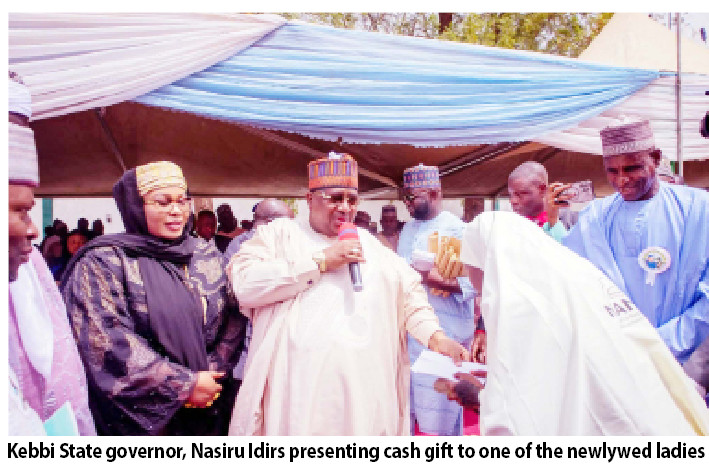
As preparations continue for another round of community marriages in Kebbi State, I commend His Excellency Governor Nasir Idris, Her Excellency Hajiya Nafisa Idris, the Nanas Foundation, and all those who have contributed to making the initiative possible.
Let us choose understanding over assumption, knowledge over ignorance, and unity overdivision. By strengthening families, preserving our cultural values, and remaining guided by the noble teachings of Islam, we can continue building stronger communities and a more prosperous Kebbi State.
May Allah (SWT)grant us wisdom, strengthen our families, bless our communities, and continue to grant Kebbi State and Nigeria peace, unity, and prosperity. Ameen.
We’ve got the edge. Get real-time reports, breaking scoops, and exclusive angles delivered straight to your phone. Don’t settle for stale news. Join THISTIMES on WhatsApp for 24/7 updates →
Join Our WhatsApp Channel