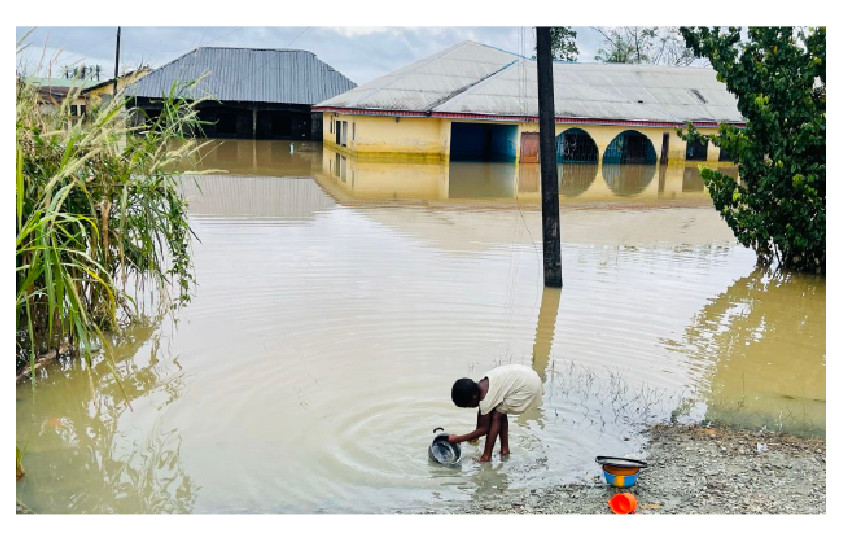
As Nigeria enters the peak of the rainy season, cholera is once again spreading through vulnerable communities, fuelled by flooding, weak sanitation systems and overstretched health infrastructure.
Public health experts warn that the country is facing a familiar but worsening cycle, where preventable outbreaks escalate rapidly whenever heavy rains overwhelm already fragile systems.
In one of the most severe ongoing outbreaks, international medical humanitarian organisation Médecins Sans Frontières (MSF) reports a rapid surge in suspected cholera cases in Borno State, where health facilities are under intense pressure.
In Maiduguri, MSF said more than 7,000 people have fallen ill since early May 2026, with cases rising sharply across multiple communities.
As of 7 June 2026, the Borno State Ministry of Health had recorded 7,850 suspected cholera cases across 14 Local Government Areas (LGAs) and 50 wards, alongside 74 deaths reported in health facilities and communities.
The Borno outbreak reflects broader national vulnerabilities that intensify during periods of heavy rainfall.
For public health expert, Dr Ozy Okonokhua, the recurring outbreaks are neither surprising nor inevitable. Rather, they are symptoms of deeper environmental and structural challenges that leave millions of Nigerians vulnerable year after year.
“The truth of the matter is that globally, Africa is usually the hardest hit when it comes to cholera outbreaks. One of the major reasons for the persistent recurrence is that our vulnerabilities are both environmental and structural,” he said.
According to Okonokhua, seasonal flooding and heavy rainfall create ideal conditions for cholera transmission.
He explained that intense downpours often overwhelm drainage systems, causing floodwaters to spread human waste from damaged pit latrines and open defecation sites into surrounding communities.
“When poor drainage overflows, faecal matter is exposed and washed into the environment. These contaminants eventually find their way into water sources used by communities for drinking and domestic purposes,” he said.
He told LEADERSHIP Weekend that this contamination fuels the spread of Vibrio cholerae, the bacterium responsible for cholera, which is transmitted through contaminated food and water.
Beyond seasonal factors, Okonokhua pointed to Nigeria’s longstanding challenges in water, sanitation and hygiene (WASH) infrastructure.
Despite public awareness campaigns over the years, many communities still lack access to safe drinking water, forcing residents to rely on unsafe sources.
“We have not fully imbibed the culture of water, sanitation and hygiene, and in many places the infrastructure is simply not there,” he noted, adding that the lack of reliable pipe-borne water means households often consume untreated water, increasing the risk of infection.
“Even when people want to do the right thing, safe water is not always available. Maintaining proper sanitation becomes difficult under such conditions,” he said.
He also identified population congestion as another factor contributing to recurring outbreaks, particularly in communities affected by insecurity and displacement.
According to him, years of insurgency and communal conflicts have forced thousands of people to leave their homes and seek refuge in safer areas, resulting in overcrowded settlements where access to water and sanitation facilities is limited.
“When people are concentrated in one location, especially where infrastructure is inadequate, the risk of cholera transmission increases significantly,” Okonokhua explained.
He noted that densely populated communities often experience higher transmission rates because contaminated water sources are shared by large numbers of people, while infections spread more rapidly through close human contact.
While government investment is critical, the expert stressed that individual actions can significantly reduce the risk of infection.
We’ve got the edge. Get real-time reports, breaking scoops, and exclusive angles delivered straight to your phone. Don’t settle for stale news. Join THISTIMES on WhatsApp for 24/7 updates →
Join Our WhatsApp Channel