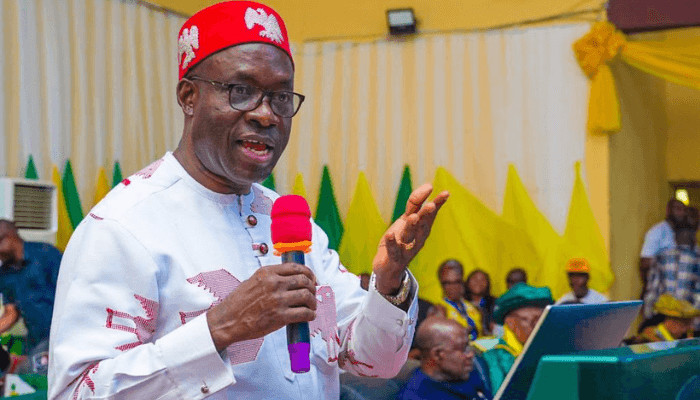
A former spokesman of the Nigerian Air Force, Group Captain Sadeeq Shehu (retd.), has backed President Bola Tinubu’s decision to expand the Nigerian Army but warned that the proposed timeline for establishing four new divisions is unrealistic.
Speaking on ARISE News on Monday, Shehu said although the expansion plan was well-intentioned, creating fully operational military divisions within a few months was practically impossible.
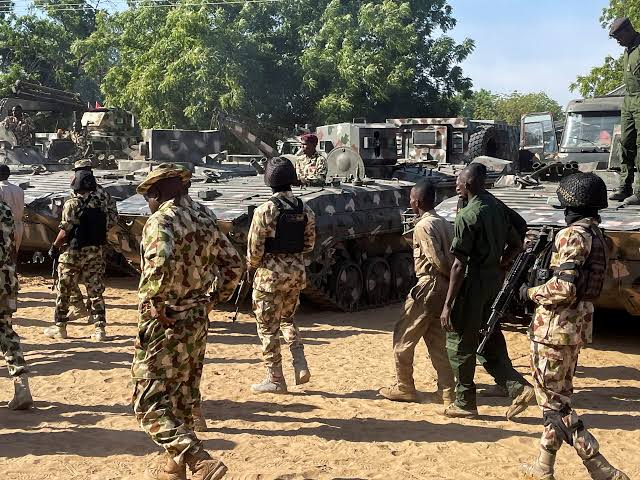
His comments come days after President Tinubu approved the expansion of the Nigerian Army from eight to 12 divisions, with four new formations to be established in Makurdi, Ilorin, Jalingo and Benin City.
The President also authorised the recruitment of 28,000 additional personnel as part of efforts to strengthen the country’s security architecture.
Reacting to the development, Shehu said while announcing the creation of military formations could be done by presidential directive, building combat-ready divisions required substantial time, personnel, equipment and logistics.
“With due respect, it is a very good plan, but the timeline is not realistic,” he said.
“We were given a timeline that the first three divisions will come on stream by the end of September, which is just two months away, while the last one is expected by December. It is very easy by presidential fiat to say I have established a division, but to have a ready division, or even a ready brigade or battalion, within three or five months is barely possible.”
He explained that appointing a General Officer Commanding (GOC) and setting up a divisional headquarters did not automatically translate into a fighting formation.
“You may appoint a GOC and establish a headquarters, but you are not going to have a division ready to fight within three months,” he added.
The retired officer also questioned how the planned recruitment of 28,000 additional personnel would fit into the expansion, noting that a standard army division typically requires between 15,000 and 20,000 officers and soldiers.
He suggested that the military might instead be considering a reorganisation of existing formations rather than creating entirely new ones.
“My understanding is that we may not really be talking about creating entirely new divisions. Perhaps what is being considered is moving existing units into new formations. But if those existing units are already below their authorised strength, then you are simply diluting the available manpower and equipment,” he said.
Shehu urged the federal government to first conduct a comprehensive assessment of the Armed Forces’ operational challenges before embarking on the expansion.
According to him, authorities should determine whether the military’s greatest needs are additional personnel, better equipment, improved serviceability or enhanced operational capacity.
“We should first do a threat analysis and identify the existing gaps. Is the problem lack of personnel? Is it equipment? Is it serviceability? Only after analysing the problem should we determine whether we need additional divisions or simply strengthen the existing brigades and battalions,” he stated.
He further noted that the Nigerian Army already had several brigades approved under its 2016 Order of Battle that had yet to be operationalised, suggesting that fully equipping and activating those formations could be a more practical approach.
The retired Air Force officer also expressed concern over funding, pointing to recent discussions at the National Assembly indicating that less than five per cent of the Army’s allocation this year was earmarked for equipment procurement.
He stressed that establishing a military formation involves much more than constructing buildings or appointing commanders.
“A battalion is not just a building. It is not just a commander. You need equipment, personnel, engineers, signals officers and other specialists to make it operational,” he said.
“It is like putting up a signboard at an airstrip and calling it an international airport. It doesn’t work like that.”
Last week, the Presidency announced that President Tinubu had approved the creation of four new army divisions in Makurdi, Ilorin, Jalingo and Benin City, increasing the total number of divisions from eight to 12.
According to a statement by the President’s Special Adviser on Information and Strategy, Bayo Onanuga, the expansion is part of the administration’s efforts to strengthen Nigeria’s security architecture through increased recruitment, acquisition of military hardware, improved troop welfare and enhanced operational readiness.
We’ve got the edge. Get real-time reports, breaking scoops, and exclusive angles delivered straight to your phone. Don’t settle for stale news. Join THISTIMES on WhatsApp for 24/7 updates →
Join Our WhatsApp Channel