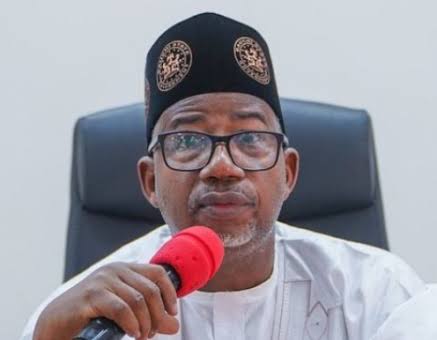
Bauchi State Governor, Senator Bala Mohammed, has said that meaningful development cannot be achieved in an atmosphere of mutual distrust, division and conflict, stressing that sustainable progress thrives only where harmony, justice and peaceful coexistence prevail.
The governor also called on religious and traditional leaders to reject divisive politics and play leading roles in ensuring violence-free elections in 2027.
Governor Bala stated this on Thursday at the 9th Interfaith Conference held at the Ahmadu Bello International Confere7nce Centre, Bauchi. The conference, themed “Non-Violent Elections: The Role of Faith and Traditional Leaders in Nigeria,” was organised by the Interfaith Dialogue Forum for Peace (IDFP) in collaboration with the International Dialogue Centre.
Represented by his Principal Private Secretary (PPS), Alhaji Hashimu Yakubu Kumbala, the governor said both Islam and Christianity uphold the sanctity of human life, love for one another and care for the vulnerable.
“Unfortunately, we often pay more attention to our differences than to the many values we share. When hunger strikes, it does not distinguish between Muslims and Christians. When poverty knocks, it does not ask about our faith,” he said.
He urged Nigerians to embrace the true spirit of interfaith collaboration by working together to build a peaceful, united and prosperous society where every citizen, regardless of religion, ethnicity, culture or political affiliation, can contribute meaningfully to national development.
The governor said practical steps must be taken to strengthen peace at the grassroots, urging religious and community leaders to avoid inflammatory rhetoric and instead promote dialogue, understanding and reconciliation.
“We must encourage patience, restraint and wisdom in resolving disputes. It is also important to establish effective early warning and response mechanisms within our communities where youths and elders from different faiths meet regularly to discuss emerging issues and resolve misunderstandings before they escalate into conflict,” he said.
He further advocated joint community development initiatives, including healthcare, education and other social intervention programmes that benefit all citizens irrespective of religious affiliation, noting that such partnerships would deepen trust and strengthen national unity.
Governor Bala said his administration had continued to invest in peacebuilding through workshops, seminars and capacity-building programmes for religious and community leaders, adding that the government had also prioritised community development and environmental improvement as part of its peace agenda.
Speaking on the peace award presented to him by the Interfaith Dialogue Forum for Peace, the governor described it as a recognition of the collective commitment of the people of Bauchi State to peaceful coexistence.
He thanked the organisers for the honour and assured them that his administration would continue to consolidate the gains recorded in promoting peace across the state.
He also appealed to traditional rulers, religious leaders, community stakeholders, Christians and Muslims alike to continue working together in the interest of national unity and peaceful coexistence.
Delivering the keynote address, Dr. Abdullahi Abubakar Lamido of the International Institute of Islamic Banking and Finance, Bayero University Kano, said democracy should be judged by how citizens manage their disagreements rather than merely by the conduct of elections.
“A lost vote can be replaced. A lost election can be contested. But a lost life can never be regained. Democracy should serve as an instrument for the protection of human life,” he said.
Dr. Lamido argued that peaceful elections are fundamentally a moral issue rather than merely a security concern.
“Before violence appears on the streets, it first appears in the hearts. Religious leaders must help build public conscience around the fear of God, tolerance, compassion, mercy and mutual understanding,” he said.
He identified six Qur’anic principles for democratic conduct as justice, consultation, human dignity, trust, verification of information and reconciliation, while urging politicians and their supporters to shun hate speech, verify information before sharing it and accept election outcomes in good faith.
“When history remembers tomorrow’s elections, may it remember how many lives were protected, not just how many votes were counted,” he added.
Also speaking, Rev. Dr. Zaka Ahuche of the Theological College of Northern Nigeria warned religious and traditional leaders against allowing themselves to be used to promote division and conflict.
Using the parable of three cows betrayed one after another to a lion, he lamented the erosion of trust among Nigerians who had previously coexisted peacefully across religious divides.
“Violence knows no religion. A bomb knows no ethnicity. Choose wisely and play your role well,” he said.
The conference honoured Governor Bala Mohammed and his wife, Hajiya Aisha Bala Mohammed, with peace awards in recognition of their contributions to sustaining peace and interfaith harmony in Bauchi State.
The event ended with a renewed commitment by stakeholders to deepen dialogue, while organisers announced plans to hold town hall meetings across the state to rebuild trust among youths, religious groups and traditional
institutions ahead of future elections.
We’ve got the edge. Get real-time reports, breaking scoops, and exclusive angles delivered straight to your phone. Don’t settle for stale news. Join THISTIMES on WhatsApp for 24/7 updates →
Join Our WhatsApp Channel