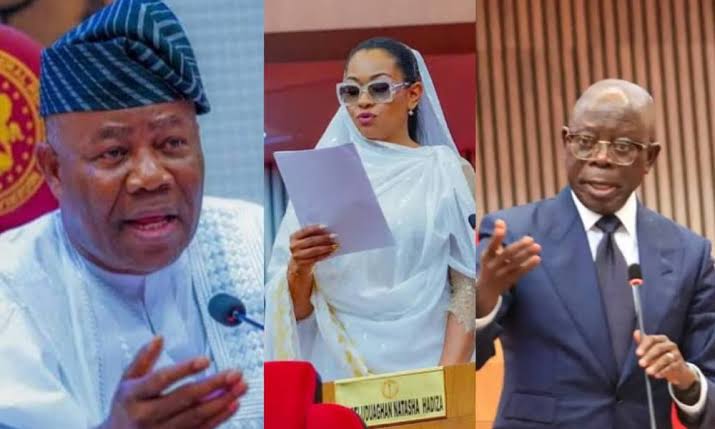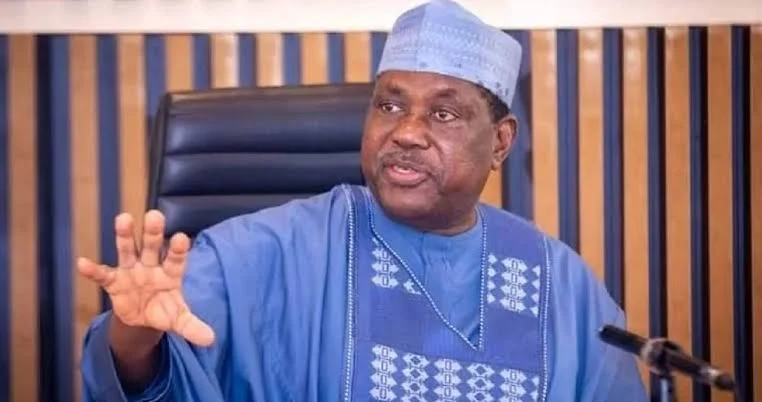
The Secretary to the Government of the Federation (SGF), Senator George Akume, has reaffirmed the federal government’s commitment to constitutional democracy, saying the administration of President Bola Tinubu neither seeks nor supports a one-party state.
Akume also said the government would deepen consultations with the Catholic Bishops’ Conference of Nigeria (CBCN), other faith-based organisations and relevant stakeholders, stressing that sustained engagement is critical to promoting peace, national unity and development.
In a personally signed statement following the recent meeting between President Tinubu and the leadership of the Catholic Bishops’ Conference of Nigeria, the SGF said the government remains open to constructive criticism and honest counsel while pursuing policies aimed at addressing Nigeria’s economic and security challenges.
He noted that the meeting with the Catholic Bishops was candid, respectful and constructive, covering issues including insecurity, economic hardship, public services, education, electoral credibility, political pluralism and religious freedom.
“The Office of the Secretary to the Government of the Federation will continue consultations with the leadership of the Catholic Bishops’ Conference, other faith-based organisations and relevant stakeholders on the issues raised during the meeting and on areas where greater collaboration can advance the national interest,” Akume said.
He described the Catholic Church as one of Nigeria’s foremost development partners, acknowledging its contributions to education, healthcare, humanitarian services, peacebuilding and moral leadership.
According to the SGF, many of Nigeria’s challenges can only be addressed through collaboration among government, faith communities, traditional institutions, civil society organisations, the private sector and citizens.
“Constructive engagement between government and these institutions is not only welcome but essential,” he stated.
On the economy, Akume acknowledged the hardship facing many Nigerians but described it as temporary, insisting that the administration’s reforms were necessary to address long-standing structural weaknesses, restore macroeconomic stability and rebuild investor confidence.
He cited ongoing investments in rail transportation, the Sokoto–Badagry and Lagos–Calabar superhighways, nationwide road rehabilitation, agricultural support programmes, electricity reforms, healthcare upgrades and regional development commissions as evidence of the government’s commitment to economic transformation.
The SGF said official economic indicators showed improving macroeconomic fundamentals, including greater foreign exchange stability, moderating inflation and renewed investor confidence.
He added that programmes such as the Student Loan Scheme (NELFUND), Social Investment Programmes, the Nigerian Consumer Credit Corporation (CreditCorp), Conditional Cash Transfers and support for business start-ups were designed to ensure that the benefits of the reforms reached ordinary Nigerians.
On security, Akume admitted that the true measure of government performance remained the safety of citizens, noting that every life lost to terrorism, banditry, kidnapping and other violent crimes was regrettable.
He said the administration had continued to strengthen Nigeria’s security architecture through the creation of four new Army divisions in Benue, Kwara, Taraba and Edo states, as well as reforms in intelligence coordination, logistics, recruitment, technology and personnel welfare.
According to him, the establishment of the Office of Homeland Security further demonstrates the government’s commitment to improving internal security.
Addressing concerns over Nigeria’s democracy, Akume reaffirmed the administration’s commitment to the rule of law, political pluralism and credible elections.
He pointed to the registration of 21 political parties by the Independent National Electoral Commission (INEC) as evidence that Nigeria’s democratic space remains open and competitive.
“The federal government neither seeks nor supports a one-party state,” he said, adding that President Tinubu’s administration would continue to respect the constitutional independence of INEC and provide the commission with the resources required to discharge its responsibilities.
Akume maintained that while the government and the Catholic Church might differ on certain policy issues, both remained united in their desire to build a peaceful, prosperous and inclusive Nigeria.
“Our diversity is our source of strength. In spite of many, we are one people,” the SGF stated.
We’ve got the edge. Get real-time reports, breaking scoops, and exclusive angles delivered straight to your phone. Don’t settle for stale news. Join THISTIMES on WhatsApp for 24/7 updates →
Join Our WhatsApp Channel