Nigeria would have spent a staggering N53 trillion on petrol subsidy by now, with the naira potentially crashing to N3,500 to the dollar, had the federal government failed to remove the subsidy regime and unify the exchange rate.
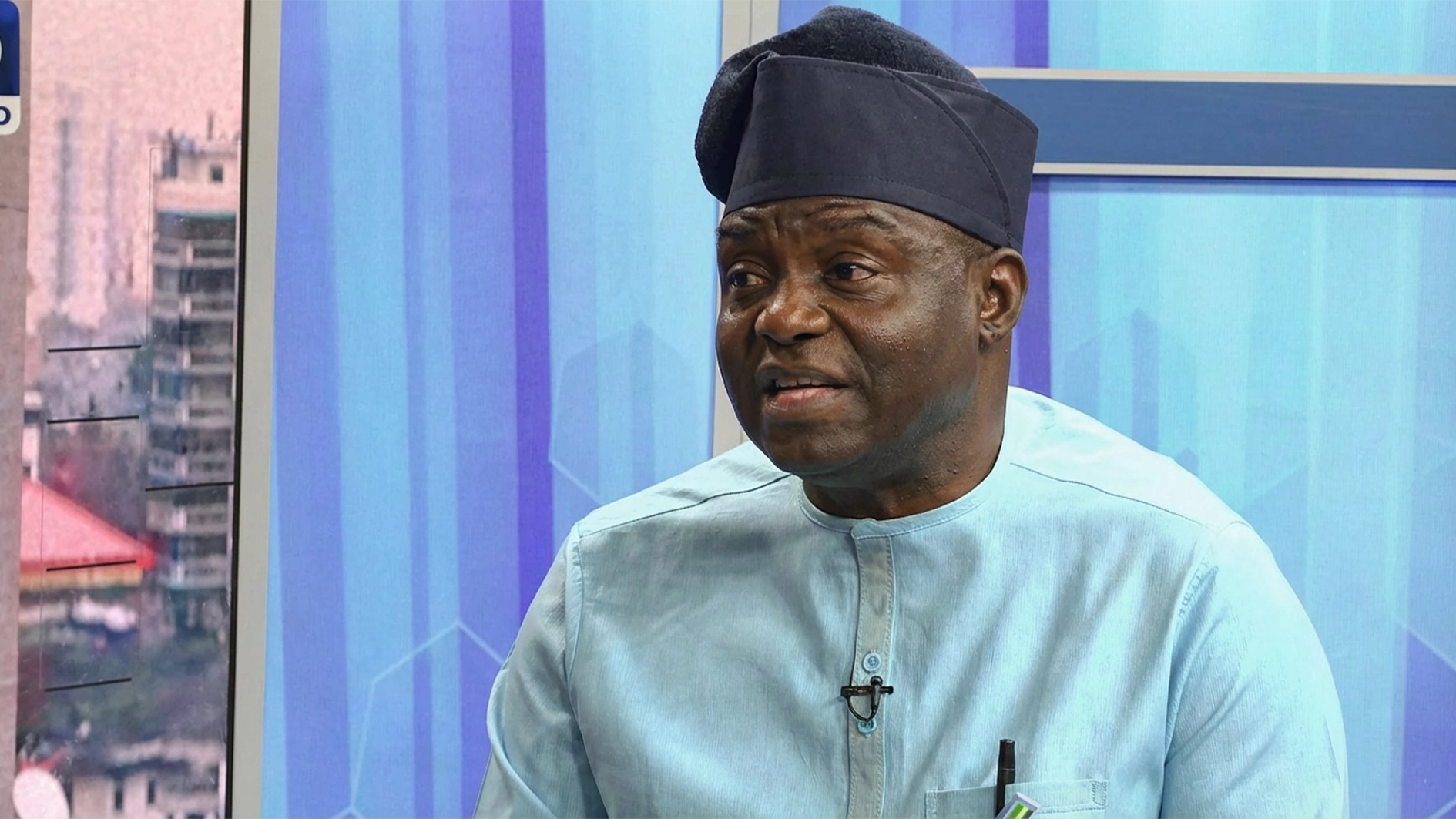
The executive chairman of the Nigeria Revenue Service (NRS), Dr Zacch Adedeji, made this claim in an interview on Channels Television on Sunday.
Adedeji further stated that the lives of Nigerians were getting better as the country’s balance sheet showed strong signs of recovery and accelerated growth following a series of “painful” reforms implemented by President Bola Tinubu.
According to him, the decision to remove the fuel subsidy, although painful in its initial stages, was a courageous one, arguing that Nigeria had reached “the bottom” of its economic challenges when President Tinubu took the decision.
“At that time we were at the lowest point. Actually, we’d reached the bottom, and if Mr. President had not taken that decision at that time, only God knows where we would have been now,” he said.
According to him, the scale of the potential subsidy burden had become unsustainable, particularly against the backdrop of rising global oil prices and geopolitical tensions.
“The subsidy today would have been N53 trillion if Mr. President had not removed it, given what is happening in Iran, given what is happening globally, and the total budget of Nigeria today is N63 trillion,” he said.
Adedeji added that maintaining the subsidy regime would have meant committing a substantial portion of the country’s total budget to subsidising petrol.
He also warned that the naira would have weakened significantly had the subsidy regime remained in place.
“The exchange rate today would have been naira at N3,500 to a dollar if that had not been done,” Adedeji said.
Attributing the positive development to Tinubu’s economic management acumen and doggedness in implementing his reforms under the Renewed Hope Agenda, the NRS chairman said the administration came into office facing “four mutually reinforcing distortions: a fiscally unsustainable fuel subsidy regime, an opaque forex system that discouraged investment, an underperforming oil sector, and a tax base far below its potential compared to the economy.”
But with the reforms and after the initial economic pains, the NRS boss said all indices now pointed to a significant recovery, evident in retreating inflation rates, the balance of payments swinging from deficit to surplus, the country’s first-ever net petrol exports, a doubling of tax collections in nominal terms and the reshaping of the country’s productive base.
An internal NRS report listing the benefits of economic stability said the Nigerian Exchange (NGX) had grown from a market capitalisation of N30.36 trillion in 2023 to N161 trillion in 2026, creating wealth for millions of Nigerians who invest in the stock market.
The NRS boss noted that, contrary to the perception that more people were getting poorer, the growth recorded on the NGX had created more millionaires in the country.
“The market capitalisation was N30 trillion. Today it is N150 trillion. What does that mean? Shareholders, the common shareholder. These are companies listed on the stock exchange, and they are getting richer. We’ve created more than 900,000 millionaires based on this,” he said.
Noting that Nigeria’s poverty level would have tripled if the reforms had not been implemented, Adedeji said, “if you remember where we are coming from, if we had not done what we’re supposed to do, possibly double or triple of that population will have gone to poverty. And I’m telling you that progress is what we should measure.”
The NRS report noted that tax collections more than doubled from N12.3 trillion in 2023 to N27.1 trillion as of July 2026, following the “digitisation of tax systems, four new tax reform laws, the transformation of the revenue service and an executive order that closed loopholes in the system”.
It stated that Nigeria’s debt-to-GDP ratio, which had been rising for years, is now falling as a result of economic growth, which increased from 2.74 per cent in 2023 to 3.8 per cent in the first half of 2026, while external reserves rose from an unrestricted $3.99 billion in 2023 to a 17-year high of $51.9 billion as of July 2026.
At the same time, the country’s balance of payments moved from a $3.34 billion deficit to a $2.38 billion surplus in the first quarter of 2026, according to the report.
It noted that Nigeria’s trade position had undergone an equally striking turnaround. The country moved from a marginal trade surplus of about N44.7 billion to a N7.55 trillion surplus in the first quarter of 2026.
The composition of exports is also beginning to change, it pointed out. Crude oil remains dominant, but exports of other oil products rose 51 per cent year-on-year to N6.78 trillion in Q1 2026.
Annual capital importation increased from $3.9 billion in 2023 to $23.22 billion in 2025. In the first quarter of 2026 alone, inflows reached $10.37 billion, the report said.
The minimum wage also doubled between 2023 and 2026, the report said, while policies and incentives introduced by the government had reduced the number of out-of-school children from 20 million to 18.3 million, according to estimates by the United Nations Children’s Fund (UNICEF).
It also noted that the government’s naira-for-crude arrangement with Dangote Refinery and other local refineries had helped Nigeria become a net exporter of petroleum products after decades of being a net importer.
Points At Issue
1. What changed: Subsidy removal and exchange-rate unification
The federal government ended the petrol subsidy and unified foreign-exchange rates under President Tinubu’s reforms. NRS says these moves were “painful” but necessary to fix fiscal and currency distortions that discouraged investment.
2. Avoided cost: The avoided cost: N53 trillion subsidy scenario
Adedeji claimed that, without subsidy removal, petrol subsidies would have reached about N53 trillion (compared with a N63 trillion total budget), a sum the NRS describes as fiscally unsustainable and capable of crowding out other spending.
3. Currency impact: How weak would the naira have been?
The NRS chief warned the naira could have fallen to around N3,500/$1 if the subsidy and opaque forex system had continued, implying the reforms helped stabilise or support the currency.
4. Early recovery signs
Reported improvements: inflation easing, reserves up to $51.9bn (July 2026), balance of payments now in surplus, and tax revenue rising from N12.3tn (2023) to N27.1tn (July 2026).
| 5. Signs of macro recovery cited by NRS |
Reported improvements include retreating inflation, balance of payments shifting from deficit to surplus, external reserves rising to $51.9bn (July 2026), and a jump in market capitalisation (from ~N30tn in 2023 to ~N161tn in 2026). Tax revenue also reportedly more than doubled (N12.3tn in 2023 to N27.1tn by July 2026).
We’ve got the edge. Get real-time reports, breaking scoops, and exclusive angles delivered straight to your phone. Don’t settle for stale news. Join THISTIMES on WhatsApp for 24/7 updates →
Join Our WhatsApp Channel