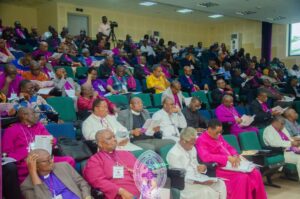
Primate of the Church of Nigeria, Anglican Communion, The Most Reverend Henry Ndukuba, has disclosed that the Anglican bishops have committed to raising N1 billion by the end of September to strengthen healthcare intervention for Nigerians through the proposed Church of Nigeria Health Maintenance Organisation (HMO).
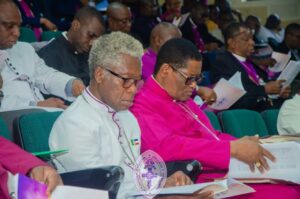
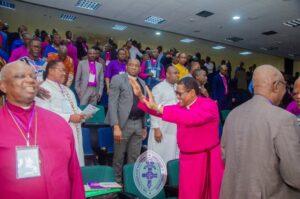
Ndukuba made the disclosure in Abuja at the opening of the Third Church of Nigeria Health Summit, where he said the financial commitment by the bishops was aimed at giving practical expression to the church’s healthcare mission and expanding access to affordable and quality medical services.
The summit, organised under the auspices of the Church of Nigeria Health and Medical Task Force, has as its theme: “Steadfast in Purpose: Implementation of the Church of Nigeria Health Action Plan for Lasting Impact.”
The primate said the N1 billion commitment followed a challenge issued at the bishops’ episcopal retreat last month, stressing that the church was determined to move from resolutions and intentions to concrete action capable of producing measurable impact in the health sector.
“God has been gracious to us,” Ndukuba said while announcing the bishops’ commitment to the fundraising target.
He said the initiative was part of the church’s broader effort to establish a sustainable healthcare system capable of supporting Nigerians, particularly vulnerable members of society.
Ndukuba also announced that the Rafa Medical Centre in the Federal Capital Territory had received approval to commence full operations, describing the development as another significant step in the church’s health intervention agenda.
According to him, the approval was communicated to him during the summit by Canon George, who informed him that the relevant health authorities in the FCT had approved the medical centre for full-scale operations.
The primate said the Church of Nigeria was determined to strengthen its longstanding contribution to healthcare delivery through its network of hospitals, clinics, nursing schools, community health programmes and other health institutions.
He said the church’s healthcare mission was not merely a social responsibility but an integral part of its Christian mandate.
“We have had enough time; we have dwelt so long in this place, under this mountain. It is time to move on. And we must move beyond vision into implementation, and beyond intentions into having enduring impact,” he said.
Ndukuba said the first and second health summits had provided the foundation for the church’s health mission by identifying critical gaps and developing the Church of Nigeria Health Action Plan.
He explained that the third summit was designed to assess the implementation of the plan, evaluate progress, particularly the establishment of the church’s HMO, and identify faster and more sustainable approaches to achieving its healthcare objectives.
He expressed the hope that every diocese of the Church of Nigeria would progressively become a centre of healing, preventive healthcare, health education, compassionate service and community transformation.
The primate acknowledged the difficulties confronting Nigeria’s health sector, including economic hardship, inflation, migration of skilled health professionals, inadequate infrastructure, rising disease burden and increasing healthcare costs.
He, however, urged the church to respond through innovation, stronger partnerships, improved governance and prudent management of resources.
According to him, successful implementation of the Health Action Plan would require “visionary leadership, accountability, prudent stewardship, strategic collaboration, professional excellence and the deployment of technological innovations.”
The executive director and chief executive officer of the National Primary Health Care Development Agency (NPHCDA), Dr Muyi Aina, described the Church of Nigeria as a critical stakeholder and strategic partner in the federal government’s efforts to expand healthcare access.
Aina said the church’s more than 170 dioceses and over 21 million members gave it an extensive grassroots platform for promoting healthy behaviours and connecting Nigerians to healthcare services.
He said the church’s hospitals, clinics, universities and health training institutions had made significant contributions to the nation’s health system.
According to him, the Church of Nigeria’s six-point Health Action Plan was closely aligned with the priorities of the federal government’s Nigeria Health Sector Renewal Investment Initiative.
“This gives us a very strong foundation for deeper partnership between the church and the government,” he said.
Aina disclosed that the federal government had refurbished 4,161 primary healthcare centres, with 3,275 completed and work ongoing on 886 others.
He said the country currently had about 14,300 functional public primary healthcare centres, while government had supported the recruitment of more than 23,000 skilled birth attendants, midwives, nurses and community health workers.
He further disclosed that 80,000 of the 120,000 frontline health workers targeted for retraining by the Tinubu administration had already undergone retraining.
The NPHCDA boss said the government had also disbursed N70.5 billion to primary healthcare centres since 2023, largely through the Basic Health Care Provision Fund, to support facility operations and health insurance for vulnerable Nigerians.
He said the number of primary healthcare centres supported through the fund had increased to 13,523 from 8,300 inherited by the present administration.
Aina added that more than 23 million Nigerians were currently covered by health insurance, while emergency obstetric care had been provided to over 80,000 pregnant women.
He said the intervention was designed to ensure that lack of funds did not prevent women from accessing lifesaving emergency caesarean sections and treatment for postpartum haemorrhage.
Aina also disclosed that Nigeria had recorded a 17 per cent reduction in maternal mortality and a 10 per cent decline in newborn mortality in priority areas over the past year.
He attributed the progress partly to increased utilisation of primary healthcare facilities, saying PHCs now record between 45 million and 46 million service contacts every quarter.
He said the government was also expanding vaccination and preventive health programmes, including measles-rubella and HPV vaccination.
More than 17 million girls aged nine years and above, he added, had received the HPV vaccine against cervical cancer, while the malaria vaccine was currently available in four states with plans for expansion.
Aina urged the Anglican Church to use its extensive grassroots network to promote vaccination, maternal healthcare, health education and preventive medicine.
“Let us ensure that our children receive all recommended vaccines. Let us ensure that our pregnant wives, sisters and daughters receive timely, quality care from trained health workers.
“The government and the church working together are much better positioned to accelerate our journey towards universal health coverage,” he said.
The N1 billion commitment by the Anglican bishops is expected to provide additional funding for the Church of Nigeria’s emerging health insurance and intervention framework as the church seeks to translate its extensive institutional and grassroots presence into broader healthcare access for Nigerians.
We’ve got the edge. Get real-time reports, breaking scoops, and exclusive angles delivered straight to your phone. Don’t settle for stale news. Join THISTIMES on WhatsApp for 24/7 updates →
Join Our WhatsApp Channel