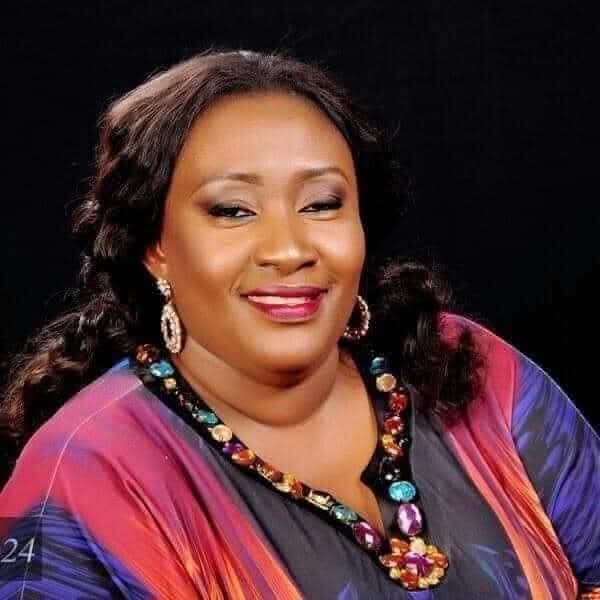
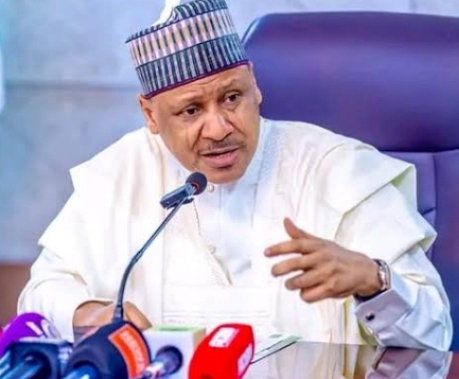
A fresh political and religious controversy has erupted ahead of the 2027 general election after prominent Islamic cleric, Sheikh Sani Yahaya Jingir, declared that he would never apologise for urging Muslims to support a Muslim-Muslim presidential ticket.
The remarks, made during a mass wedding organised by the Kano State Government for 1,500 couples, have drawn widespread criticism from political leaders, rights groups and sections of the public, with the National Human Rights Commission (NHRC) describing the comments as hate speech and calling for his arrest and prosecution.
Speaking at the event in Kano, Jingir urged Muslims to vote in a way that reflects their numerical strength in Nigeria, reviving a debate over religious balancing in presidential elections.
Nigeria has traditionally maintained an informal arrangement of pairing a Muslim with a Christian on presidential tickets. The convention was broken in 2023 when President Bola Tinubu selected Kashim Shettima, also a Muslim, as his running mate, producing the country’s first Muslim-Muslim ticket since the 1993 election involving MKO Abiola and Babagana Kingibe. Ahead of the 2027 presidential election, Tinubu has again picked Shettima to run the race with him, sparking fresh debate.
In a follow-up interview with BBC Hausa, the cleric doubled down on his position.
“I have absolutely no regrets. I stand firmly by my words and will never apologise. I will continue to advocate for a Muslim-Muslim ticket,” Jingir said.
He insisted that his campaign was not for any political figure but for his faith.
“I am not campaigning for Bola Tinubu; I am campaigning for my religion. As I have stated before, my advocacy for a Muslim-Muslim leadership structure is not about Tinubu or Muhammadu Buhari; it is strictly for the sake of Allah,” he said.
Jingir argued that political participation is a religious obligation for Muslims and that clerics have a duty to educate their followers on issues affecting their faith and society.
He also rejected claims that his comments were inflammatory.
“My words carry no harm. I explicitly stated that people are free to vote for whoever they want, while I will personally do what aligns with my beliefs. There is absolutely nothing harsh or inciting about that statement,” he said.
The cleric dismissed calls for his arrest, saying the criticism was largely coming from Christians who disagreed with his religious position.
He added that his appeal was for Muslims to support a “righteous and better Muslim,” stressing that Islam forbids corruption and other forms of wrongdoing.
Jingir further claimed to enjoy overwhelming support from the Muslim community.
“I swear that I have received immense support from the Muslim community. A vast majority of Muslims agree with this stance,” he said, pointing to the reaction of the crowd during his address in Kano.
The comments have, however, triggered strong political backlash.
Former Kano State governor and 2027 presidential candidate of the Nigerian Democratic Congress (NDC), Rabiu Musa Kwankwaso, condemned the remarks in a post on Xo on Tuesday
“I am deeply concerned by the comments made by Sheikh Sani Yahaya Jingir at an event in Kano this weekend,” Kwankwaso wrote.
“At this critical moment in our nation’s history, statements that promote division and disunity must be firmly discouraged.
“It is particularly troubling to hear such rhetoric from a religious leader of Sheikh Jingir’s stature and influence.
“Let it be clearly stated: the good people of Kano do not endorse or support these divisive remarks.”
Kwankwaso said both political and religious leaders have a responsibility to promote unity and reconciliation rather than deepen divisions.
He added that the 2027 election should be an opportunity for Nigerians to assess leaders based on governance and performance.
The National Human Rights Commission (NHRC)issued an even stronger response.
In a statement on Tuesday, the Executive Secretary of the commission, Tony Ojukwu, described Jingir’s comments as hateful, reckless and dangerous.
“The commission finds these remarks to be hate speech and incitement to religious hatred and potential violence,” Ojukwu said.
“At a time when we are preparing for another general election, such utterances are reckless and dangerous. They serve no purpose other than to divide Nigerians along religious lines and set citizens against one another.”
He warned that failure to act could embolden other influential figures to make more extreme statements as the 2027 elections approach.
“We cannot afford to look away. If we fail to speak and act now, we embolden both Christian and Muslim clerics and other influential persons to make worse statements in the coming months. That path leads only to crisis,” he said.
The NHRC called on the Inspector-General of Police, the Director-General of the Department of State Services (DSS) and other relevant authorities to arrest and prosecute Jingir for alleged hate speech and incitement.
Ojukwu said the law should be applied regardless of the cleric’s status or political affiliation and urged Nigerians to reject identity politics.
According to him, leaders should be judged by competence, service delivery and respect for human rights rather than by religious identity.
“The commission will continue to monitor compliance and will engage with security agencies, INEC, and civil society to ensure that the 2027 elections are free from hate and violence,” he added.
With political activities gradually gathering momentum ahead of 2027, Jingir’s remarks have once again brought the sensitive issue of religion and power-sharing to the centre of Nigeria’s national conversation.
We’ve got the edge. Get real-time reports, breaking scoops, and exclusive angles delivered straight to your phone. Don’t settle for stale news. Join THISTIMES on WhatsApp for 24/7 updates →
Join Our WhatsApp Channel