The Independent Corrupt Practices and Other Related Offences Commission (ICPC) is moving beyond routine anti-graft enforcement to target corruption with the greatest potential to undermine public finances, after tracking 4,582 government projects valued at more than N22.53 trillion between 2023 and June 2026.
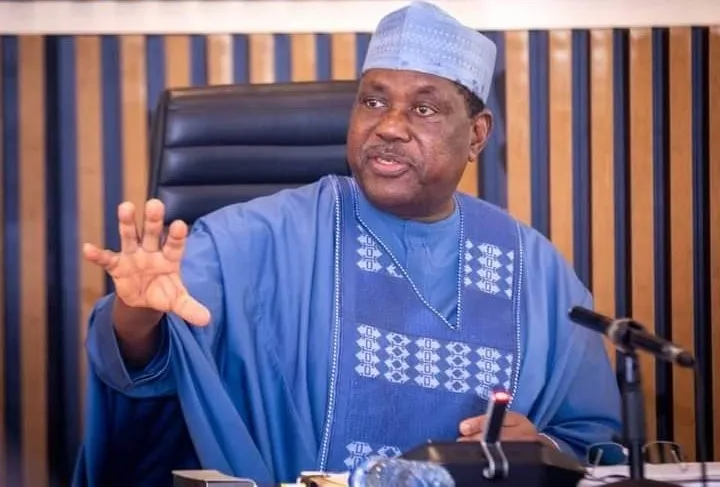
The Commission’s intervention returned projects worth N507.04 billion to project sites and generated estimated savings of N385.62 billion for government, ICPC Chairman, Dr Musa Adamu Aliyu, disclosed, signalling a broader strategy to prevent losses before they become another burden on public finances.
Aliyu spoke while delivering the keynote address at the 4th Economic Confidential Lecture and 6th National Spokespersons Awards in Abuja, on the theme: “Anti-Corruption Reforms, Economic Stability and Effective Communication.”
The figures, he said, demonstrate the economic value of preventive enforcement, particularly in a public sector where billions of naira can be committed to projects without producing the infrastructure or services for which they were approved.
Under the new high-impact approach, Aliyu said, the Commission would prioritise cases according to their consequences for public resources, governance and the wider economy rather than the prominence of those involved.
Cases involving private individuals without a public-interest dimension would not be prioritised, while matters outside the ICPC’s statutory mandate would be referred to the appropriate agencies.
Aliyu said enforcement must be matched by prevention, stronger institutions, public engagement, asset recovery and sanctions. He also identified weak ethical values as a driver of corruption and said the ICPC was consolidating its school-based initiatives into a National Schools Integrity Programme, drawing lessons from Hong Kong and Singapore.
The chairman said reforms such as the Treasury Single Account, Integrated Personnel and Payroll Information System, beneficial ownership transparency, improved procurement, whistleblower mechanisms and digital governance had strengthened Nigeria’s integrity systems.
He said the National Anti-Corruption Strategy 2022–2026 provides the framework for the ICPC’s enforcement, prevention and public enlightenment functions, including its Ethics and Integrity Compliance Scorecard, Anti-Corruption and Transparency Units, System Study and Review, Corruption Risk Assessments and project-tracking initiatives.
Citing the ICPC’s assessment of the port sector, Aliyu said the exercise identified procedural weaknesses that created opportunities for corruption and inefficiency, leading to harmonised Standard Operating Procedures and stronger integrity safeguards.
He noted that the Commission’s system reviews and Ethics and Integrity Compliance Scorecard had similarly helped public institutions strengthen procurement, internal controls, transparency and ethical standards.
“These examples demonstrate that anti-corruption is not solely about sanctions; it is equally about improving systems, strengthening institutions and delivering better governance,” he said.
Aliyu linked the fight against corruption directly to economic stability, saying sustainable growth depended on transparency, fiscal discipline, investor confidence, regulatory certainty and efficient institutions.
“Integrity therefore serves as an economic asset,” he said. He said the N507.04 billion in projects returned to sites had helped revive stalled developments, while the N385.62 billion in estimated savings represented resources protected for government. He also cited the recovery of unlawfully acquired Federal Mortgage Bank of Nigeria properties worth more than N5 billion, with the court directing the completion of 962 housing units.
He further cited the ICPC’s investigation into the 2024 IPPIS payroll fraud, saying the Federal High Court ordered the final forfeiture of more than N941.9 million recovered in Federal Republic of Nigeria v. Mr. Olusanya Matthew Arilewola & 908 Others, Suit No. FHC/ABJ/CS/156/2026.
“Every naira recovered from payroll fraud is a resource restored for education, healthcare, infrastructure and other national development priorities,” Aliyu said.
On communication, the ICPC chairman said public confidence was essential to the success of anti-corruption reforms and urged institutions to communicate honestly, consistently and proactively.
He cited the UNODC/NBS National Corruption Survey, which showed bribery reporting rose from 3.6 per cent in 2019 to 8.6 per cent in 2023, while the proportion of reports leading to formal procedures against public officials increased from 16 per cent to 45 per cent. He called for stronger whistleblower protection, secure reporting channels and timely feedback, while urging the media to remain accurate, fair and objective. “If ICPC has done wrong, say it. But if we did well, please communicate that we have done well,” he said.
Aliyu maintained that artificial intelligence could strengthen anti-corruption efforts through fraud detection, predictive analytics, procurement monitoring, financial intelligence and anomaly detection, while warning that the technology could also facilitate cyber fraud, identity theft, deepfakes and digital misinformation. “Technology must remain an instrument for transparency rather than a vehicle for sophisticated corruption,” he said.
He called for stronger collaboration among government, the private sector, civil society, schools, traditional and religious leaders, professional bodies, development partners, the media and citizens, as well as greater international cooperation against cross-border corruption.
He stressed that the ultimate objective was to embed integrity in Nigeria’s national culture, adding, “The task before this room is not only to fight corruption, but to tell the truth about it well—honestly enough to be believed, and hopefully enough to be followed.”
We’ve got the edge. Get real-time reports, breaking scoops, and exclusive angles delivered straight to your phone. Don’t settle for stale news. Join THISTIMES on WhatsApp for 24/7 updates →
Join Our WhatsApp Channel