China’s philosophy of “shared prosperity” or “common prosperity” has been the fulcrum of its political and economic goals to reduce social and wealth gaps.
China has continued to seek balanced economic growth with fair income distribution, moving away from extreme inequality without forcing strict equal pay for everyone. China has invested in human capital and added value to industry, trade and investment.
However, the announcement by Chinese President Xi Jinping about China’s zero-tariff concessional market access for African products into the huge Chinese market of 1.4 billion added a new dimension to China-Africa relations, which are predicated on the Forum for China-Africa Cooperation (FOCAC).
The Zero-Tariff policy commenced in earnest on 1 May 2026, and it is instructive that the results so far have been impressive, with positive outcomes promising to change the fortunes of Africa for the better by facilitating open access for products into the Chinese market.
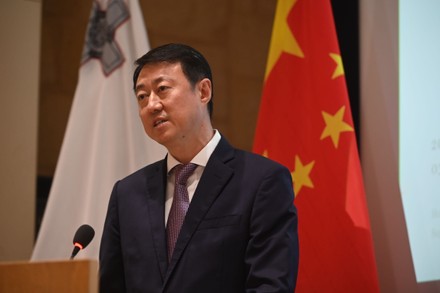
During an international seminar organised by the Centre for China Studies, with the support of the Embassy of China in Nigeria, in Abuja on Friday, Chinese Ambassador to Nigeria, Yu Dunhai, said the policy can generate more economic dividends and accelerate Africa’s transformation in the coming months and years.
He described it as “a strategic milestone in building a high-level China–Africa community with a shared future and advancing our joint vision for modernisation.”
The theme “Zero-tariff treatment for African countries and its implications for structural economic transformation in Africa” captured the essence of fruitful cooperation with China, such that, just three months after discussing the policies, they were already visible.
According to the Chinese Envoy, in the first half of 2026, China–Africa trade reached a record high of 207 billion dollars. From May to June alone, Chinese imports from Africa reached 29 billion US dollars, a 24% year-on-year increase. Estimates show that the zero-tariff policy has increased overall exports to China by roughly 6%.
He added that Nigeria’s performance has been especially striking, stressing that total bilateral trade with Nigeria reached 18 billion in the first half of the year, a 35% increase, while Chinese imports from Nigeria surged to 80%, amounting to 2.3 billion dollars.
He described Nigeria as ‘a cornerstone for China on the African continent,’ saying “our nations share deep political thought, robust economic ties and rich history of cooperation, Nigeria is positioned to be a primary beneficiary of this zero-tariff policy.”
He pointed to concrete results in three key areas: sharply reduced trading costs, expanded trade volumes, and an upgraded trade structure, as well as empowering Nigeria’s industrial transformation and supporting local livelihoods, with local businesses leveraging the zero-tariff in processing to move up the value chain.
Nigeria’s Minister of Foreign Affairs, Bianca Odumegwu–Ojukwu, in her remarks, said the zero-tariff policy is strategic to Africa’s future and to the continent’s economic transformation.
Represented by the Permanent Secretary, Ahmed Dunioma, the Minister said, “This presents a significant opportunity for strengthening Africa-China economic relations and promoting greater integration of African economies into the global value chain. It calls for concerted efforts on what Africa can produce and how much value Africa can retain within the continent.”
He said further that “this is where the vision of President Bola Tinubu becomes particularly relevant, stressing that the President has consistently emphasised that Nigeria must move beyond an economic model that relies predominantly on the export of unprocessed commodities to value addition.
“Nigeria welcomes investments, but such investments must establish manufacturing capacity, develop industrial value chains and create jobs rather than merely extract and export our raw materials,” he added.
Director of the Centre for China Studies, Charles Onunaiju, said China’s zero-tariff policy has a significant impact not just for prosperity but for sustainable peace, adding that what China has offered is a very critical component of the Chinese Initiative on Global Governance Reform, a key aspect of which emphasises that reform must deliver tangible results.
“Zero- tariff treatment for 100% lines for products coming from Africa to the world’s largest single integrated market is quite consequential for world peace and prosperity,” he said, even as he advised African leaders to address the deep structural constraints within the continent for the policy to be more effective and efficient.
The zero-tariff policy may have opened up opportunities to increase Africa’s imports into China, but despite these advantages, African economies have long faced structural disadvantages, delayed industrialisation, an incomplete manufacturing system, and infrastructure bottlenecks, leaving the continent caught in resource abundance yet economically dependent.
It has become incumbent on African leaders to reform their structures and make value addition the focus through massive investment in the processing of agro-commodities, especially now that President Tinubu has sent a bill to the National Assembly for 30% value addition on any Nigerian product before exports. This bill must be treated with the attention it requires.
We’ve got the edge. Get real-time reports, breaking scoops, and exclusive angles delivered straight to your phone. Don’t settle for stale news. Join THISTIMES on WhatsApp for 24/7 updates →
Join Our WhatsApp Channel