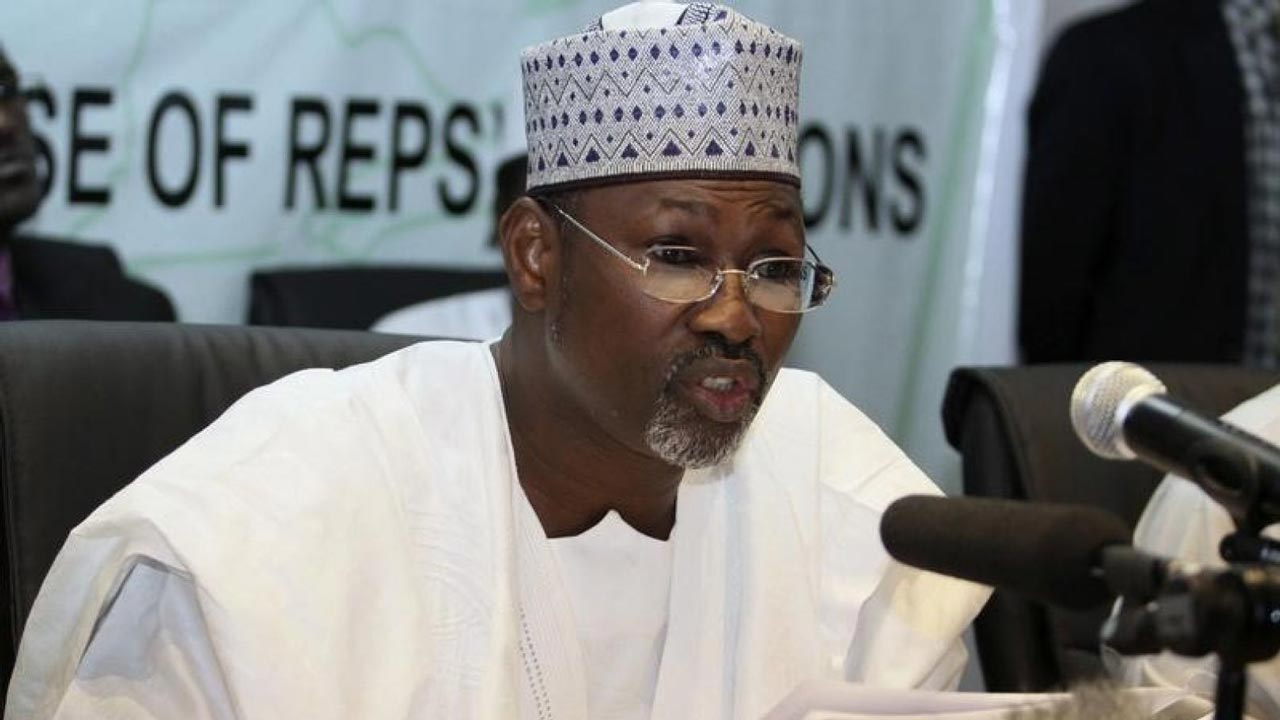
Imam Muhammad Nurayn Ashafa is a prominent Islamic leader who sees peace beyond a religious ideal.
Over the years, Dr Ashafa has turned the search and promotion of interfaith peace into a personal mission shaped by the bitter experience of religious conflict and transformed into decades of reconciliation, dialogue and humanitarian service.
Once associated with one side of the violent Christian-Muslim conflicts that shook Kaduna in the 1990s, Ashafa has become one of Nigeria’s most recognisable advocates of interfaith dialogue. His remarkable transformation from conflict to peacebuilding has earned him international recognition, most recently as a joint winner of the inaugural Commonwealth Peace Prize in 2025.
The eminent Islamic leader and philanthropist was born into a Muslim family in Zaria, Kaduna State. According to the University of Southern California’s Centre for Religion and Civic Culture, he was the first son of Abdul-Yakeen Ashafa, a respected Muslim spiritual leader. His father began preparing him for religious leadership when he was still a child.
Much of his early education took place at a madrasa attached to his father’s mosque, where he studied the Qur’an and Islamic teachings. His educational journey later broadened. After turning 16, he was permitted to attend primary and secondary schools run by the Methodist Church in Oyo State, where he was exposed to Christianity and the study of the Bible stimulated his interest in comparative religion.
After completing his secondary education, Ashafa returned to Kaduna and continued advanced Islamic studies under his father while reading extensively about other religious traditions. He subsequently travelled to Sudan for a nine-month course in Arabic Studies at the International University of Africa. He eventually became the Imam of Ashafa Central Mosque in Kaduna. The USC account says he is the 13th generation of Imams in his family.
His life took a dramatic turn during the religious violence of the early 1990s. Ashafa and Rev. Dr James Movel Wuye, a Christian pastor, were on opposing sides of the conflict. Their confrontation was not merely ideological: Wuye lost his right hand during the violence.
But the two men eventually made a decision that would redefine their lives. Rather than remain trapped in the cycle of revenge, they chose dialogue and reconciliation.
In 1995, Ashafa and Wuye established the Interfaith Mediation Centre (IMC) in Kaduna. The organisation became a vehicle through which a Muslim Imam and a Christian Pastor could work together to mediate conflicts and promote peaceful coexistence.
Their approach was distinctive because they drew credibility from having experienced religious conflict themselves. The USC’s Centre for Religion and Civic Culture reports that the pair developed a mediation process involving shuttle mediation, intra-community dialogue, inter-community negotiations and public peace commitments. Their work subsequently took them to conflict-affected communities in Kaduna, Plateau, Benue, Taraba States and other parts of Nigeria.
One of their notable interventions was the mediation of the Yelwa-Shendam conflict in Plateau State.
The process brought opposing communities into dialogue and culminated in a public peace affirmation in 2005, with the parties committing themselves to peaceful coexistence and dialogue as a means of resolving future disputes.
Over the years, Ashafa’s peacebuilding work has expanded beyond conflict mediation. Through the IMC, he and Wuye have promoted religious tolerance, trained young people, worked with women and traditional and religious leaders, and encouraged communities to reject violence.
The Commonwealth says the IMC has worked in more than 50 communities across Nigeria and reached millions through youth peace clubs and leadership training. The organisation has also worked with people vulnerable to recruitment into violent groups, helping to steer young Nigerians towards peaceful engagement.
His contribution has attracted several national and international recognitions. Among the honours associated with Ashafa and Wuye are the Peacemaker in Action Award, Bremen Peace Award, Prize for Conflict Prevention and Deutsche Afrika-Preis. They have also received honorary doctorates and have been nominated for the Nobel Peace Prize, according to USC’s profile.
In March 2025, the Commonwealth added its highest recent recognition when Ashafa and Wuye became the inaugural joint winners of the Commonwealth Peace Prize. The award, presented in London, recognised their longstanding efforts to bridge religious divides through faith-based dialogue and conflict resolution. They also shared a £50,000 prize to support their continuing peacebuilding work.
Ashafa’s humanitarian commitment is another important dimension of his work. Through initiatives associated with his name, including the Ashafa Relief Foundation, he has supported vulnerable communities through humanitarian assistance, education, skills development and other forms of social intervention.
His latest peacebuilding emphasis also focuses strongly on the younger generation. Following the Commonwealth recognition, Ashafa highlighted the Ashafa Peace Academy as a platform for mentoring young people in cross-cultural and intergenerational dialogue. The Commonwealth reported his view that peace must begin at the individual and community levels and that young people must be equipped to become future peacebuilders.
From a young religious scholar shaped by a conservative Islamic upbringing to an internationally celebrated peace builder, Ashafa’s life represents an extraordinary journey of personal transformation.
His partnership with Wuye has demonstrated that former adversaries can become agents of reconciliation and that religious identity, rather than being a source of division, can become an instrument for peace.
For Nigeria, a country that continues to grapple with religious, ethnic and communal tensions, the journey of Imam Muhammad Nurayn Ashafa offers a compelling lesson: reconciliation is possible when former enemies choose dialogue over revenge and service over division.
We’ve got the edge. Get real-time reports, breaking scoops, and exclusive angles delivered straight to your phone. Don’t settle for stale news. Join THISTIMES on WhatsApp for 24/7 updates →
Join Our WhatsApp Channel