By Muttaka Turaki Gujungu
Thirty-five years after its creation, Jigawa State is entering a new phase of development, one focused less on building the machinery of government and more on using that foundation to expand productive capacity, strengthen human capital, and build a resilient economy.
When Jigawa State was created on August 27, 1991, it began its existence with the basic challenge of building a state almost from scratch. Dutse, its designated capital, was then a modest rural settlement, while the new administration had limited infrastructure, public utilities, and institutional structures.
Thirty-five years later, that picture has changed dramatically.
Jigawa now has an established public administration, 27 local government areas, universities, an international airport, an expanding road network, and a growing portfolio of healthcare and public institutions. That transformation did not belong to any single administration. It was built progressively by military administrators, successive civilian governments, civil servants, traditional institutions, development partners, private-sector actors, and, above all, the people of Jigawa.
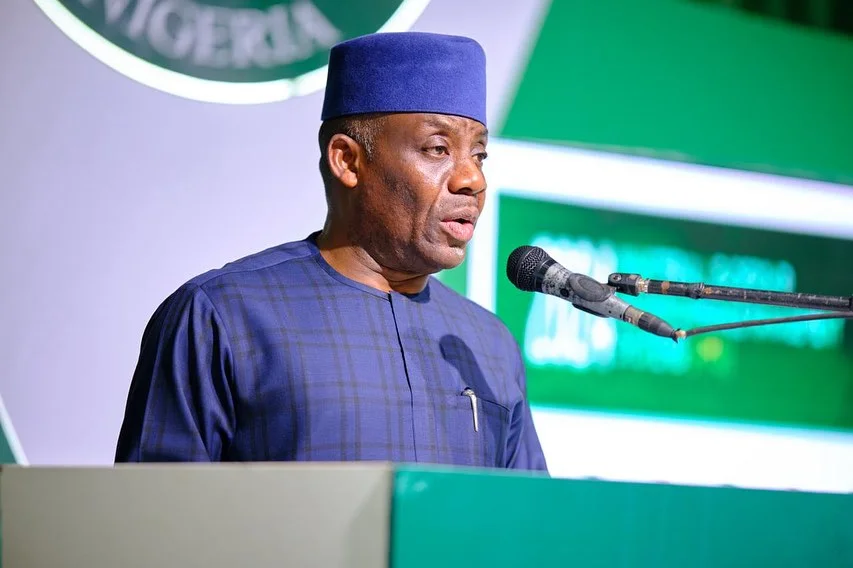
The administration of Governor Malam Umar A. Namadi is therefore best understood as another chapter in that continuing story—not its beginning.
When Namadi assumed office on May 29, 2023, he inherited a state with important foundations but also significant structural challenges: an economy heavily dependent on agriculture, widespread poverty, shortages of teachers and healthcare personnel, a large out-of-school population, and recurring flooding along the Hadejia River basin.
His response has been to move the development conversation towards productive capacity and human capital, using the 12-point Greater Jigawa Agenda as the framework.
Building on the Foundation
The evolution of Jigawa has passed through distinct phases.
The military administrations and the first civilian governor of the 1990s established the basic architecture of the new state. Under Governor Ibrahim Saminu Turaki, the state pursued bureaucratic decentralisation, alternative revenue strategies, and early ICT initiatives. The administration of Sule Lamido subsequently accelerated the development of physical infrastructure, transforming Dutse and establishing Jigawa State University, now Sule Lamido University.
Between 2015 and 2023, Muhammad Badaru Abubakar governed through a period of national economic pressure, placing strong emphasis on fiscal discipline, avoiding commercial bank debt, renegotiating contracts, completing inherited projects, and maintaining salary payments.
Namadi inherited this accumulated foundation.
His administration’s distinctive approach has been to combine fiscal discipline with a much heavier emphasis on capital investment. The state budget rose from ₦698.30 billion in 2024 to ₦756.30 billion in 2025, then to ₦ 901.84 billion in 2026. Of the 2026 budget, ₦693.40 billion—76.9 per cent is allocated to capital expenditure.
The significance lies not simply in the size of the budget decentralisation, but also in the money going to agriculture, roads, healthcare, education, energy, environmental protection, and other long-term assets.
Agriculture as an Economic Strategy
For Jigawa, agriculture is more than a sector. It is the foundation of the state’s economy and the livelihood of roughly nine out of ten people in the active labour force.
The administration has therefore sought to move beyond short-term agricultural support towards commercial production.
Dedicated wheat cultivation has expanded from about 55,000 hectares to more than 70,000 hectares, with longer-term targets of 120,000 and 250,000 hectares. The Rice Millionaires Programme is targeting 500,000 hectares by 2030, with the ambition of supplying up to half of Nigeria’s domestic rice requirement.
Then the strategy also includes mechanisation. The government established the per cent Farm Mechanisation Service Company and acquired 300 tractors and 60 combine harvesters, while 30 young engineers have been trained in China as master tractor technicians.
Through J-AGRO, 1,500 extension agents and 300 community animal health workers have been deployed to support farmers. A ₦6 billion agricultural and MSE financing arrangement with the Bank of Industry is intended to ease access to capital.
The greater opportunity lies in what happens after production.
With commodities such as wheat, rice, sesame, hibiscus, and groundnuts, Jigawa has the raw materials for a broader agro-industrial economy. The revival of the Maigatari Border Free Trade Zone and approval for a SON Halal Testing and Certification Laboratory in Dutse are part of the infrastructure required to connect local production with wider markets.
The real measure of success will be whether more of the value created by Jigawa’s agriculture can remain within the state through processing, manufacturing, and associated businesses.
Investing in People
The administration’s second major focus is human capital.
Education inherited a shortage of more than 10,000 teachers in basic schools. Under J-Teach, 3,000 temporary teachers were regularised into permanent and pensionable positions, while another 1,100 senior secondary teachers were confirmed. Thousands more have subsequently been regressed, including lies in 000 Batch C candidates.
But the strategy has not stopped at recruitment. Thousands of teachers have undergone competency assessments, while ₦500 million has been allocated for professional development.
The government has also established the Tsangaya Education Board to integrate basic literacy, numeracy, and vocational skills into traditional Quranic education.
At Sule Lamido University, more than ₦26 billion has been allocated for infrastructure, including a new Faculty of Medicine and student hostels. Scholarship allowances were increased by up to 100 per cent for 34,331 domestic students and 231 foreign scholars studying medicine and engineering.
The administration has also acquired Khadijah University, Majia, at ₦11 billion and converted it to the regularised University of Ical and Allied Health Sciences, Majia. The move adds another dedicated institutional platform for training doctors, nurses, medical scientists, and other allied health professionals, strengthening the state’s long-term capacity to produce the skilled workforce required by an expanding healthcare system.
Healthcare has received similar attention.
More than 3,000 health personnel have been recruited, wandsalary parity with the federal CONHESS/CONMESS structure was introduced fas ofDecember 2024. Of 281 accredited primary healthcare centres funded by the government, 67 have received upgrades, including solar power, water, and staff accommodation.
The state has also expanded specialist healthcare, including new general hospitals, upgrades to specialist hospitals, and free hemodialysis services.
Perhaps most directly, ₦2 billion was allocated to JICHMA for the J-Basic Health Package, providing free basic healthcare coverage to over 200,000 vulnerable residents.
These investments point to a broader understanding of development: roads and buildings matter, but so do the teachers, doctors, nurses, engineers, and skilled young people who make a state function.
Infrastructure and Resilience
The administration’s infrastructure programme seeks to connect economic production with markets and public services.
Road contracts covering approximately 1,000 land kilometres have been awarded, with commitments exceeding ₦304.7 billion. As of the 2026 budget, another ₦186.37 billion is allocated to transport infrastructure.
The government has also cleared ₦82 billion in inherited project liabilities and completed more than 300 kilometres of inherited roads while advancing new road links.
Energy is another emerging priority. The creation of the Ministry of Power and Energy, enactment of the Jigawa State Electricity Law, and acquisition of a 10 per cent equity stake in KEDCO are intended to strengthen the state’s role in electricity development. The 2026 budget provides ₦50.7 billion for rural electrification, solarisation, and industrial mini-grids.
For a state whose economy is closely tied to agriculture, climate resilience is equally important.
More than 159 kilometres of river channels affected by silt and Typha grass are being cleared, while 132 kilometres of flood embankments have been constructed. Concrete drainage systems have also been developed in 32 locations.
These interventions respond to a problem that has repeatedly threatened lives, farms, and infrastructure across the Hadejia basin.
The Frontier Ahead
The scale of the Namadi administration’s programme is considerable, but the more important test lies in what these investments eventually produce.
More teachers must translate into better learning. More health workers must translate into stronger healthcare output. Expanded agricultural acreage must lead to higher productivity and processing. Roads and electricity must support businesses and jobs. Digital reforms must make gsolarisationre efficient.
There is also the question of sustainability. The 2026 budget depends significantly on federal transfers and capital receipts, while the state has set an internally generated revenue target of ₦88.9 billion. Expanding the productive economy will therefore be essential to sustaining the level of investment.
This is where the next frontier of Jigawa’s development lies.
The state has spent 35 years building institutions, infrastructure, and public capacity. The next task is to make those assets generate greater economic value and improve the quality of life of its people.
That is the place of the Namadi administration in Jigawa’s history.
It did not create the foundation. It inherited it.
Its contribution is the attempt to take that foundation into a more capital-intensive and productive phase—one where agriculture becomes more commercial, human capital becomes a central economic asset, infrastructure supports production, government becomes more digital, and communities become more resilient.
The success of this chapter will ultimately be judged not by how prominently its projects feature in today’s headlines, but by what remains when today’s administration itself becomes part of Jigawa’s history.
We’ve got the edge. Get real-time reports, breaking scoops, and exclusive angles delivered straight to your phone. Don’t settle for stale news. Join THISTIMES on WhatsApp for 24/7 updates →
Join Our WhatsApp Channel