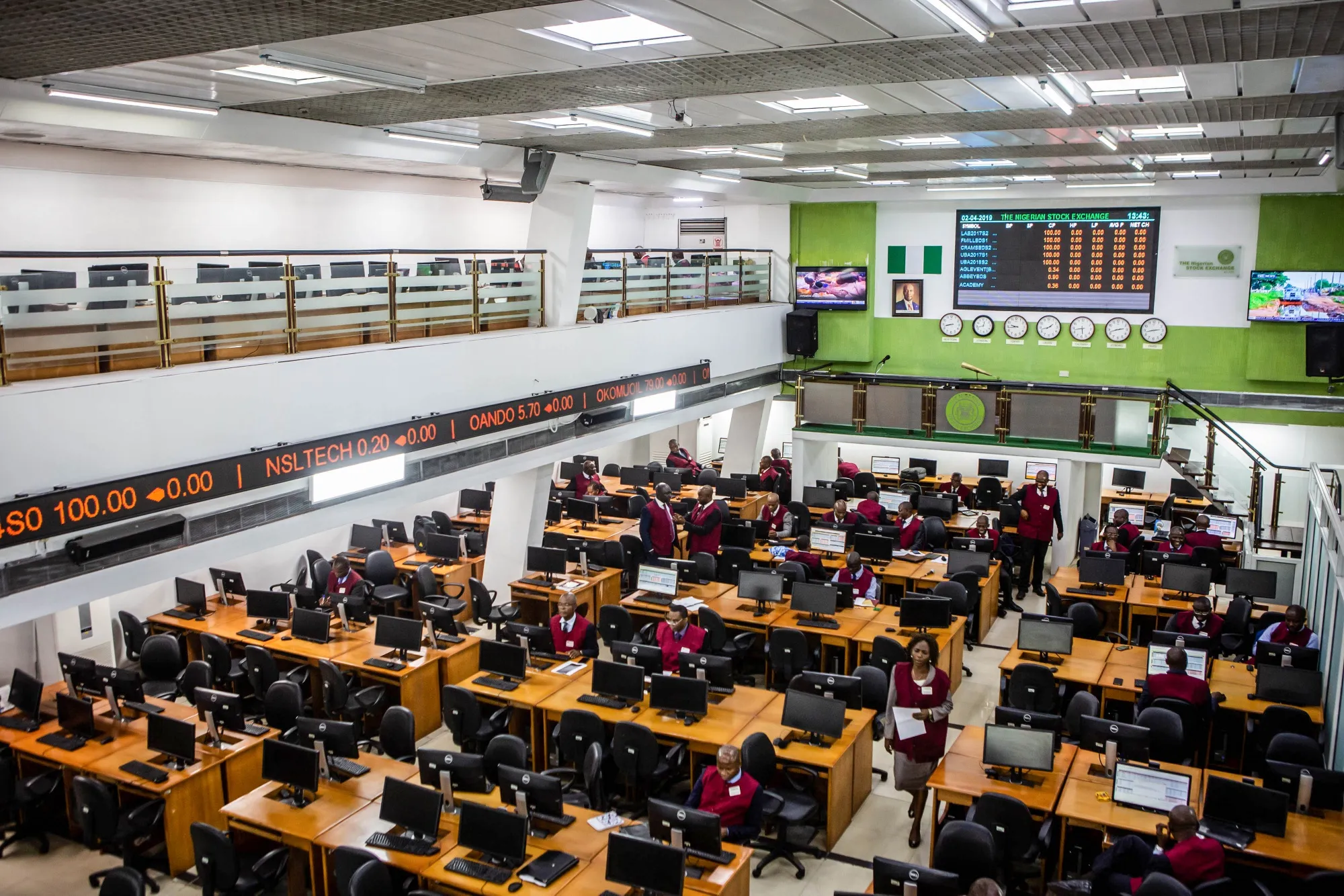
Nigerian equities closed August 2026 on a mixed note, with the benchmark NGX All-Share Index (ASI) declining 0.44% over the month, even as a strong finish on the final trading day largely driven by banking and consumer goods sector gains helped the market retain much of its exceptional year-to-date gains.
The All-Share Index closed the month at 244,199.39 points, down from 245,283.68 points at the end of July, a decline of 1,084.29 points.
Market capitalisation settled at N157.74 trillion, compared with N158.33 trillion at the end of July, a decline of about N590 billion or 0.37%.
The month’s high was 244,199.39 points, recorded on the final trading day, while the low of 238,682.92 points came mid-month, underscoring how much ground the market clawed back before August closed.
Despite the modest headline decline, the strongest monthly performance came from banking, consumer goods and value-oriented stocks, while insurance, industrial goods and growth stocks recorded significant declines.
Trading activity also improved on the final day, with the value of transactions rising 29.65% to N38.66 billion on August 31, from N29.82 billion in the previous session. A total of 606.13 million shares were exchanged in 53,364 deals. Market breadth strengthened, with 43 equities advancing against 17 decliners, reflecting broader buying interest across the market.
Among the August gainers, four major heavyweight blue-chip stocks, including Airtel Africa, Seplat Energy, First HoldCo, and Transcorp Hotels, stand out largely in helping the market recover some of the earlier losses recorded in the month.
Among the losses that weighed on market performance in August were those recorded by blue chip stocks of Unilever Nigeria (-22.95%, International Breweries (-16.95%), Ecobank Transnational Incorporated (-16.81%), Transcorp (-12.50%), Dangote Sugar (-11.05%), BUA Foods (-10.00%), and TotalEnergies Marketing Nigeria (-10.00%).
Banking sectoral index rose +3.82% to close at 2,624.05 points, the strongest-performing major sector for the month.
The August performance was characterised less by a broad-based sell-off and more by a sharp rotation across sectors and investment styles.
In a statement, the Exchange noted that domestic retail and institutional investors remain the dominant force in market activity, accounting for about 90% of transacted value, while foreign portfolio participation remains relatively limited.
David Adonri, Vice Chairman of Highcap Securities, said the market could sustain positive momentum into September, with investors likely to remain focused on fundamentally strong and relatively undervalued stocks.
FTSE Russell has confirmed that Nigeria will return to Frontier Market status effective September 21, following an assessment of the country’s market infrastructure and T+1 settlement framework.
The development could improve Nigeria’s visibility among international investors and potentially support fresh portfolio flows into the equities market.
The outlook comes as Nigeria is scheduled for a decisive return to FTSE Russell’s Frontier Market status on September 21, 2026, a development expected to strengthen the country’s visibility among international investors and potentially support greater participation in Nigerian equities.
The market endured an 11-session losing streak during August, with the ASI falling to 238,682.92 points on August 26 before staging a late-month recovery.
With the ASI still up 56.93% year-to-date, investors enter September with attention shifting toward valuations, corporate earnings and Nigeria’s return to the Frontier Market universe. The August market therefore ended with a clear message: investors are becoming more selective, favouring value and established earnings while rotating away from expensive growth and weaker sectors.