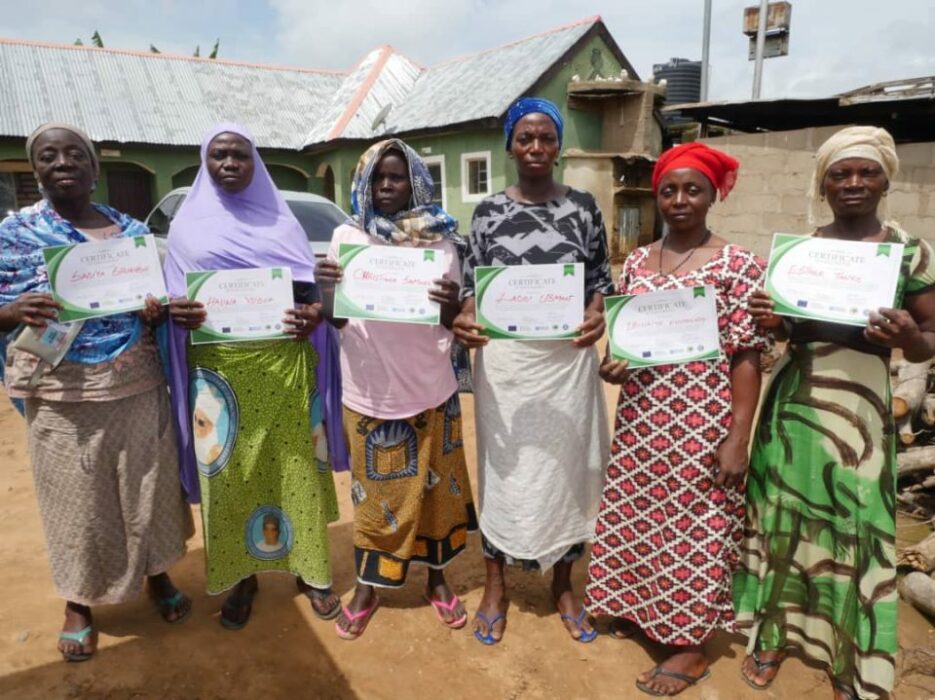
Women in Kilankwa community, Kwali Area Council of the Federal Capital Territory (FCT) have received grinding and milling machines to boost their economic activities and reduce poverty in the community.
The machine was donated by ActionAid Nigeria, in partnership with the Centre for Information Technology and Development (CITAD).
The facility, which was commissioned yesterday, will ease the burden of processing agricultural produce, particularly cassava, while creating new income-generating opportunities for the women and other vulnerable members of the community.
The event was attended by community leaders, government representatives, women groups and other stakeholders.
At the event, the country director of ActionAid Nigeria, Andrew Mamedu, represented by the local rice specialist, Kehinde Arowosegbe, said the initiative was part of the organisation’s commitment to practical, community-driven interventions aimed at reducing poverty and creating sustainable livelihood opportunities for vulnerable women and youths.
Arowosegbe noted that the intervention went beyond the provision of the milling machine, explaining that a building had also been constructed to house the facility.
He said, “We believe that sustainable development begins when people are empowered to take charge of their own lives and communities.”
According to him, women, particularly those in rural communities, play critical roles in household welfare, food security and local economic development but often face barriers that limit their economic potential.
He said the machine would reduce the time and physical burden associated with manual processing, improve productivity, create income-generating opportunities and strengthen household livelihoods.
Arowosegbe urged the women to regard the facility as a community-owned asset and ensure its proper management, maintenance and equitable access.
“We encourage the women to see this machine as a community-owned asset, manage it transparently, maintain it properly, and ensure that its benefits are extended equitably to the wider community,” he said.
Also speaking, the executive director of CITAD, represented by Johnson Maichibi Musa, described the intervention as an investment in women’s economic empowerment, community livelihoods and sustainable development.
Musa commended the Kilankwa community for providing land for the project and establishing a management committee to oversee its operations and maintenance.
He urged the committee to manage the facility with transparency, accountability, fairness and inclusiveness, stressing that the machine belonged to the entire community and should benefit residents regardless of tribe, religion, gender or social status.
In his remarks, the District Head of Kilankwa, Hakimi Hon. Yahaya Abdullahi, a former councillor representing Kilankwa Ward, expressed appreciation to ActionAid and CITAD for the intervention.
Abdullahi said the community had neither applied for nor requested the milling machine before it was donated, adding that its arrival had generated considerable excitement among the women.
He appealed to the organisations to consider providing additional equipment and other development projects to address the needs of the community.
The traditional ruler also called for assistance in electricity, road construction and education infrastructure, noting that Kilankwa continued to face significant development challenges.
Meanwhile, the Programme Officer and Team Lead at CITAD, Yesmin Salako Ejiwumi, said the milling machine was the outcome of more than a decade of engagement with the Kilankwa community under the Local Rights Programme funded by ActionAid Nigeria.
She explained that the women had previously received training in self-reliance, financial independence, agriculture and agro-ecological farming.
According to her, the women subsequently participated in Village Savings and Loan Associations, through which they accessed low-interest loans to establish and expand businesses.
Ejiwumi said the women’s investment in cassava farming eventually created the need for a facility to process their farm produce into marketable products, leading to the provision of the milling machine.
“This is something that the community themselves decided. It’s not something that we just came to do for them,” she said.
She added that a community management committee, headed by the women leader as chairperson, had been established to manage proceeds from the milling centre and reinvest part of the income in sustaining the facility.
Ejiwumi said the ultimate objective of the intervention was to lift women out of poverty, enable them to support their children’s education and promote their financial independence.
We’ve got the edge. Get real-time reports, breaking scoops, and exclusive angles delivered straight to your phone. Don’t settle for stale news. Join THISTIMES on WhatsApp for 24/7 updates →
Join Our WhatsApp Channel