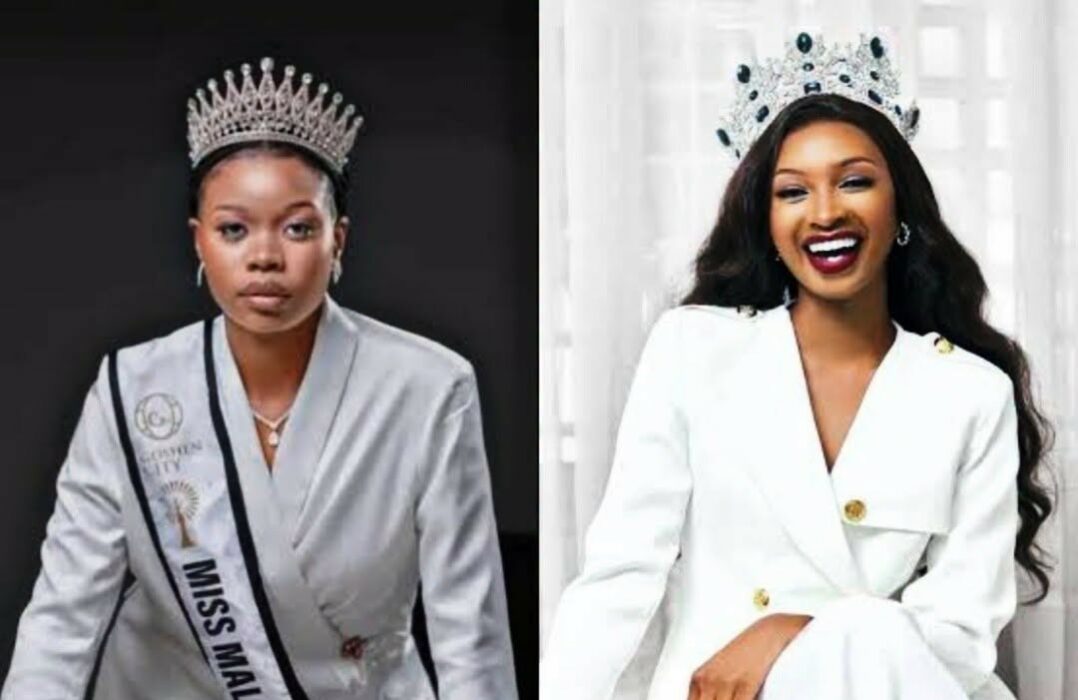
A beauty pageant that should have been a straightforward celebration of Malawi’s return to the Miss World stage has instead become a national debate about fairness, power, and who gets to wear the country’s sash.
Thandi Chisi won the Miss Malawi crown in December 2025. Yet when Malawi returned to the Miss World stage in Vietnam this year, it was not the reigning queen who represented the country.
Instead, the opportunity went to first runner-up Ireen Navicha, the daughter of Malawi’s Cabinet Minister Mary Navicha.
That decision immediately raised eyebrows.
The Miss Malawi Organisation initially cited age as the reason for overlooking Chisi, saying Miss World’s eligibility requirements meant she was too old at 27. That explanation became increasingly difficult to defend after 27-year-old South African contestant Romanda Hombir progressed deep into the competition and eventually reached the Top Six.
The organisers subsequently offered another explanation: Navicha had international pageant experience and an advocacy project that aligned strongly with Miss World’s Beauty With a Purpose philosophy. They have repeatedly denied that politics played any role in the decision.
But the controversy did not disappear.
Chisi has also spoken about what she says were changes to her contract after she won the national title. She alleged that the agreement guaranteeing the winner an international pageant opportunity was altered, and that she was later asked to borrow money to participate in another pageant.
Throughout the dispute, Chisi has largely maintained her composure, presenting herself as bigger than the crown itself.
And that may be the most powerful part of this story.
Because a crown is meant to represent merit, achievement, and the trust of the people who place it on a woman’s head. When the crowned winner is subsequently bypassed for an international opportunity, the question naturally becomes bigger than beauty: What exactly does winning mean if the prize can change afterwards?
Navicha, meanwhile, did make history. She became the first Malawian contestant to reach the Miss World Top 40, although she failed to progress to the Top 20 at the September 5 final.
Her achievement deserves recognition in its own right.
Yet the questions surrounding how she got there remain.
There is no publicly established evidence that her mother’s political position secured her the Miss World slot. The organisers deny such influence. But the coincidence has been enough to fuel public suspicion, particularly because the woman left behind was the country’s reigning queen.
And perhaps that is why the controversy has resonated beyond pageantry.
It is about what happens when power, privilege and opportunity appear to occupy the same room.
For Malawi, the real legacy of this episode may not be the Top 40 placement. It may be a question of whether the country’s pageant industry can emerge from the controversy with greater transparency, clearer contracts, and rules that every contestant can trust.
Because in the end, a queen is not made by the international sash she wears.
Sometimes, she is defined by how she carries herself when the sash she expected is given to someone else.
We’ve got the edge. Get real-time reports, breaking scoops, and exclusive angles delivered straight to your phone. Don’t settle for stale news. Join THISTIMES on WhatsApp for 24/7 updates →
Join Our WhatsApp Channel