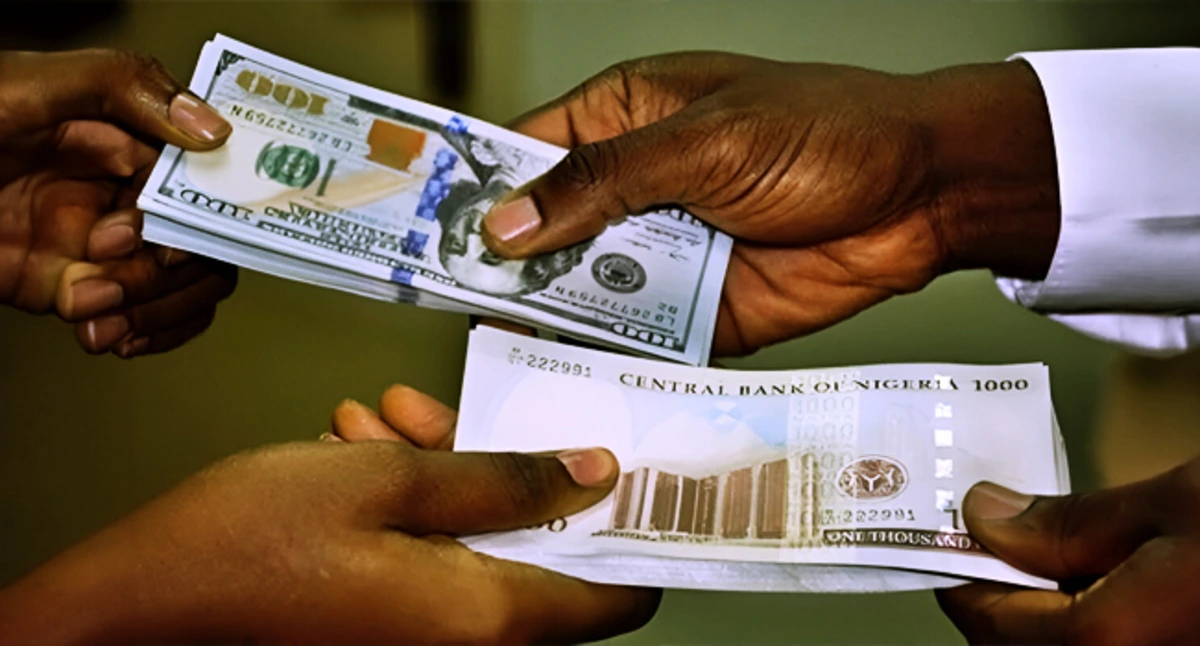
Foreign exchange turnover in the Nigerian Foreign Exchange Market (NFEM) fell sharply on Monday, September 7, dropping to N107.07 million as the naira strengthened to N1,320/$.
Data obtained from the Central Bank of Nigeria’s (CBN) website showed that daily NFEM turnover declined by 78.4% from N495.70 million recorded on Friday, September 4, highlighting a significant drop in trading activity at the start of the new week.
Despite the lower market volume, the naira appreciated by 0.19% to N1,320/$ at the close of trading, compared with N1,322.50/$ recorded on the previous trading day.
The data showed that this was the lowest recorded since April 2, when NFEM turnover stood at N73.90 million.
The currency traded between N1,318.50/$ and N1,322.50/$ during the session, while the weighted average rate stood at N1,320.56/$.
Trading activity has remained volatile in recent weeks. Turnover stood at N674.38 million on September 3 before falling to N495.70 million on September 4 and then dropping further on Monday.
The decline also marks a sharp contrast with some of the higher turnover levels recorded in August.
Nigeria’s foreign exchange market posted its strongest weekly turnover so far in 2026, with total transactions in the FX Spot and Derivatives markets surging 146.12% to $5.06 billion in the week ended August 21, 2026.
The latest increase in external reserves comes as the CBN maintains a tight monetary policy stance aimed at moderating inflation and supporting macroeconomic stability.
Nigeria’s foreign exchange market recorded its sharpest weekly turnover decline of 2026, with total transactions in the FX Spot and Derivatives markets falling 46.57% to $1.631 billion in the week ended July 10, 2026.
The $1.421 billion week-on-week decline is the largest single-week drop in FX market turnover recorded so far this year.
Nairametrics had earlier reported that FMDQ’s cumulative turnover for the January–July 2026 period reached N426.51 trillion ($310.18 billion), with FX transactions among the leading drivers alongside OMO Bills.