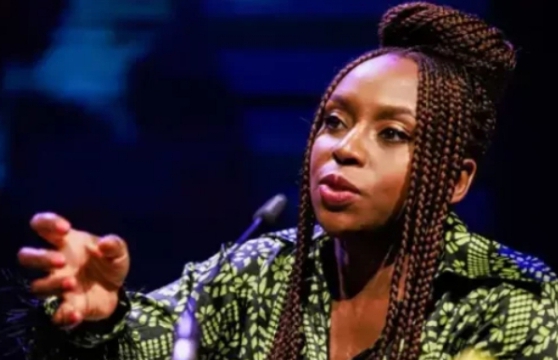
Nigerian author Chimamanda Ngozi Adichie has said she no longer wants to return to Nigeria following the death of her 21-month-old son, Nkanu, saying the tragedy has changed her feelings towards her home country.
Adichie made the disclosure in an interview with The New York Times, where she was asked whether Nigeria still felt like somewhere close to her heart.
“My feelings toward Nigeria have changed,” she said. “I do not want to go back to Nigeria.”
Nkanu, one of Adichie’s twin boys, died in December 2025 following a medical emergency at Euracare in Nigeria.
According to Adichie, Nkanu initially developed a fever and was placed on antibiotics by her husband, Ivara Esege. When his condition failed to improve, the couple took him to the hospital for further examination.
She said Nkanu was later sedated with propofol during an MRI examination, after which he suffered cardiac arrest and died the following day.
Recalling the incident, Adichie said a doctor approached her in a state of panic after the procedure and told her the child had been given too much propofol.
“He was very calm and he said to me, ‘Well, look, they gave him too much Propofol.’ Those were his exact words, which I will never forget until the day I die,” she recalled.
Adichie had in June publicly raised allegations of medical negligence concerning the treatment her son received at the hospital.
The circumstances surrounding Nkanu’s death have since become the subject of a coroner’s inquest, with the proceedings reportedly marked by delays and disagreements between the family and the hospital.
Euracare has reportedly accused Adichie and her husband of destroying evidence by cremating their son’s remains, an allegation connected to the ongoing proceedings.
Adichie and her husband have called for improvements in Nigeria’s healthcare system but, according to the report, have not instituted a lawsuit against the hospital.
Speaking about the possibility of returning to Nigeria, Adichie said her children could be the only reason she would reconsider her position.
She said her daughter still regarded Nigeria as her “happy place.”
Before her son’s death, Adichie said Nigeria remained deeply connected to her identity and writing, describing it as the place where she received “everything” that enabled her to become a writer.
“I mean, it is so surreal, all of this. I still can’t believe we’re talking about my son who died,” she said.
“You’re going through something, but you also feel like you’re outside of it.”
We’ve got the edge. Get real-time reports, breaking scoops, and exclusive angles delivered straight to your phone. Don’t settle for stale news. Join THISTIMES on WhatsApp for 24/7 updates →
Join Our WhatsApp Channel