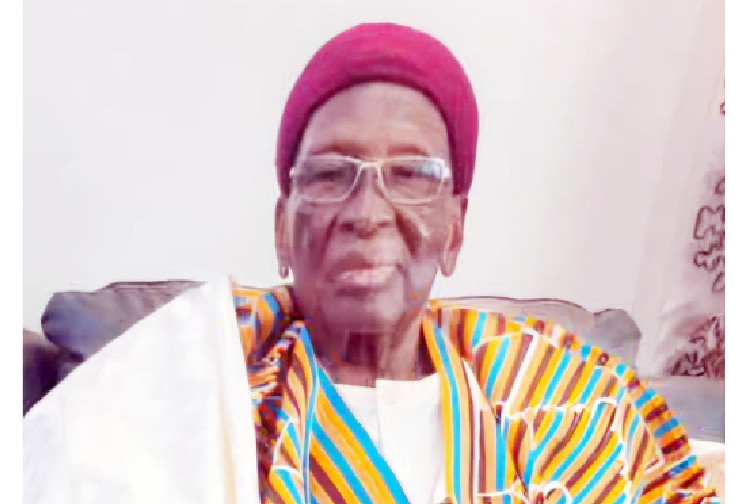
- Tinubu, Jonathan mourn, Adamawa gov declares 3-day mourning
- Nigeria has lost a patriot, gentleman–David Mark, Secondus
- Bamanga Tukur: The Statesman, the battles
By Ademu Idakwo, Jonathan Nda- Isaiah and James Kwen Abuja, Hussaini Hammangabdo, Yola
Nigeria has lost an elder statesman, businessman and former national chairman of the Peoples Democratic Party (PDP), Alhaji Bamanga Tukur.
Tukur, who died on Saturday, 12 September 2026, passed away three days before his 91st birth anniversary. He was born on 15 September 1935.
Family sources said he died after a brief illness, although details surrounding his death were not immediately available at press time.
A former governor of the old Gongola State, Tukur’s public life spanned more than six decades and took him from the Nigerian Ports Authority (NPA) to Government House, the Federal Executive Council, international business circles and the leadership of Nigeria’s biggest political party.
From the Ports to Government House
Tukur first rose to national prominence as general manager and chief executive of the Nigerian Ports Authority (NPA), a position he held from 1975 to 1982.
His years at the NPA gave him extensive experience in maritime administration, trade and transportation, while also establishing his reputation as a manager and businessman.
He subsequently turned to politics and, in 1983, contested the governorship of the old Gongola State on the platform of the National Party of Nigeria (NPN). He won the election and became governor in October that year, succeeding Wilberforce Juta.
His tenure, however, lasted only about three months. On December 31, 1983, the military overthrew President Shehu Shagari’s government, ending the Second Republic and removing Tukur from office.
Gongola State itself was later divided in 1991 to create the present-day Adamawa and Taraba states.
Business and National Politics
After leaving office, Tukur returned to the private sector and built a substantial business empire through BHI Holdings, also known as the DADDO Group of Companies, with interests spanning manufacturing, agriculture, logistics and trading.
His influence soon extended beyond Nigeria. He served as Executive President of the Africa Business Roundtable and later chaired the NEPAD Business Group, becoming a prominent advocate of African trade, private-sector development and economic cooperation.
His business career, however, did not sever his connection with politics.
During General Ibrahim Babangida’s transition programme in the early 1990s, Tukur emerged as one of the politicians seeking national political power.
He contested for the presidential nomination under the National Republican Convention (NRC) in 1992, placing him among the northern political figures seeking the presidency during the troubled transition to the Third Republic.
The transition eventually collapsed amid disputes over the presidential primaries and the annulment of the June 12, 1993 presidential election won by Moshood Kashimawo Abiola of the Social Democratic Party (SDP).
Tukur later returned to government as Minister of Industries under General Sani Abacha, serving from 1993 to 1995.
By then, he had accumulated an unusual breadth of experience: he had managed the nation’s ports, governed a state, built a business empire, pursued the presidency and served in the Federal Executive Council.
The PDP and the Battle for Control
With the return of democracy in 1999, Tukur became a prominent figure in the PDP and one of its influential northern leaders.
In March 2012, with the backing of President Goodluck Jonathan, he emerged as the party’s national chairman.
His tenure quickly became embroiled in internal disputes over party control, political succession and the direction of the government.
The crisis reached a turning point in 2013 when former Vice President Atiku Abubakar and several PDP governors and lawmakers broke away from the Tukur-led leadership to form the faction popularly known as the “New PDP”.
The rebellion became one of the most serious internal challenges to the PDP ahead of the 2015 general election.
It also produced a striking historical irony. Atiku had been involved in the political campaign surrounding Tukur’s 1983 governorship of Gongola State. Three decades later, the two men found themselves on opposing sides of a bitter struggle for control of the same political party.
Tukur eventually resigned as PDP national chairman on 15 January 2014.
His departure from the party’s leadership did not end his public career. The Jonathan administration later appointed him Ambassador-at-Large, and he subsequently served as chairman of the Nigerian Railway Corporation board.
He was also the Tafidan Adamawa and a recipient of the national honour, Commander of the Order of the Niger (CON).
Fintiri: ‘I Will Miss His Wise Counsel’
The governor of Adamawa State, Ahmadu Fintiri, described Tukur’s death as a monumental loss to Adamawa and Nigeria.
In a statement by his chief press secretary, Humwashi Wonosikou, Fintiri praised the deceased for his courage, foresight, patriotism and lifelong commitment to public service.
“Alhaji Bamanga Tukur was a colossus who made remarkable contributions to the development of Adamawa State and Nigeria,” the governor said, adding that he would personally miss Tukur’s “wise counsel” and depth of experience.
Fintiri declared three days of mourning across Adamawa State in honour of the former governor, directing that government flags be flown at half-mast during the period.
He also prayed that Almighty Allah forgive Tukur’s shortcomings, grant him Aljannah Firdaus and give his family the strength to bear the loss.
Tinubu Mourns Former PDP Chairman
President Bola Tinubu has also mourned Tukur, describing his death as the end of a remarkable chapter in Nigeria’s political and economic history.
In a statement by his spokesman, Bayo Onanuga, Tinubu described the former governor as a towering figure whose career spanned public administration, governance, industry, politics and pan-African business.
The President recalled Tukur’s years at the NPA, his governorship of Gongola State, his service as Minister of Industries and his leadership roles in African business organisations.
He also acknowledged Tukur’s contribution to the PDP during his tenure as national chairman.
“Alhaji Tukur was urbane, generous and deeply rooted in the values of integrity and service,” Tinubu said, describing him as a man of “big ideas and bold enterprise” who believed in Nigeria’s potential.
The President extended his condolences to the Tukur family, the Fombina Emirate, the Adamawa State Government and the political and business communities in Nigeria and across Africa.
David Mark: Nigeria Has Lost a Distinguished Statesman
Similarly, a former Senate President and National Chairman of the African Democratic Congress (ADC), Senator David Mark, has described Tukur’s death as a loss to Nigeria.
In a condolence message issued by his special adviser on media and publicity, Kola Ologbondiyan, Mark said Tukur belonged to a generation of Nigerians whose lives were devoted to public service, business and politics.
“His journey through public service, business and politics was remarkable, and his counsel and experience will be greatly missed,” Mark said.
A Perfect Gentleman – Secondus
On his part, former PDP National Chairman Prince Uche Secondus described Tukur as a “perfect gentleman”, saying his death had ended an era in Nigerian politics and business.
Secondus said Tukur was an illustrious son of Adamawa who avoided the politics of hatred and hate speech and served as a “peace ambassador in politics.”
PDP Factions Unite in Tributes
The tributes have come from across political divides, including the two competing factions of the PDP.
The Tanimu Turaki-led faction described Tukur’s death as “a statesman’s farewell”, recalling his contributions to public administration, business, international trade and politics.
It said that during one of his final interactions with the party, Tukur reaffirmed his belief in the PDP as a genuinely national platform capable of addressing Nigeria’s challenges.
The faction said he had urged the party’s leadership to keep its flag flying.
The Wike-backed faction has also mourned him, describing him as a distinguished statesman, administrator, businessman and committed PDP member whose tenure as national chairman came at a critical moment in the party’s history.
The competing tributes offered a final political footnote to the career of a man who once occupied the centre of the PDP’s national power structure.
Yet Tukur’s legacy extends well beyond those political battles.
He was a ports administrator who became governor; a governor whose tenure was cut short by a military coup; a businessman who built an international profile; a presidential aspirant caught up in the turmoil of the aborted Third Republic; a federal minister; and, eventually, the national chairman of Nigeria’s dominant political party at the time.
From the ports to Government House in old Gongola, from the boardroom to the presidential race, and from the Federal Executive Council to the turbulent leadership of the PDP, Bamanga Tukur participated in several defining chapters of Nigeria’s political and economic history.
At 90, that journey has come to an end, but the ambitions, alliances, battles and contradictions that shaped his long public life remain woven into the history of the Nigerian state.
His Words Preserved
Tukur’s public career and worldview are also documented in Legacies of a Legend: Selected Speeches of Ambassador Bamanga Tukur, a 324-page collection of his public addresses compiled by Engineer Awwal Hayatu Wakil and edited by Chief Tony Amadi.
The collection traces his evolution from his years at the Nigerian Ports Authority through his business career and public service, with particular emphasis on enterprise and the role of the private sector in Africa’s economic development.
Former Head of State General Yakubu Gowon also contributed a tribute to the volume, describing Tukur as a “true workaholic.”
Abbas Hails Tukur’s Legacy of Service
The Speaker of the House of Representatives, Hon. Abbas Tajudeen, has expressed sadness over the death of former governor of the defunct Gongola State, now Adamawa and Taraba states, Alhaji Bamanga Muhammad Tukur.
In a condolence message issued through his special adviser on media and publicity, Musa Abdullahi Krishi, Speaker Abbas described Tukur’s death as a huge loss to Nigeria’s business and political communities.
He said the deceased was an elder statesman whose contributions would remain indelible in the country’s history.
Abbas said that beyond Tukur’s exemplary contributions to public administration, governance, industry and politics, he was also a prominent pan-African business leader and a devoted Muslim who propagated Islam and used his wealth to benefit humanity.
He added that Tukur, as national chairman of the PDP, contributed immensely to the development of Nigerian democracy and the advancement of political practices in the country.
The Speaker commiserated with Tukur’s family, members of his community, his business and political associates, as well as the governments and people of Adamawa and Taraba states.
He prayed to Allah (SWT) to forgive Tukur’s shortcomings and grant him Jannatul Firdausi.
Makinde: Tukur Was a National Icon
The presidential candidate of the Allied Peoples Movement (APM) and governor of Oyo State, Engr. Seyi Makinde and the entire Makinde/Daura Campaign Organisation have expressed deep sadness over Tukur’s death.
In a statement by his special adviser on Media and Digital Communication, Anthony Ehilebo, Makinde described Tukur as a national icon and global leader who made significant contributions to Nigeria, Africa and the wider world.
He said, “Tukur stood tall as an awe-inspiring personality and leader — a national icon and global torchbearer who bestrode the business and political worlds like a colossus. He played indelible roles and left an immeasurable legacy, dedicating his intellect, expertise, personal resources, and energy to the unity, stability, and economic and democratic development of not only our dear nation, Nigeria, but also of Africa and the wider world.
“Indeed, a star has passed. Our nation, Africa and humanity have lost one of our best and brightest. Alhaji Tukur was an undefeated optimist, a man of practical ideas and solutions to national issues. He gave his all for the good of our nation and remained dedicated to this cause to the very end.”
Jonathan: Tukur Was a Distinguished Patriot
Former President Goodluck Ebele Jonathan has also expressed deep sadness over the death of Alhaji Bamanga Tukur, describing him as a distinguished elder statesman, patriot, accomplished businessman, and committed democrat.
In a condolence message signed by his special adviser, Ikechukwu Eze, Jonathan said Tukur dedicated much of his life to the service of Nigeria and made significant contributions to the country’s political development and democratic consolidation.
The former President noted that, as a respected chieftain and former national chairman of the PDP, Tukur played an important role in the party’s growth and contributed to Nigeria’s democratic journey.
He said: “Alhaji Tukur was a man of remarkable experience and wisdom who dedicated much of his life to the service of our nation. His contributions to Nigeria’s political development, democratic consolidation, and national unity remain significant.”
Jonathan also described Tukur as a foremost administrator, entrepreneur and businessman who left an indelible mark on Nigeria’s business landscape and economic development.
He said Tukur’s wise counsel, wealth of experience and commitment to democratic governance would be greatly missed by the nation.
We’ve got the edge. Get real-time reports, breaking scoops, and exclusive angles delivered straight to your phone. Don’t settle for stale news. Join THISTIMES on WhatsApp for 24/7 updates →
Join Our WhatsApp Channel