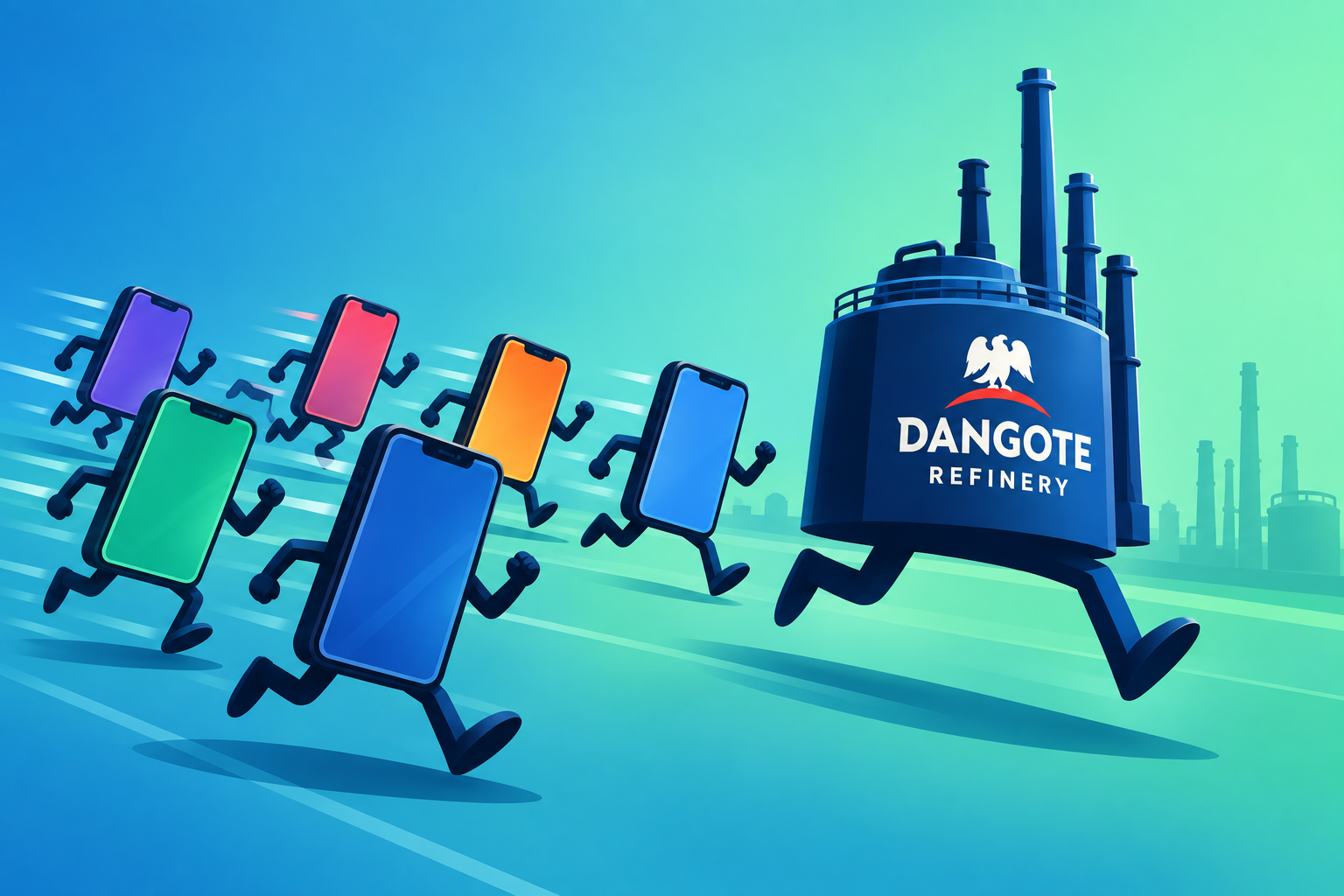
The Dangote Petroleum Refinery and Petrochemical initial public offering (IPO) has triggered an unprecedented digital race among Nigerian stockbrokers, banks and fintech companies seeking to participate in what could become the country’s largest retail-driven share sale.
Sources familiar with the transaction told Nairametrics that the unusually large number of participating platforms was driven by Aliko Dangote’s insistence that the IPO should attract as many as 10 million subscribers and be built primarily around digital distribution.
The refinery opened its N2.15 trillion public offer on Monday, September 14, 2026, with investors able to subscribe through about 55 approved electronic application channels, representing the largest digital distribution network deployed for an IPO in Nigeria.
The channels include apps operated by 20 banks, two mobile money companies, the Nigerian Exchange’s NGX Invest platform and 32 fintech and investment firms.
Sources who spoke to Nairametrics said Dangote’s vision for the IPO went beyond raising capital for the refinery, as the billionaire industrialist wanted the transaction to significantly expand retail participation in Nigeria’s capital market.
Achieving that ambition required the transaction’s advisers to reach Nigerians who may never have opened a stockbroking account or purchased shares on the Nigerian Exchange, making digital distribution central to the public offer.
The result is a public offer being distributed through more apps and digital channels than any previous Nigerian IPO, with banks, stockbrokers, fintechs and payment companies all competing to capture retail demand.
The scale of Dangote’s retail ambition created an immediate technology challenge for Nigeria’s stockbroking industry, particularly for traditional brokers whose digital platforms were designed mainly to serve existing clients rather than rapidly onboard potentially millions of new investors.
The rush to develop new platforms was also challenging because, before the latest Investment and Securities Act (ISA), digital platforms for share offerings could only be operated through an exchange.
Some brokers developed proprietary applications ahead of the Dangote offer, while others partnered with fintech companies that already had payment infrastructure, identity-verification systems and large numbers of active users.
These partnerships allowed stockbrokers to provide the capital-market licences and transaction expertise required for the offer, while fintech companies supplied the technology and retail distribution channels.
The Dangote Refinery IPO therefore represents a significant expansion in the use of multiple digital distribution channels for a Nigerian public offer, moving beyond the traditional reliance on issuing houses, receiving agents, commercial banks and physical application forms.
The scramble by stockbrokers, banks and fintech companies for access to digital distribution platforms goes beyond the traditional fees they could earn from participating in the IPO.
Platforms could also leverage the new relationships to offer other fintech-related products and services, making customer acquisition potentially more valuable over the long term than the immediate fees earned from distributing the IPO.
For the Securities and Exchange Commission (SEC) and the broader capital market, the transaction could serve as a major capital-formation catalyst and a test of Nigeria’s capacity to digitally onboard millions of investors ahead of other expected listings, including the anticipated NNPC listing next year.
This explains why access to the IPO’s digital distribution network has become commercially important for participating firms: the transaction offers an opportunity not only to distribute Dangote Refinery shares but also to establish relationships with a potentially new generation of Nigerian retail investors.
The intense competition among stockbrokers, banks and fintech companies reflects both the scale of the Dangote Refinery offer and the commercial opportunities attached to potentially onboarding millions of new investors.
The proliferation of platforms is expected to test Nigeria’s electronic public-offer infrastructure, including identity verification, payment processing, share allotment and the creation or validation of Central Securities Clearing System accounts.
The Dangote Refinery IPO comprises 4.1 billion new ordinary shares offered at N525 each, giving the company a target raise of approximately N2.15 trillion.
The public offer follows a private placement that reportedly raised approximately $2.5 billion after attracting subscriptions equivalent to 3.7 times its initial size.
Funds raised from the IPO will support the refinery’s long-term expansion plans, including increasing processing capacity from about 700,000 barrels per day to 1.4 million barrels per day.