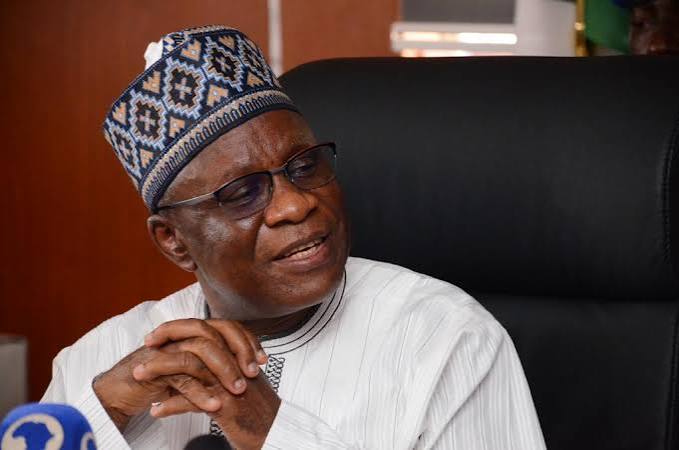
The federal government will conduct a peer review of the regional development commissions and submit its findings to President Bola Ahmed Tinubu.
It directed underperforming commissions to improve.
The minister of Regional Development, Engr. Abubakar Momoh, disclosed this on Monday at the first North Central Stakeholders Development Summit in Abuja.
He said the review would determine whether the commissions had fulfilled the purposes for which they were established.
“In a very short time, as a ministry, we will sit down and peer review all the development commissions and submit our report to the President,” Momoh said.
He stressed that the commissions were government establishments and must operate within its policies, rules and regulations, rather than functioning as independent entities.
“Let it be made clear that the regional development commissions are not private enterprises. They are government establishments, governed by government rules, governed by all extant regulations,” he said.
Momoh said the outcome of the exercise would form the basis for determining whether individual commissions had fulfilled their mandates upon establishment.
“Our report will form the basis to know whether that commission has fulfilled the reason for which they were inaugurated and established,” he said.
The minister said some of the new commissions were beginning to demonstrate capacity and vision, while others needed to improve.
“Two of them are starting to show the path. One is at the middle. I think the other two, they are still sleeping. I think, I’m sure they need to wake up,” he said.
He cited the Niger Delta Development Commission and the North East Development Commission as examples of commissions that had demonstrated capacity through major development projects.
Minister of State for Regional Development, Alhaji Uba Maigari Ahmadu, said the Federal Government was also at an advanced stage of harmonising the National Regional Development Policy 2026–2030.
Ahmadu said the policy was being developed in collaboration with the National Economic Council, the regional development commissions, development partners and the National Regional Development Policy drafting team.
He said the policy would provide “a single coherent national architecture” within which the commissions could plan, prioritise and mobilise resources.
According to him, the policy would soon be presented to the Federal Executive Council for consideration.
Ahmadu said the North Central required a dedicated and coordinated response to its development challenges, stressing that government alone could not provide the resources needed to transform the region.
He called for increased participation by the private sector and development partners through blended finance, public-private partnerships, agribusiness investment and technical collaboration.
The minister said the success of regional development should ultimately be measured by its impact on towns, farming communities and local governments, rather than activities carried out in Abuja.
He added that the ministry would work with the North Central Development Commission to track the implementation of the summit’s resolutions and ensure that they feed into the National Regional Development Policy and its accompanying plan.
Governor Abdullahi Sule of Nasarawa State said the North Central had the human and natural resources required to become a major economic hub, but needed effective planning, leadership and implementation.
Sule particularly called for value addition to the region’s mineral resources, insisting that resources extracted from the region should also be processed there.
“When you are mining in North Central, you must also process in North Central,” he said.
He recalled that Nasarawa State had more than 400 mining licences when his administration came into office in 2019, but did not have a single processing plant.
Sule said the state now hosts major lithium processing plants, adding that the North Central also had major advantages in cement, rice and sesame production.
He said the region needed “thinkers” and “implementers” who understood leadership and public service to convert its resources into sustainable development.
Minister of Information and National Orientation, Mohammed Idris, said the North Central could translate its enormous natural and human resources into sustainable prosperity by strengthening regional economic integration.
Speaking on “Aligning the Renewed Hope Agenda of the Federal Government,” Idris identified solid minerals, agriculture, water, energy, tourism and the region’s large population as major assets that could drive its development.
He said infrastructure projects across the region should be treated as economic infrastructure because they connect farms to markets, reduce transportation costs and create opportunities for trade and investment.
“These are not simply roads and bridges. They are economic infrastructure connecting farms to markets, reducing transport costs, creating opportunities for trade and for investment,” Idris said.
Idris said the Federal Government was increasingly shifting from resource extraction to processing and value addition, adding that the North Central had the capacity to become a major agricultural and food-processing hub.
He said the region’s minerals could be linked to manufacturing, energy to industry, agriculture to agro-processing and skills development to employment.
On security, Idris said lasting development could not be achieved through force alone, stressing the need for early warning mechanisms, community engagement and economic opportunities for young people.
He also expressed support for establishing state police, saying that localising policing could help address security challenges more effectively.
Meanwhile, the Managing Director and Chief Executive Officer of the North Central Development Commission said the summit was intended to move the region from a fragmented state-level development to a coordinated regional economy with a common vision.
He said the commission’s “Great Leap Forward” 20-year Economic, Infrastructural and Social Development Plan was designed to create a productive, connected, secure, inclusive and globally competitive North Central.
The NCDC covers Benue, Kogi, Kwara, Nasarawa, Niger, Plateau and the Federal Capital Territory.
The commission said its mandate covered transportation, agriculture, security, entrepreneurship, industrialisation, employment, health, education, housing, water, electricity and telecommunications.
It said discussions were ongoing on major regional infrastructure projects, including a railway network, revival of the Ajaokuta Steel project, dredging of the Rivers Benue and Niger, Baro Port and the Jos Dry Inland Port.
The commission also plans to establish investment “Deal Rooms” to classify projects according to their readiness for financing and investment.
It said its performance would be measured by tangible outcomes, including jobs created, private capital mobilised, infrastructure delivered and value added to agricultural and mineral resources.
Chairman of the occasion, AVM Mohammed Ndatsu Umaru (rtd), said the test of the summit would be implementation, urging the commission to translate the deliberations into practical development interventions across the region.
We’ve got the edge. Get real-time reports, breaking scoops, and exclusive angles delivered straight to your phone. Don’t settle for stale news. Join THISTIMES on WhatsApp for 24/7 updates →
Join Our WhatsApp Channel