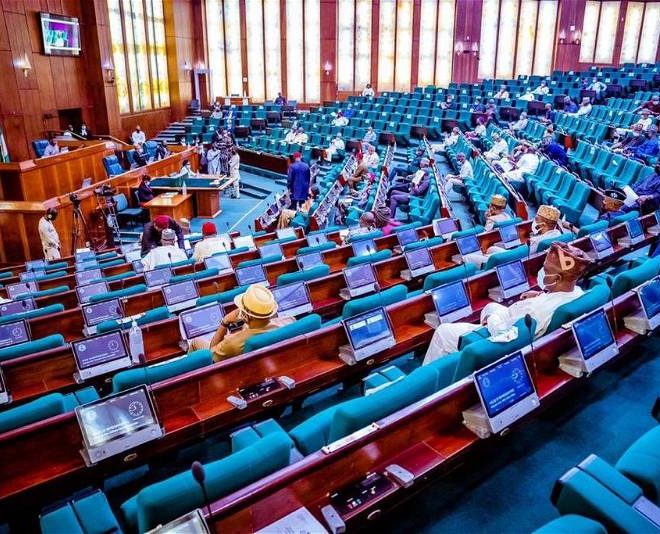
The National Assembly has formally transmitted the Constitution (Sixth Alteration) Bill, 2026, to the 36 state Houses of Assembly, along with the State Police Bill and other bills.
This has set the stage for the next phase of the proposed amendments to Nigeria’s 1999 Constitution.
The state legislatures are now expected to consider the Bill and communicate their resolutions to the National Assembly.
The transmission was carried out on Wednesday by the Clerk to the National Assembly, Kamoru Ogunlana, in line with Section 9 of the Constitution, as amended.
Among the major proposals contained in the Bill are the establishment of state police, financial autonomy for local governments, independent candidacy, electoral reforms, special legislative seats for women and judicial reforms.
The proposed state police framework seeks to introduce a dual policing structure comprising federal and state police services.
The local government proposals, meanwhile, aim to strengthen the financial autonomy and constitutional protection of the third tier of government.
The electoral reforms include the proposed establishment of an Electoral Offences Commission and provisions for independent candidates.
However, the proposed amendments cannot proceed without the required support of the state legislatures.
Section 9 of the Constitution requires at least two-thirds of the 36 state Houses of Assembly to approve a constitutional alteration Bill.
This means that at least 24 state legislatures must pass resolutions approving the amendments before the National Assembly can complete the process.
In transmitting the Bill, Ogunlana asked the state assemblies to consider the proposals in accordance with their respective legislative procedures and forward their resolutions to the National Assembly after deliberations.
He said the state legislatures were expected to communicate their decisions within 30 days of receiving the Bill.
Ogunlana, however, stressed that the 30-day period was only an administrative timeframe and not a constitutional deadline.
He explained that the Constitution does not prescribe a specific period within which State Houses of Assembly must communicate their resolutions on constitutional alteration Bills.
The Clerk also emphasised the independence and constitutional responsibilities of the state legislatures in the amendment process.
According to him, the National Assembly’s transmission of the Bill was intended to facilitate the orderly discharge of the state assemblies’ constitutional role.
He said the National Assembly remained committed to conducting the process in accordance with the Constitution, due process, institutional cooperation and respect for the legislative responsibilities of all tiers of government.
The National Assembly will take further steps on the proposed amendments after receiving the resolutions of the 36 state Houses of Assembly.
We’ve got the edge. Get real-time reports, breaking scoops, and exclusive angles delivered straight to your phone. Don’t settle for stale news. Join THISTIMES on WhatsApp for 24/7 updates →
Join Our WhatsApp Channel