The Church of Nigeria (Anglican Communion) has warned politicians and their supporters against vote-buying, hate speech, intimidation, violence and misinformation ahead of the 2027 general elections, urging Nigerians to reject actions capable of further dividing the country.
The church also charged the Independent National Electoral Commission (INEC) to guarantee neutrality, transparency and credibility in the electoral process, while calling on the judiciary to remain independent and impartial in handling election disputes.
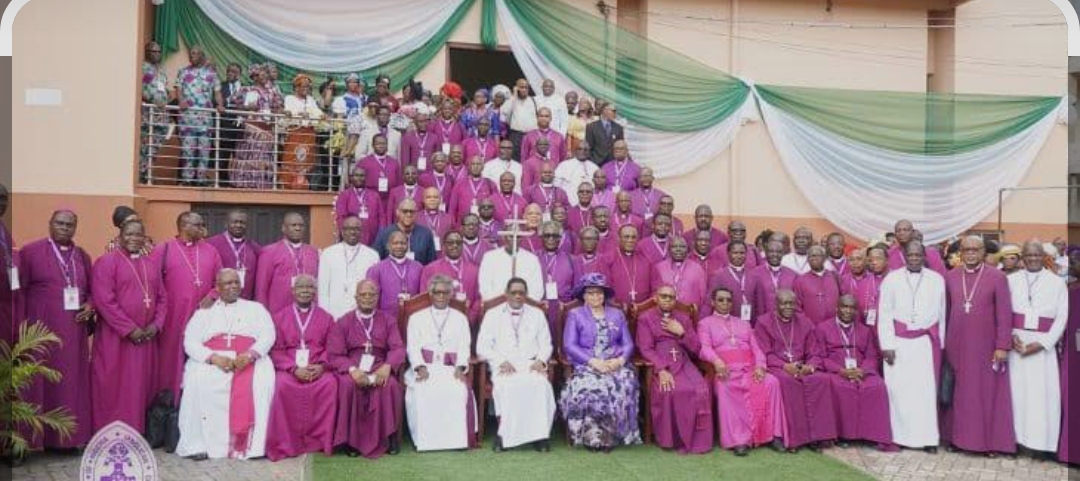
The warnings were contained in a communiqué issued yesterday at the end of the 15th General Synod of the Church of Nigeria, held at Our Saviour’s Church, Ikenne, Diocese of Remo, Ogun State.
The 15th General Synod, which had the theme “The Priesthood of All Believers: Equipping God’s People for the Work of Ministry,” was attended by 142 bishops, 199 clergy and 145 members of the laity.
The Synod, presided over by the Archbishop, Metropolitan and Primate of All Nigeria, Most Rev. Henry Chukwudum Ndukuba, also raised alarm over persistent insecurity, economic hardship, food shortages, corruption and the high cost of governance.
The church said political leaders and citizens must place national unity, peace and the common good above partisan interests as the country approaches the 2027 elections.
It urged political parties to campaign on issues rather than resort to inflammatory rhetoric, while calling on citizens to participate peacefully and respect lawful electoral processes and outcomes.
“Political differences should never become grounds for hatred, violence or the breakdown of national unity,” the Synod said.
On insecurity, the church said banditry, kidnapping and killings continued unabated in parts of the country despite ongoing government interventions.
While commending the Federal Government for recent successes in rescuing kidnapped persons, particularly schoolchildren and their teachers, and for deploying forest guards, the Synod said more needed to be done to protect lives and property.
It called for intensified intelligence gathering, the occupation of ungoverned spaces and the recovery of territories under terrorist control.
The church urged security agencies and governments at all levels to move from a reactive approach to a proactive strategy capable of preventing attacks before they occur.
The Synod also expressed concern over the pressure of inflation, unemployment, poor electricity supply and rising fuel prices on households and businesses.
It urged the Federal Government to take measures to stabilise and reduce the prices of petrol, diesel and kerosene, saying the rising cost of transportation, food and other basic necessities had severely weakened household purchasing power.
It also demanded a transparent framework for licensed modular refineries, with proper environmental and safety standards, lawful revenue generation, employment opportunities and equitable benefits for Niger Delta communities.
The Anglican Church further demanded an urgent reduction in the cost of governance, calling for the elimination of administrative waste, redundant political appointments and non-essential expenditure.
It urged government to redirect savings from such reductions to education, healthcare, infrastructure, security and social welfare.
The Synod called for full and transparent implementation of the Oronsaye Report, alongside stronger anti-corruption measures, open budgeting, transparent procurement and effective fiscal oversight.
It reminded public officials that they were accountable to God, the Constitution and the Nigerian people in the management of public resources.
The Synod expressed grave concern over Nigeria’s food crisis, citing insecurity, climate change, high farming costs and inflation as major threats to agricultural production.
It called for stronger security for farmers, increased investment in mechanised agriculture, single-digit agricultural loans and transparent subsidies for farm inputs.
It also demanded measures to reduce post-harvest losses, modernise grazing, expand fisheries, improve food storage and establish an Agriculture Trust Fund.
“Farmers must be empowered to feed the nation,” the church said.
The church also raised concerns over developments capable of aggravating Nigeria’s religious and ethnic divisions.
It urged Nigerians to resist attempts to divide the country along ethnic, religious, regional or political lines, stressing that Nigeria’s diversity should remain a source of strength rather than conflict.
The Synod said the country’s constitutional character and mechanisms for accommodating its religious and ethnic diversity must be respected.
It further called for investigation into reports that qualified Christian youths were allegedly being denied admission to professional courses in some federal universities in northern Nigeria on religious grounds.
It demanded strict adherence to merit, fairness and lawful admission criteria.
The Synod also proposed consideration of a constitutional amendment to introduce mandatory, credible and periodic drug and substance-abuse testing for serving public officers and persons seeking elective or appointive public offices.
It said the growing abuse of drugs and other substances, particularly among young Nigerians, was increasingly associated with violent crime, gang activity, mental health challenges and damage to families and the wider economy.
It called for stronger prevention, public education, enforcement, rehabilitation and reintegration efforts involving government, schools, families, communities and faith-based organisations.
The church called for urgent investment in public healthcare institutions, better-equipped facilities and improved welfare for medical and health workers.
It also demanded greater attention to preventive healthcare, maternal and child health, mental health and the needs of vulnerable Nigerians.
On education, the Synod acknowledged efforts by federal and state governments but identified inadequate funding, insecurity, poor infrastructure, teacher shortages and the high number of out-of-school children as continuing challenges.
It called for sustained funding, improved teacher recruitment and remuneration, better training and wider access to affordable basic and tertiary education.
The Anglican Church condemned xenophobia, Afrophobia and racial discrimination, particularly reported attacks against Nigerians in South Africa.
It called on the governments of Nigeria and South Africa to strengthen dialogue and bilateral relations and ensure the protection of citizens.
It, however, urged Nigerians living abroad to maintain proper documentation and comply with the immigration laws of their host countries.
The Synod acknowledged the potential of artificial intelligence and other digital technologies to improve education, healthcare, communication and economic opportunities.
It, however, warned against misinformation, hate speech, cybercrime, privacy violations, deepfakes, digital addiction, academic dishonesty and exploitation of children and vulnerable people.
The church called for ethical and responsible use of technology, stressing that technological capability should not automatically be regarded as moral acceptability.
The Synod reaffirmed the Church of Nigeria’s commitment to contributing to national transformation and urged Christians to deploy their gifts in service to God and humanity.
It called on Nigerians to recommit themselves to truth, justice, peace, accountability and the common good as the country confronts its security, economic and political challenges.
We’ve got the edge. Get real-time reports, breaking scoops, and exclusive angles delivered straight to your phone. Don’t settle for stale news. Join THISTIMES on WhatsApp for 24/7 updates →
Join Our WhatsApp Channel