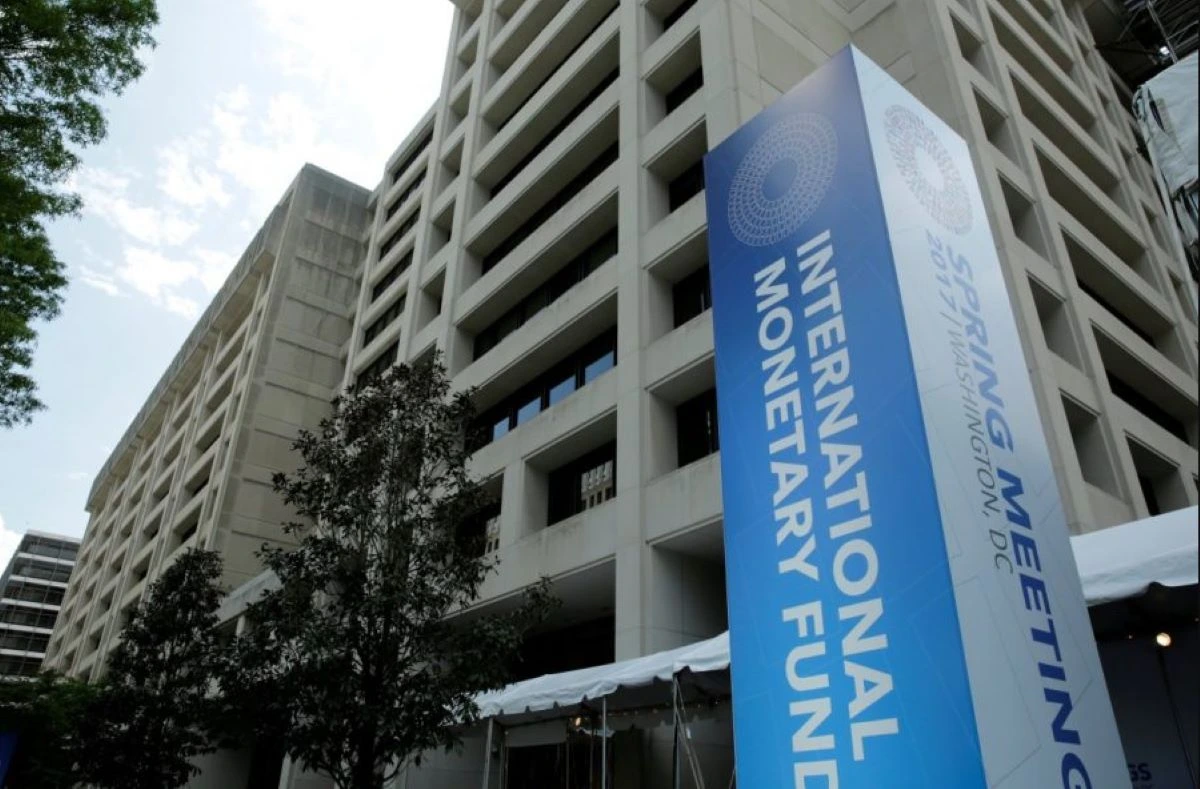
The International Monetary Fund (IMF) has cautioned that evidence of financial shocks in foreign exchange markets does not, on its own, justify central bank intervention, stressing the need for a broader assessment of market conditions and potential policy costs.
In a Staff Discussion Note titled Drivers of Exchange Rates in EMDEs: Implications for Foreign Exchange Intervention, the IMF outlines a framework to help policymakers distinguish exchange rate movements driven by macroeconomic fundamentals from those caused by financial shocks and market amplification.
The note argues that while exchange rate flexibility generally supports economic adjustment, market frictions can sometimes trigger destabilising currency movements, even when domestic fundamentals remain sound.
The IMF’s framework uses monthly macrofinancial data, theoretical models and evidence from real-world episodes to assess the drivers of exchange rate movements in emerging market and developing economies (EMDEs).
Applied to Brazil and Chile, the analysis found that financial shocks account for about a third of uncovered interest parity (UIP) fluctuations on average.
However, the note highlights that financial frictions can amplify shocks and transmit them to the real economy. Episodes of sharp increases in financial stress were associated with notable declines in output, underscoring the importance of monitoring market-functioning indicators.
The framework is intended to help policymakers assess exchange rate movements in real time and determine whether circumstances may warrant intervention under the IMF’s Integrated Policy Framework (IPF).
Where intervention is being considered to stabilise exchange rate risk premia, the presence of a financial shock is still not sufficient on its own. Policymakers must assess a wider range of factors, including the adequacy of foreign exchange reserves, the expected effectiveness of intervention compared with alternatives such as macroprudential policies.
This, it said, reinforces the need for a careful cost-benefit assessment before intervening in foreign exchange markets.
The IMF’s findings come amid changes in Nigeria’s foreign exchange market, including renewed foreign investor interest and rising external reserves.
Nigeria was also recently included in J.P. Morgan’s newly introduced Government Bond Index–Emerging Markets Edge (GBI-EM Edge), with a 7.4% weighting in the benchmark tracking local-currency government debt across frontier emerging markets.
Nairametrics earlier reported that Nigeria’s external reserves have grown by $7.09 billion since the beginning of 2026.
The latest position has now surpassed the CBN’s projected reserve level of approximately $51.04 billion for the whole of 2026.
The continued accumulation of reserves provides a stronger external buffer for the Nigerian economy and comes as the CBN continues efforts to strengthen foreign exchange market stability.
Also, the latest increase in external reserves comes as the CBN maintains a tight monetary policy stance aimed at moderating inflation and supporting macroeconomic stability.