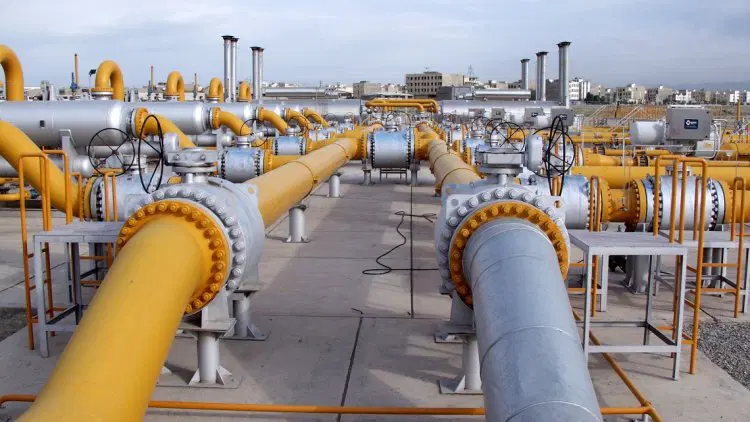
Nigeria’s natural gas exports rose by 19 % year-on-year to 733,778 million standard cubic feet (MMSCF) in the first eight months of 2026.
This is according to Nairametrics’ analysis of data from the Nigerian Upstream Petroleum Regulatory Commission (NUPRC).
The increase reflects stronger export volumes between January and August, with 2026 exports already accounting for a significant share of total gas produced during the period.
NUPRC data show that Nigeria produced 1.92 million MMSCF of gas during the eight-month period, comprising 959,941 MMSCF of associated gas (AG) and 963,321 MMSCF of non-associated gas (NAG).
Despite the stronger export performance, domestic gas sales remained substantial, reaching 516,780 MMSCF in the eight months, while 525,768 MMSCF was used in the field.
Non-associated gas production slightly exceeded associated gas output during the period, with NAG accounting for 963,321 MMSCF compared with 959,941 MMSCF of AG.
The August figures also showed relatively strong production, with total output reaching 245,439.13 MMSCF, compared with 227,015.22 MMSCF in August 2025.
NUPRC had earlier reported that average daily natural gas production rose to 7.93 billion standard cubic feet per day (bcf/d) in May 2026, up 0.63% from 7.88 bcf/d in May 2025.
While export volumes increased, NUPRC data also show that Nigeria flared 131,564 MMSCF of gas between January and August 2026.
August recorded the highest monthly flaring volume so far this year at 18,350.55 MMSCF, equivalent to 7.48% of total gas production.
The August flaring rate was also the highest recorded in 2026 and marked a notable increase from 6.72% in July.
NUPRC data indicate that July and August 2026 figures, including gas shrinkage, remain provisional and may change following the quarterly gas data reconciliation exercise for the third quarter.
The increase in gas exports points to stronger utilisation of Nigeria’s gas resources for international markets and provides an additional source of foreign exchange earnings.
NUPRC has also introduced a Gas Development Roadmap targeting more than 55 trillion cubic feet of uncommitted gas reserves, aimed at attracting investment and accelerating the development of the country’s gas resources.
Nigeria holds one of Africa’s largest proven natural gas reserves, estimated at more than 200 trillion cubic feet, providing significant opportunities for economic diversification beyond crude oil.