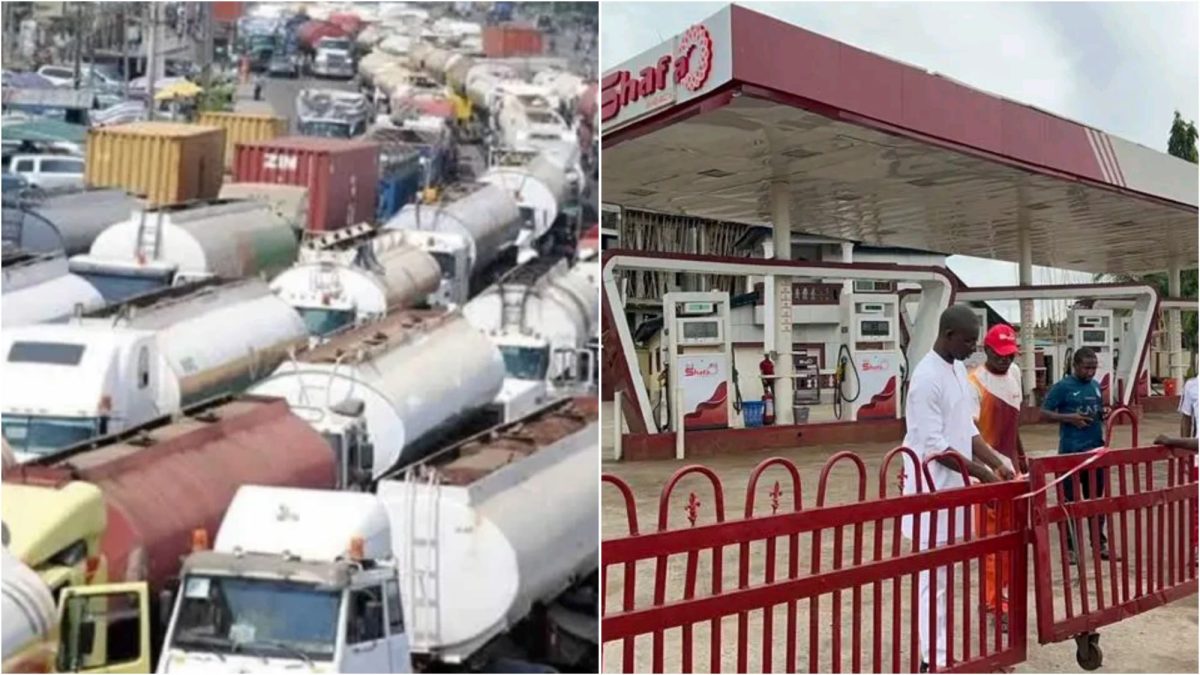
Filling stations have begun reducing their petrol pump prices in Abuja and its environs, with some major retailers cutting their rates by between N25 and N30 per litre amid changing conditions in the downstream petroleum market.
A market survey showed that AA Rano, Mobil and some other filling stations have adjusted their petrol prices downward, although pump rates remain relatively high across the country.
AA Rano reduced its petrol price from N1,450 to N1,420 per litre, representing a N30 reduction. Mobil also lowered its pump price from N1,435 to N1,410 per litre, a reduction of N25 per litre.
The adjustments mean motorists buying petrol from the affected stations will now pay slightly less than they did previously, although the new rates remain above N1,400 per litre.
The reductions come amid increased competition among fuel retailers and a decline in international crude oil prices. At the time of the survey, Brent crude was trading at about $103 per barrel, while West Texas Intermediate (WTI) stood at around $100.30 per barrel.
The reduction also comes against the backdrop of continued concerns about the effect of fuel prices on the cost of living. Higher petrol prices have contributed to increased transportation costs and have affected the prices of goods and services across the country.
Recently, the Leader of INRI Evangelical Spiritual Church, Primate Elijah Ayodele, warned that Nigerians could face deeper economic hardship if they elect what he described as the “wrong candidate” in the 2027 presidential election.
Ayodele, in a statement signed by his media aide, Osho Oluwatosin, predicted that petrol could rise to N2,500 per litre and diesel to N3,000 under such a scenario.
“If Nigeria votes for the wrong candidate in 2027, petrol will rise to N2,500, and diesel will go to N3,000. There will be economic hardship, and insecurity will increase,” Ayodele said.
The cleric also predicted increases in electricity tariffs, examination fees and cement prices, while warning of worsening insecurity and the emergence of another terrorist group.
“Another new terrorist group will come up, and electricity tariffs will rise. WAEC fee will rise to N70,000, and a bag of cement will rise to N18,000 regardless of whatever Dangote does,” he said.
Ayodele said the poor would bear the greatest impact of the economic difficulties he predicted, attributing the possible deterioration to what he described as wrong policies, declining foreign reserves and increased corruption.
“The poor will suffer it greatly, and everything will change. There will be wrong policies, our foreign reserves will go down, corruption will increase,” he added.
He urged Nigerians to carefully scrutinise candidates ahead of the 2027 presidential election rather than making their decisions based on immediate material benefits.
“Nigerians must open their eyes before voting for any candidate in the forthcoming election. This election will determine a lot, and if care isn’t taken, Nigerians will move into another round of hardship,” he said.
Ayodele also said he would later disclose what he described as “God’s choice” for Nigerians, while acknowledging that voters would ultimately decide whom to support.
“In the coming days, I will reveal God’s choice for Nigerians in the coming election. I will let the people know how to identify the best candidate, but it’s left to them to decide what they want to follow,” he said.
Meanwhile, the Federal Government has continued to pursue measures aimed at reducing transportation costs through alternative energy sources, particularly compressed natural gas (CNG) and electric-powered public transportation.
President Bola Tinubu, in an update on the National Affordable CNG Transit Programme on Saturday, directed state governments to intensify efforts to ensure that more Nigerians begin to experience measurable reductions in transportation costs from October 1.
Tinubu said the initiative followed his August 27 meeting with the 36 state governors, after which an implementation committee was established under the Nigeria Governors’ Forum, chaired by Kwara State Governor AbdulRahman AbdulRazaq.
The President cited reductions in transport fares in Borno, Oyo, Adamawa, Enugu, Plateau and Niger states, which he attributed to the deployment of CNG and electric-powered transport schemes.
According to Tinubu, more than 120,000 vehicles have been converted to CNG over the past three years, while Nigeria now has more than 400 certified CNG conversion centres and over 90 CNG refuelling stations.
He also rejected calls for a return to the petrol subsidy regime, arguing that the policy had exposed the Nigerian economy to international oil-price fluctuations and consumed trillions of naira.