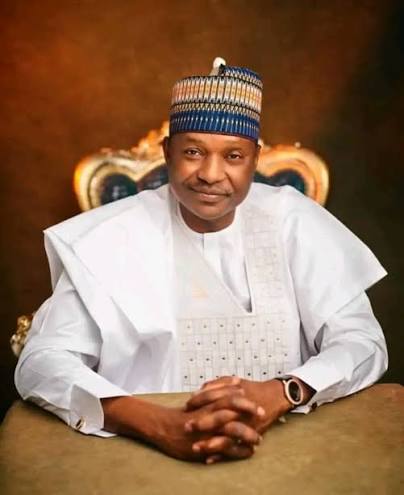
Former Attorney-General of the Federation and Minister of Justice, Abubakar Malami, SAN, has rejected allegations of a corrupt arrangement with the promoter of Sunrise Power and Transmission Company Limited, Leno Adesanya, over settlement negotiations concerning the Mambilla Hydroelectric Power Project.
Malami, through his Special Assistant on Media, Mohammed Bello Doka, also welcomed Nigeria’s successful defence in the arbitration proceedings instituted by Sunrise, urging Nigerians to consider the tribunal’s findings alongside the complete documentary and evidentiary record.
The statement came amid extensive public discussion of the 616-page arbitral award and reports concerning the settlement negotiations, presidential approval, communications between Malami and Adesanya, and an alleged agreement involving a share of money that Sunrise would receive.
Reports indicate that the Economic and Financial Crimes Commission (EFCC) has setup a team to probe individuals mentioned in alleged illicit deals in the Mambilla Power Project. Besides Malami, others mentioned in the alleged illicit deals include former Vice President Atiku Abubakar, his then-wife Jennifer Douglas, Abubakar Malami, Olu Agunloye, Sambo Dasuki, his son Abubakar Dasuki, Abdullahi Yola, and Dere Awosika.
Recall that last Thursday, the International Arbitration Tribunal under the auspices of the International Chamber of Commerce (ICC) in Paris, rejected the claim in the arbitration instituted by Sunrise Power and Transmission Company Ltd (Sunrise) against Nigeria.
The company made the claim over disputes associated with the development of the 3,960 MW Mambila Hydroelectric Power Project in Taraba State. It demanded $680 million as a settlement sum and interest in respect of another arbitration in which it is claiming over $2.7 billion in compensation and interest.
However, the former Attorney-General, while explaining his role in the saga, said the issues required careful distinction between an arbitral determination and a criminal conviction.
“We nevertheless consider it necessary, in view of the extensive reports and interpretations presently circulating in the media, to distinguish carefully between the outcome of an international commercial arbitration, findings and observations made by an arbitral tribunal for the purpose of determining the claims before it, and a criminal adjudication against an individual,” the statement said.
“The proceedings were commercial arbitration proceedings between parties to a dispute. They were not a criminal prosecution of Abubakar Malami, SAN, and the award does not constitute a criminal conviction of him.”
The statement, however, acknowledged the seriousness of the issues reportedly contained in the award.
“We are conscious that serious findings have been reported from the 616-page award, including findings concerning the settlement and Addendum, presidential approval, communications between Malami and the promoter of Sunrise, Mr. Leno Adesanya, and an alleged corrupt arrangement,” it said.
“Those matters should not be ignored, trivialised or answered by speculation.”
Malami’s office said it would respond comprehensively after examining the complete award and the underlying records, arguing that individual extracts circulating publicly should not be treated as a substitute for the tribunal’s full reasoning.
“Equally, findings of that gravity should be considered against the complete evidentiary and documentary record, rather than through selected passages circulating in the media, particularly where the extracts were neither the findings nor reason for the decision of the tribunal,” the statement said.
“A comprehensive response to every finding attributed to the tribunal will therefore follow a careful examination of the complete award and the underlying records.”
Dispute predates Malami
The statement also sought to place the Mambilla dispute in its historical context, stressing that the controversy predated Malami’s tenure as Attorney-General.
“The Mambilla contractual controversy did not originate during Malami’s tenure as Attorney-General,” it said.
“Its history stretches back to 2003, when Sunrise Power and Transmission Company Limited became involved in the proposed hydroelectric project. Subsequent decisions concerning the project resulted in litigation and competing contractual claims long before Malami assumed office.”
According to the statement, former Attorney-General Michael Aondoakaa, SAN, had reviewed the dispute before Malami came into office and expressed the view that Sunrise had not been properly disengaged before another contractor was brought into the project.
“An amicable resolution was consequently recommended as being in Nigeria’s interest,” the statement said.
It further pointed to a November 2012 General Project Execution Agreement involving Sunrise and Sinohydro, saying the agreement was part of earlier efforts to resolve the dispute and advance the project.
“The relevance of this history is straightforward: Malami did not create the Sunrise dispute, introduce Sunrise to the Mambilla project, or originate the Federal Government’s attempts to settle the controversy,” it said.
“He inherited a longstanding dispute that had traversed previous administrations, Attorneys-General, ministries and contractual arrangements.”
Presidential directive and settlement negotiations
Malami’s office said his involvement followed existing governmental and presidential processes rather than originating independently from the Ministry of Justice.
According to the statement, the Chief of Staff to then-President Muhammadu Buhari communicated a presidential directive in April 2016 concerning resolution of outstanding disputes and competing interests associated with Mambilla.
“As Attorney-General and chief legal officer of the Federation, Malami was required to advise the government concerning the legal exposure created by those disputes and possible means of resolving them,” the statement said.
It added that the Ministry of Justice was not the executing agency for the Mambilla project or the ministry that originally awarded the underlying contracts.
“Its role was principally legal: to advise the Federal Government concerning its exposure and the available means of managing that exposure.”
The statement also linked the unresolved Sunrise dispute to efforts to finance and implement the Mambilla project.
“The records available to the former Attorney-General’s office indicate that the unresolved arbitration was regarded as an impediment to financing discussions involving China Exim Bank,” it said.
It further referred to discussions on September 5, 2019, involving President Buhari and Yang Jiechi, then Special Representative of Chinese President Xi Jinping, concerning resolution of the arbitration.
“Settlement discussions therefore did not arise in a vacuum,” the statement said.
“They formed part of a broader governmental effort to resolve a longstanding dispute and remove what was regarded at the time as a legal obstacle to financing and implementation of a major national power project.”
Why US$200 million was considered
Malami’s office also sought to explain the circumstances surrounding the proposed US$200 million settlement.
“Sunrise was asserting claims running into billions of dollars,” it said.
According to the statement, Sunrise initially proposed US$500 million as a full and final settlement during negotiations in London in November 2019, while Federal Government representatives countered with US$100 million.
“A figure of US$200 million subsequently emerged from the negotiations,” it said.
“The governmental calculation was whether an asserted multibillion-dollar exposure, continuing litigation, financing difficulties and delays to the Mambilla project could be brought to an end through a substantially smaller negotiated settlement.”
The statement stressed that the justification for considering a settlement should not automatically be treated as an endorsement of every term eventually negotiated.
“Whether every term ultimately negotiated advanced that objective is a separate question and must be examined on its own evidence,” it said.
Buhari did not approve the payment
Malami’s office also acknowledged that President Buhari ultimately rejected the proposed US$200 million payment.
“President Buhari ultimately did not approve payment of the US$200 million settlement,” the statement said.
“On 20 April 2020, the President indicated that the Federal Government did not have US$200 million to pay Sunrise. That position was communicated to Sunrise by Malami on 22 April 2020.”
The statement further said that subsequent attempts to secure presidential approval were unsuccessful.
“Reports of the award further state that subsequent efforts to obtain presidential approval were unsuccessful, including a January 2021 request upon which President Buhari wrote ‘Not approved,’” it said.
“Any complete account must acknowledge those facts.”
However, Malami’s office said his subsequent conduct was also relevant to understanding the sequence of events.
“Following the President’s refusal to approve payment, Malami did not simply direct that Sunrise be paid regardless of the President’s position,” the statement said.
“When Sunrise asserted that Nigeria was consequently in default and sought to rely upon the enhanced financial consequences of the settlement arrangements, Malami instructed counsel representing the Federal Government to resist Sunrise’s attempt to have the settlement terms adopted or enforced against Nigeria and to preserve the Federal Government’s legal position.”
Malami rejects alleged corrupt arrangement
On the central allegation, Malami’s office issued a categorical denial.
“Media reports state that the tribunal reached the serious conclusion, on the civil standard applicable to the proceedings, that there was a corrupt arrangement between Malami and Mr. Adesanya under which Malami was allegedly promised a share of money that Sunrise would receive,” the statement said.
“That is an exceptionally serious allegation and deserves a direct response.”
“Malami rejects any suggestion that his official actions were undertaken pursuant to a corrupt agreement or in exchange for personal financial benefit.”
The statement said the allegation should be tested against the complete evidentiary record, including questions surrounding whether Malami ever received any money or other financial benefit from Sunrise, Adesanya or any related entity.
“One obvious factual question is whether any money or other financial benefit from Sunrise, Adesanya or any connected entity was ever received by Malami pursuant to the alleged arrangement,” it said.
The statement also highlighted reports that Adesanya claimed to have recordings relevant to his allegations but that those recordings were not produced before the tribunal.
“Reports further indicate that Adesanya claimed to possess audio or video recordings relevant to his allegations but that those recordings were not produced before the tribunal,” it said.
“Where allegations of this gravity are made, the existence, non-production, authenticity and contents of any claimed recordings are matters of obvious evidentiary importance.”
‘Malami instructed lawyers to resist enforcement’
The former Attorney-General’s office said particular attention should be paid to what happened after Buhari declined to approve the settlement.
“President Buhari declined the proposed payment,” it said.
“Malami communicated that position to Sunrise.”
After Sunrise subsequently asserted that the Federal Government was in default and sought to rely on enhanced financial consequences arising from the settlement arrangements, the statement said Malami instructed government lawyers to resist the enforcement attempt.
“Malami then instructed the Federal Government’s lawyers to resist Sunrise’s attempt to enforce those terms against Nigeria and to protect the government’s position,” it said.
“That sequence is significant.”
“Any comprehensive assessment of Malami’s conduct should examine not only the terms he participated in negotiating, but also what he did when Sunrise subsequently attempted to invoke those terms against the Federal Government.”
‘The award is not a criminal conviction’
Malami’s office reiterated that the arbitral proceedings should not be presented as a criminal trial.
“An international commercial arbitral tribunal determined contractual claims and associated issues submitted to it,” the statement said.
“Malami was not standing trial before a Nigerian criminal court, and the arbitral award is not a criminal conviction of him.”
It added that Malami “was neither a party to the proceedings, nor accorded any opportunity of stating his own side of the story.”
The statement said this distinction did not seek to diminish the reported findings.
“That distinction does not erase adverse arbitral findings. It simply describes their legal character accurately,” it said.
“If allegations of criminal wrongdoing are to be pursued, they must be addressed through the appropriate lawful processes, with the evidentiary and procedural protections applicable to such proceedings.”
Malami welcomes Nigeria’s arbitration victory
Despite the controversy surrounding the award, Malami welcomed Nigeria’s outcome in the arbitration.
“The Federal Republic of Nigeria ultimately succeeded in defeating Sunrise’s enormous financial claims,” the statement said.
“The defence lawyers were engaged by Malami and the investigations conducted by the EFCC to strengthen Nigeria’s case were conducted on his instructions.”
It added: “The Presidency has publicly confirmed that the tribunal rejected Sunrise’s claims and awarded substantial costs in Nigeria’s favour.”
“Malami welcomes that outcome.”
The former Attorney-General said he remained pleased whenever Nigeria’s legal interests and public finances were protected.
“As a former Attorney-General of the Federation, he remains gratified whenever the legal interests and public finances of Nigeria are successfully protected, irrespective of the administration under which that result is ultimately secured,” the statement said.
The statement concluded by urging journalists and commentators to consider the full history and documentary record of the dispute.
“The Mambilla controversy traversed several administrations, Attorneys-General, ministries, international contractors, presidential decisions, contractual arrangements and years of litigation and arbitration,” it said.
“Its history cannot accurately be compressed into a headline or attributed in its entirety to one public officer.”
“Nigeria’s victory should be welcomed, and findings concerning the conduct of former public officials should be carefully examined and answered on the evidence.”
The former Attorney-General’s office also appealed for caution as political attention turns towards the 2027 electoral cycle.
“The Office therefore calls upon journalists, commentators and political actors to distinguish established facts from allegation and interpretation; to distinguish an arbitral finding from a criminal conviction; and, particularly as Nigeria approaches the 2027 electoral cycle, to allow the complete documentary record rather than partisan considerations to determine the public understanding of these events.”
It said a further response addressing the tribunal’s individual findings would be issued after the complete arbitral award and accompanying records had been studied.
We’ve got the edge. Get real-time reports, breaking scoops, and exclusive angles delivered straight to your phone. Don’t settle for stale news. Join THISTIMES on WhatsApp for 24/7 updates →
Join Our WhatsApp Channel