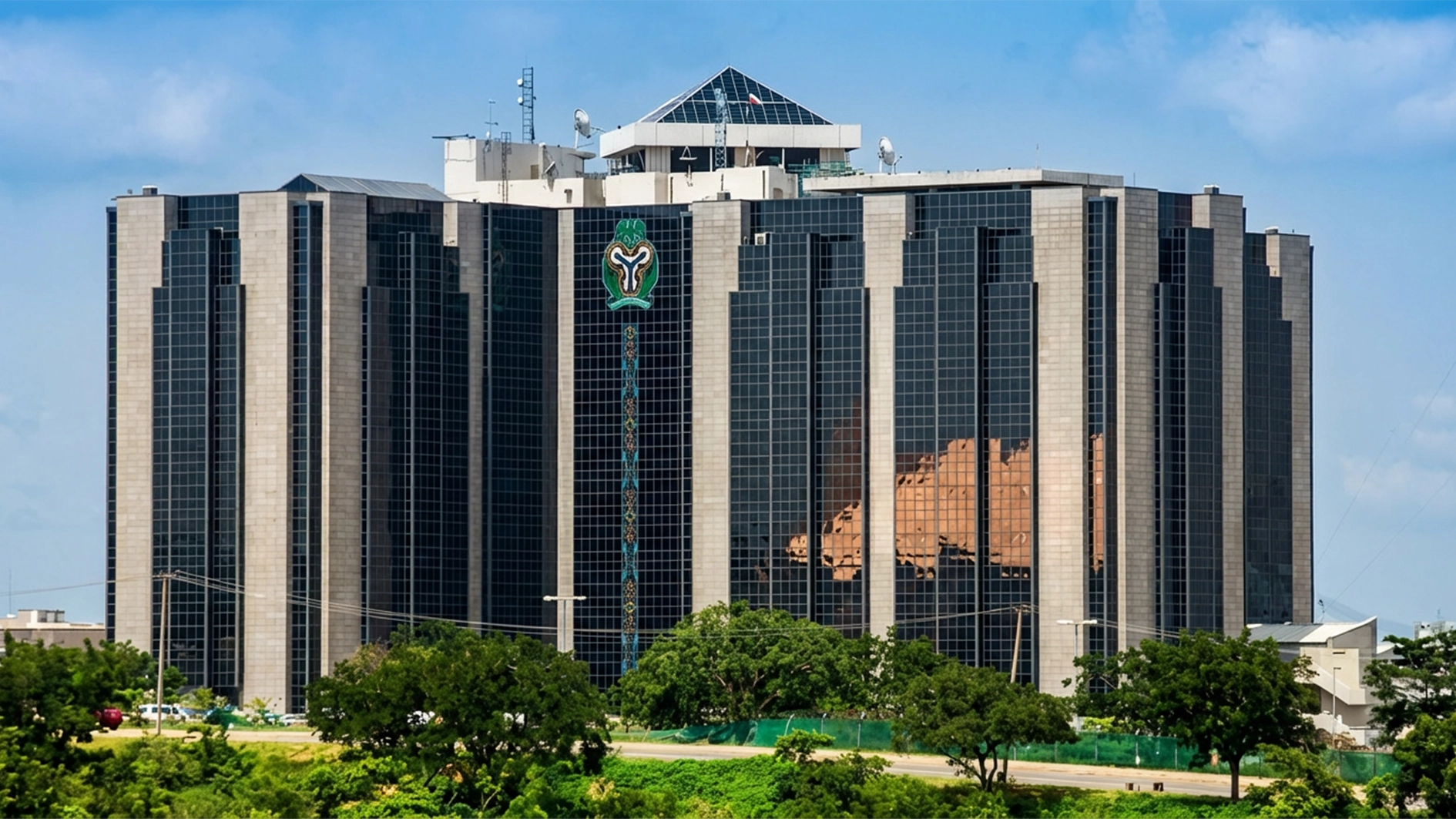
Nigeria’s interest-rate differential has fallen behind Ghana after the Central Bank of Nigeria (CBN) cut its benchmark rate by 350 basis points to 23% on Tuesday, September 22, 2026, making the West African peer a more attractive destination for portfolio capital inflows.
Nairametrics comparative analysis of a few East and West African economies shows Nigeria’s policy rate is now 7.61 percentage points above its 15.39% headline inflation rate.
Ghana, however, has a wider 9 percentage-point differential, with a 14% policy rate against 5% inflation.
The 350-basis-point cut to its benchmark Monetary Policy Rate (MPR) narrowed the gap between the country’s policy rate and inflation to 7.61 percentage points, a differential now smaller than Ghana’s, even though Nigeria’s nominal policy rate remains the highest among a group of comparable African economies.
The decision of Monetary Policy Committee (MPC) of the Central Bank of Nigeria (CBN) to reduce the MPR from 26.5% to 23% at its 307th meeting, held September 22, 2026, means that while Nigeria’s policy rate is still well above its 15.39% headline inflation, the widening of that gap has effectively narrowed relative to Ghana, whose smaller policy rate is offset by considerably lower inflation.
Nigeria’s policy rate-inflation differential now sits at 7.61 percentage points (23.00% minus 15.39%), a measure economists watch closely because a wider gap generally makes a country more attractive to foreign capital seeking carry trade returns.
Ghana: policy rate of 14.00% against inflation of 5.00%, a gap of +9.00 percentage points — the widest differential among the four African economies compared, despite having a policy rate 9 percentage points below Nigeria’s.
The comparison illustrates a distinction between nominal interest-rate levels and the differential that actually matters for capital flows: Ghana’s much lower policy rate is more than offset by its much lower inflation rate, giving it a wider effective cushion for investors than Nigeria currently offers.
Set against advanced economies, Nigeria’s positive gap remains unusually large.
The United States shows a gap of roughly +0.35 to +0.60 percentage points (policy rate of 3.75%–4.00% against inflation of 3.40%).
The FDC boss, who spoke during a televised interview on local media, noted that despite the rate reduction, the real return available to investors remains significant.
Comparing Nigeria’s position against advanced economies specifically, Rewane said:
Rewane cautioned, however, that the naira’s immediate reaction to the rate cut was muted, noting that the currency “stayed flat at about N1,387” in the parallel market, moving briefly to around N1,390 before settling back — suggesting investors have not yet dramatically repriced Nigerian risk on the back of the cut.
Nigeria’s MPR has moderated by about 4.25 percentage-point since September 2024, from 27.25% to 23% while inflation has declined a roughly 9-percentage-point over the same period, a trend Rewane described as evidence that, “from a price-stability perspective, this is working.”
With Ghana now holding a wider policy-rate/inflation differential than Nigeria despite a considerably lower nominal rate, the comparison underscores that the attractiveness of Nigerian assets to foreign portfolio investors will increasingly depend on how quickly domestic inflation continues to moderate, rather than on the size of the MPR alone.