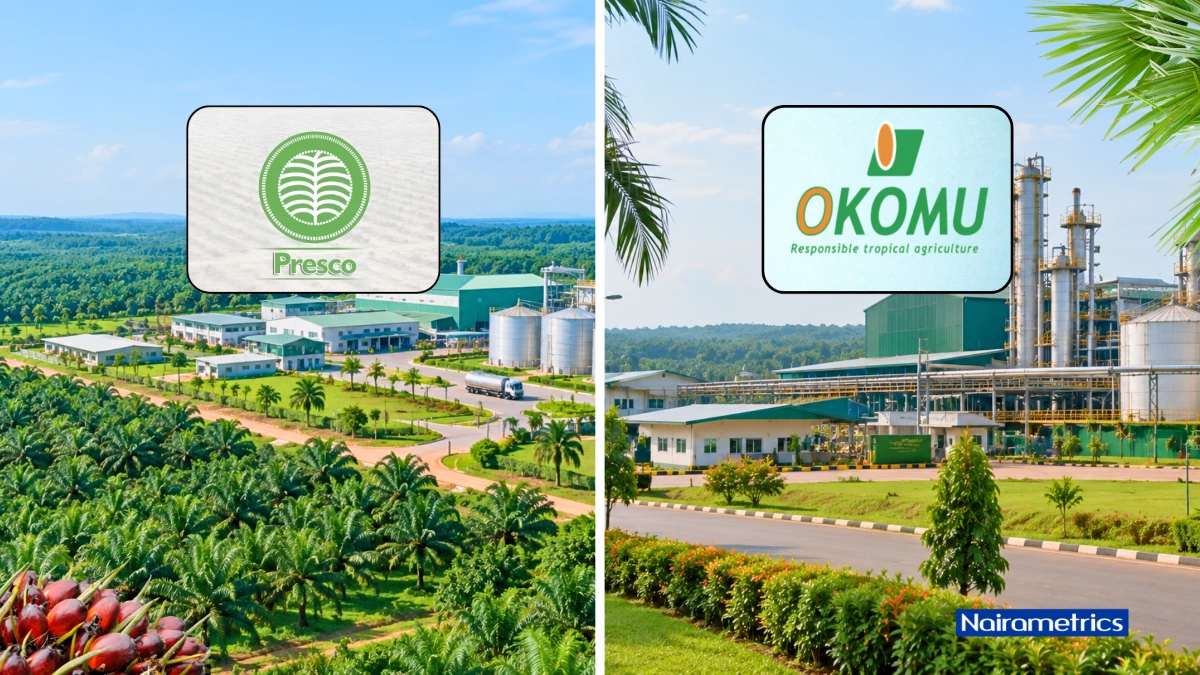
If you invested N1 million each in Presco Plc and Okomu Oil Palm Plc a little over ten years ago, those investments would be worth approximately N61.98 million and N42.12 million, respectively, today.
Such is the scale of wealth creation delivered by two of Nigeria’s largest listed palm oil producers, which have emerged as some of the Nigerian Exchange’s biggest long-term compounders over the past decade.
Nairametrics Research analysis from share price data published by the Nigerian Exchange (NGX) was utilized. Entry prices are based on the December 31, 2015 closing price, which served as the reference opening prices for the first trading session of 2016 on January 4.
Between the start of 2016 and September 24, 2026, Presco delivered a share price return of 6,098%, effectively multiplying investor capital almost 62 times, while Okomu Oil returned 4,112%, representing nearly 42 times the initial investment.
Put together, N2 million invested equally in both companies would have grown to about N104.10 million over the period, excluding dividends, brokerage fees and taxes.
Presco and Okomu Oil, the two dominant listed palm oil producers in Nigeria, have been the sector’s standout performers, compounding investor capital at rates that most asset classes anywhere in the world would struggle to match.
At the start of 2016, Presco’s shares were trading at N33.00. An investor who put N1 million into the stock at that price would have acquired 30,303 shares.
Okomu Oil Palm’s shares were trading at N30.30 at the start of 2016. An investor who put N1 million into the stock at that price would have acquired 33,003 shares.
Okomu’s business model through the decade was similarly structured to Presco’s, with revenues effectively linked to international palm oil prices converted at the prevailing naira exchange rate.
The extraordinary returns delivered by Presco and Okomu over the past decade were underpinned by equally strong growth in their businesses.
The difference is the naira. Over the period, the naira lost approximately 85% of its value against the dollar, falling from roughly N197 to N1,328. As a result, the spectacular naira gains translated into much smaller, though still exceptional, returns in dollar terms.
That distinction matters. Presco turned roughly $5,076 into $46,671, while Okomu turned it into about $31,716. Those are outstanding long-term outcomes by almost any standard. But they also show why Nigerian equity returns should not be judged by naira appreciation alone.
In an earlier article published by Nairametrics looking at where to invest in September 2026, Presco and Okomu Oil were both highlighted as preferred agricultural plays in the equities section, with Presco described as a preferred agro play and Okomu noted as offering quality but at a higher valuation.
For investors whose target return is below 30%, OMO Bills and Treasury Bills with stop rates of 19.32% to 19.90% and 16.30% to 17.15% respectively offered strong risk-adjusted alternatives to equity exposure, while money market funds led by DLM at 20.69% provided another route to competitive returns without equity market risk.