BY OKEM GREEN MBAH, Yenagoa, IBRAHIM OBANSA, Lokoja, EMMANUEL MGBEAHURIKE, Imo, FELIX IGBEKOYI, Delta , ADEBAYO WAHEED, Oyo And Nnamdi Mbawike , Enugu
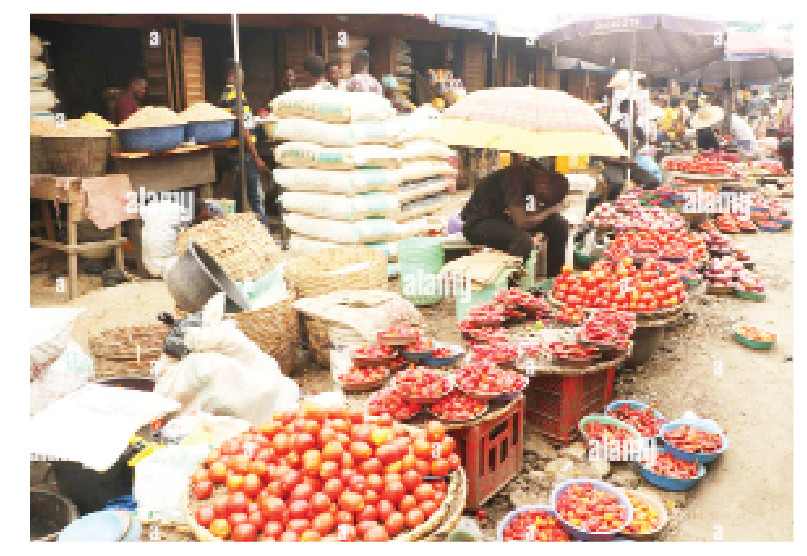
Concerns over a fresh threat to food supply are mounting across 15 states following a flood alert issued by the Nigerian Meteorological Agency (NiMet), with farmers warning that widespread flooding could disrupt agricultural production and further strain the food supply chain.
Farmers in the 15 affected states in Imo, Cross River, Ebonyi, Benue, Anambra, Akwa Ibom, Lagos, Rivers, Edo, Kogi, Taraba, Delta, Bayelsa, Enugu and Abia are already counting their losses, with many lamenting that floodwaters have submerged farmlands and washed away crops following weeks of heavy rainfall.
Some farmers told our correspondents that the floods had destroyed portions of their immature produce, while some have been forced to harvest crops prematurely to salvage whatever remains before rising waters completely destroy their farms. They fear that continued flooding could worsen losses, disrupt the supply of food to markets and put further pressure on prices in the coming weeks.
From Cross River to Bayelsa , Akwa Ibom, and other states, they lamented told LEADERSHIP Sunday that the impact of the floods could extend beyond their farms to consumers, as damaged farmlands and lost harvests would reduce food supplies to local markets and potentially push up prices.
They said Livestock farmers could also suffer losses if animals, including poultry, goats and pigs, are not moved to safer areas before floodwaters rise.
BAYELSA
For Bayelsa State, the warning is particularly significant as large parts of the state comprise riverine communities and low-lying areas prone to flooding.
The state has suffered major flooding in the past, including the devastating floods of 2012 and 2022, while flooding was also recorded in 2023 and 2025.
The director-general of the Bayelsa State Directorate of Flood and Erosion Control (DFEC), Surveyor Chief Omuso Kari, said the state was taking measures to mitigate the impact of flooding, particularly in Yenagoa, through the clearing of waterways and drainage channels to facilitate the free flow of water.
Kari told our correspondent that delayed funding, released in June instead of April, affected this year’s flood-control work. He explained that the directorate was using swamp buggies to clear waterways but needed better equipment, including a Watermaster, to tackle larger channels.
The DG identified the Ikoli Creek as a major concern, saying drone surveillance showed blocked sections restricting water flow and navigation. He added that five locations had been identified for raised shelters where residents could seek refuge during floods.
He said the renewed flood threat also posed risks to agriculture and food supplies, as many smallholder farmers operate in low-lying areas. Prolonged flooding, he warned, could destroy crops, displace livestock and cut off access to farms, worsening food losses and disrupting supplies to local markets.
On his part, the chief executive officer of Agri Echo Resource Foundation (AERF), Mr Martin Eyomiowei, urged farmers to begin preparations immediately, particularly those cultivating lowland areas, by moving vulnerable crops, livestock and other valuables to higher ground.
He also called for stronger government and agricultural-sector support, including access to flood-resistant seedlings, emergency funds and improved flood-protection measures.
A farmer in Yenagoa, ….who has experienced previous flooding, said the major concern was the uncertainty over the timing and severity of the floods, which could disrupt farming activities and the food supply chain.
He urged early preparation, saying timely action could determine whether farmers salvage part of their harvest or lose everything to floodwaters.
KOGI
In Kogi State, the government has intensified flood preparedness and evacuation campaigns following rising water levels in the Rivers Niger and Benue and NiMet warnings that the state remains at high risk.
LEADERSHIP Sunday observed that despite repeated appeals, however, some residents of flood-prone communities remain reluctant to relocate, citing financial constraints, fear of losing property and attachment to ancestral homes.
Speaking with LEADERSHIP Weekend, the executive secretary of the Kogi State Emergency Management Agency (KOSEMA), Mouktar Atimah, said measures were in place to mitigate the impact of the predicted floods, identifying Ibaji, Idah, Igalamela, Ajaokuta, Lokoja, Bassa, Ofu, Koton Karfe and Omala as particularly vulnerable areas.
He called for stronger collaboration among government agencies, traditional institutions, humanitarian organisations and residents to prevent loss of lives and property.
Atimah commended Governor Ahmed Usman Ododo for what he described as a proactive approach to disaster management, recalling that more than 76,000 people were accommodated in IDP camps across the state during last year’s flooding without any recorded death.
Meanwhile, Haruna Maikudi, a resident of Adankolo, appealed for stronger preventive measures, including the construction of an embankment along the River Niger from Pata to Adankolo as a permanent solution to recurring floods.
The Kogi State Emergency Management Agency, working with the Nigeria Security and Civil Defence Corps (NSCDC), has also intensified sensitisation in Adankolo and Ganaja, urging residents to move to safer ground.
This is even as health officials and humanitarian organisations have cautioned residents against contact with contaminated floodwater because of the risk of water-borne diseases.
The traditional ruler of Adankolo, Etsu Adankolo, Chief David Agba, welcomed the sensitisation campaign and called for lasting solutions to the recurring floods that displace residents and disrupt economic activities in riverine communities.
IMO
In Imo State, an official of NEMA, Nweze Innocent, revealed that they had commenced rescue operations by evacuating victims affected by the flood to their improvised accommodation, located in the upland regions and safe for human habitation.
He revealed that affected victims in areas such as Works Layout, Umuguma, Akwakuma and Amakohia had been relocated to safer locations.
Nweze called on the citizenry residing in areas at high risk of flooding to relocate to safer grounds and avoid actions that could increase their vulnerability and lead to unexpected consequences.
He appealed to the people not to endanger their lives but to keep their environments clean and be proactive in confronting the flood menace.
According to him, “The flooding situation has presented an ugly scenario for farmers, as parts of their farmlands are being washed away, which could contribute to low productivity.”
Another farmer, Mazi Ndukwe Ubaka, stated that the floods associated with torrential rainfall destroyed his farmland and washed away the seeds planted.
He lamented the ugly incident and called on the government to assist, while urging the citizenry to desist from dumping and remove waste from gutters and not block the drainage system.
DELTA STATE
LEADERSHIP Sunday gathered that the chairman and co-chairman of the State Flood Management Committee, Dr Kingsley Emu (SSG), Hon Etacherure Terry, Commissioner, Bureau of Special Duties, and director, Delta State Emergency Management Agency, Mr Karo Ovemeso, have conducted a spot assessment of the water level in flood-prone communities in the state.
They warned residents in such areas to vacate and move upland in order not to be caught unaware, warning that life is more important than property.
According to Emu, the state has pre-positioned relief, water-treatment and first-aid supplies, just as it has identified and prepared safe shelters in Aniocha North, Aniocha South, Bomadi, Burutu, Ethiope East, Ika North, Ika South and 13 others.
The team visited flash points across the state, including Oko, Berger, Tier Junction, Mile 5 and Ugbolu in Oshimili South LGA. They also made calls to President-Generals in Ndokwa East, Patani, Bomadi and Isoko North to ascertain the flood situation in those areas.
The Delta State Emergency Management Agency, under the Ministry of Bureau for Special Duties, confirmed that it has boat operators at the Otogwu River axis of Anwai Road who are to alert the agency of any disaster and the actions to be taken.
The Commissioner for the Bureau of Special Duties, Ejiro Terry Etacherure, said SEMA may engage divers to assist in its operations.
Around the Ugbolu axis, it was observed that most of the farmlands have been submerged by the floodwaters, which are rising due to the rising water level of the River Niger.
A yam farmer, Titus Igwe, lamented the disaster, worrying that if the situation persists, it may result in food shortages, hunger and low income for farmers.
A pepper trader, Eunice Onolo, also lamented that there was nowhere to farm and that supply was shorter than demand. She lamented her inability to meet the demands of customers.
ONDO
Meanwhile, the Ondo State Emergency Management Agency (ODSEMA) said it has intensified measures to minimise the impact of flooding across the state, with the deputy Governor, Olayide Adelami, overseeing the agency’s preparedness efforts.
The deputy governor, who supervises ODSEMA, said the agency had commenced public sensitisation through radio jingles to educate residents on flood prevention, environmental sanitation and compliance with safety advisories.
Adelami, who spoke through his chief press secretary, John Paul Akinduro, said ODSEMA had also organised stakeholders’ engagement workshops involving community leaders, government agencies, environmental experts and other partners to strengthen emergency response coordination.
He said the agency was encouraging residents to desist from indiscriminate dumping of refuse in drainage channels and waterways, while working with the state Ministry of Environment to clear blocked drainages and waterways in flood-prone areas.
According to him, ODSEMA was also collaborating with the National Emergency Management Agency (NEMA) on intervention measures and disaster management strategies to safeguard lives and property.
ENUGU
In Enugu, about four communities in Aninri local government area rea of Enugu State – Mpu, Okpanku, Ndiabor and Oduma – have been ravaged by devastating floods that displaced residents and destroyed houses, shops, rice mills, farmlands and other property worth millions of naira.
The flood submerged parts of Afor Okpanku, Ivo Bridge and adjoining roads, washing away rice, yam and cassava farms.
The councillor representing Mpu Ward, Hon. Edwin Ogbuka, described the situation as life-threatening, saying several houses and farmlands were affected.
A community leader in Mpu, Mr Chukwu Magnus Dele, said six villages in the community had been affected, with displaced residents taking refuge at Amachalla Town School.
A farmer, Mrs Amarachi Chukwu, said goods and farms worth millions of naira had remained submerged for two days.
Residents who spoke with our correspondent said that Okpanku had experienced major flooding on previous occasions, with community accounts citing 1939, 1965 and 2026 as major flood years.
Speaking on the incident, the chairman of Aninri local government Area, Prince Ugochukwu Nwanjoku, expressed concern over the natural disaster, saying flooding occurs at least twice yearly in some parts of the area due to the uncompleted Ivo Dam project.
The acting executive secretary of the Enugu State Emergency Management Agency (SEMA), Mrs Chinasa Mbah, confirmed that Enugu is already flooded.
It was gathered that rather than building new physical shelters, Enugu State Governor Peter Mbah had earlier directed local council chairmen to reactivate and fully prepare already-established flood IDP holding camps.
This prepares the state to accommodate residents moving from flood-prone zones to higher ground in line with the 2026 Seasonal Climate Predictions.
OYO
In the same vein, the Oyo State Emergency Management Agency (OYSEMA), in collaboration with the Ministry of Environment and Natural Resources, has activated comprehensive disaster preparedness and flood mitigation measures.
OYSEMA’s operational office said it had activated a technologically driven, sensor-based Early Warning System designed to remotely monitor water levels and detect flood risks up to 72 hours in advance, broadcasting alerts to vulnerable populations.
According to the office, specialised flash flood alerts have been deployed, specifically focusing on low-lying and high-risk local government areas, including Akinyele, Egbeda and Oluyole.
Working with community leaders, OYSEMA has mapped out logistics to coordinate fast-tracked relocation using the six-to-72-hour early warning window to limit injuries or loss of property.
A resident of Ibadan, Mr Adedamola Ojo, while speaking on preparedness, said many urban and rural residents actively clear gutters, unblock drainage channels and organise community clean-ups through local associations.
A farmer in Akinyele local Government area, Adeseun Alani, said farmers largely rely on indigenous knowledge, environmental indicators and community cooperation to anticipate flood surges.
He said some agricultural communities constructed local drainage systems, adopted early-maturing or flood-tolerant crop varieties, and built elevated refuge mounds for livestock.
Speaking on the impact of floods on farms and crops, another farmer, Pa Adedotun Adewale, said floods often submerge and rot mature or growing crops, leading to immediate harvest losses and disruption in food supply.
Speaking on the impact of floods on livestock, Mr Aderemi Oluwafolakemi said rapidly rising floodwaters could trap and drown farm animals if they are not moved to higher ground in time, while wet and muddy conditions foster parasites and water-borne diseases such as foot rot and respiratory infections.
We’ve got the edge. Get real-time reports, breaking scoops, and exclusive angles delivered straight to your phone. Don’t settle for stale news. Join THISTIMES on WhatsApp for 24/7 updates →
Join Our WhatsApp Channel