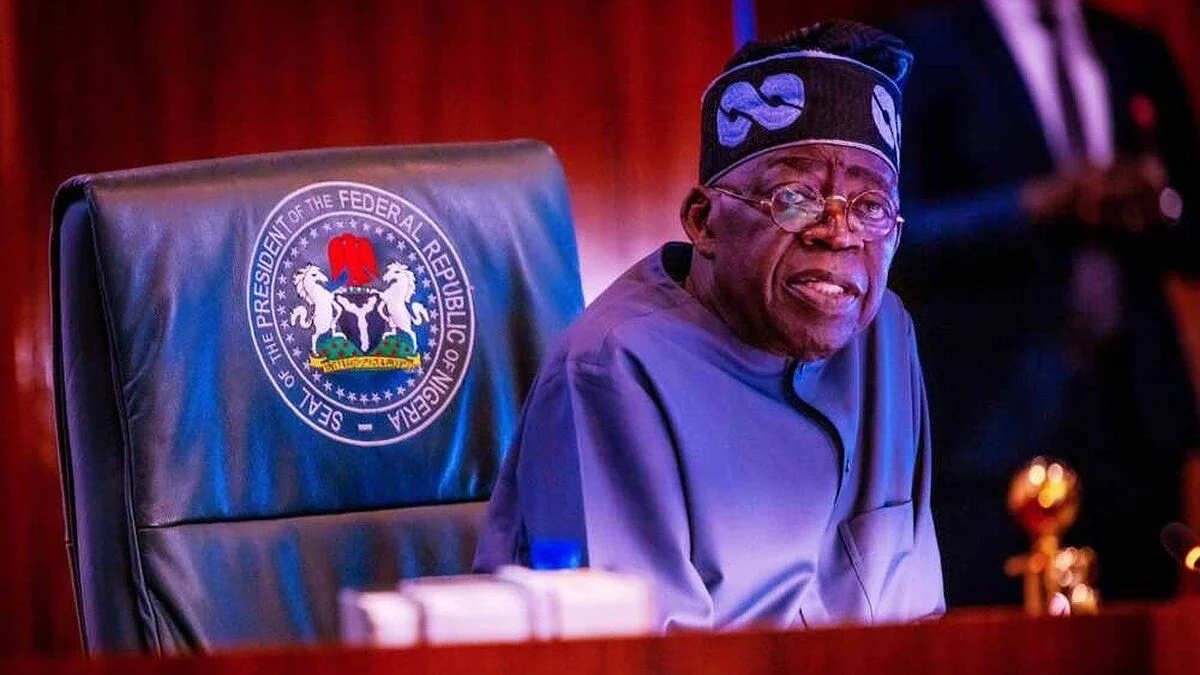
The administration of President Bola Tinubu has moved to secure three new World Bank loans worth a combined $1.5bn.
Documents from the World Bank show that the proposed facilities will provide $500m each for climate resilience, social protection and early childhood development programmes.
The first facility is an additional $500m financing for the Agro-Climatic Resilience in Semi-Arid Landscapes project, known as ACReSAL. The World Bank has scheduled October 29, 2026, as the estimated date for consideration of the financing by its board.
The Federal Republic of Nigeria is listed as the borrower, while the Federal Ministry of Environment is the implementing agency.
If approved, the additional financing will increase the total size of ACReSAL from $700m to $1.2bn. The entire facility is expected to come from the International Development Association, the World Bank’s concessional financing arm.
According to the World Bank document, the Nigerian government requested the additional funding “to scale up demonstrated project results and strengthen the institutional, operational and financing arrangements needed to sustain integrated landscape management.”
The proposed funding will support activities including landscape restoration, watershed rehabilitation, erosion and flood control, irrigation and drainage, water harvesting and storage, reforestation and other measures aimed at improving climate resilience.
About $310m of the proposed financing is earmarked for dryland management, while $165m will support community climate resilience and $25m will go towards institutional strengthening and project management.
ACReSAL currently operates in 19 northern states and the Federal Capital Territory, focusing on challenges including land degradation, water insecurity, climate vulnerability and declining agricultural productivity.
The World Bank said desertification and land degradation affected an estimated 43 per cent of Nigeria’s land area. It also estimated that the effects of climate change could reduce Nigeria’s gross domestic product by about 2.6 per cent annually by 2030 and as much as 6.7 per cent by 2050 if not adequately addressed.
Another $500m facility being prepared by the World Bank is the Household Prosperity and Empowerment-Social Protection Project, otherwise known as HOPE-SP.
The proposed HOPE-SP financing is at an earlier preparation stage, with its technical design review scheduled for October 30, 2026. The bank has tentatively set March 16, 2027, for consideration of the project.
The Federal Ministry of Finance is listed as the borrower, while the Federal Ministry of Humanitarian Affairs and Poverty Reduction is expected to implement the programme.
The proposed $500m financing comprises a $420m results-based programme and an $80m investment project financing component. The entire facility is expected to be provided through IDA.
The programme is designed to expand social assistance for poor and vulnerable households while gradually increasing the role of federal and state governments in financing such interventions.
The World Bank said the programme would establish “a sustainable social assistance to poor and vulnerable households, financed increasingly from federal and state budgets and delivered through strengthened state and local government systems.”
The proposed intervention will include targeted unconditional and conditional cash transfers, improvements to the national social registry, integration of the National Identification Number into the social protection information system and stronger implementation structures at federal, state and local government levels.
The World Bank noted that Nigeria spent only 0.14 per cent of its GDP on social safety-net programmes in 2021, compared with a global average of 1.5 per cent and 1.2 per cent among lower-middle-income countries.
The lender also estimated that the share of Nigerians living in poverty increased from 40 per cent in 2019 to 56 per cent in 2023 and could reach 62.5 per cent in 2026. It linked the deterioration to factors including the COVID-19 pandemic, inflation, natural disasters and conflict, while also noting the short-term effect of fuel subsidy removal and exchange-rate reforms on living costs.
The third proposed loan is another $500m facility for Nigeria’s Early Childhood Development programme.
The World Bank has scheduled October 30, 2026, for its technical design review and March 15, 2027, as the estimated approval date.
The Federal Ministry of Finance will be the borrower, while the Federal Ministry of Budget and Economic Planning is expected to implement the programme.
The project will cover all 36 states and the Federal Capital Territory and is aimed at improving access to health, nutrition, early learning, childcare, water and sanitation services for children from birth to five years.
The $500m financing is expected to comprise $400m under a programme-for-results component and $100m through investment project financing.
The World Bank said the programme was needed because “40 percent of children under five are stunted, fewer than half are developmentally on track, 36 percent of children aged 36 to 59 months attend organised early learning,” with children in poor rural households facing a significant share of the burden.
The proposed World Bank borrowing comes as Nigeria’s public debt has continued to increase.
Figures from the Debt Management Office show that the country’s total public debt rose from N152.40tn in June 2025 to N166.79tn in June 2026, representing an increase of N14.39tn or 9.44 per cent in one year.
In dollar terms, total public debt increased from $99.66bn to $120.93bn during the same period, a rise of $21.27bn or 21.35 per cent.
The difference between the naira and dollar increases was partly linked to the exchange rate used in valuing the country’s external debt. The DMO used N1,379.1842 to the dollar in June 2026, compared with N1,529.2105 a year earlier.
Nigeria’s debt also increased during the second quarter of 2026, rising from N159.35tn in March to N166.79tn in June.
Domestic debt accounted for N91.59tn, representing 54.91 per cent of the total, while external debt stood at N75.20tn, or 45.09 per cent.
The Federal Government accounted for most of the debt. Its domestic obligations stood at N87tn, while states and the Federal Capital Territory owed N4.59tn domestically. On the external side, the Federal Government owed N65.77tn compared with N9.42tn owed by states and the FCT.
Nigeria’s World Bank exposure has also grown. DMO figures show that the country owed the World Bank Group $20.73bn as of June 2026, comprising $19.12bn to IDA and $1.61bn to the International Bank for Reconstruction and Development.
The amount represented an increase of $1.34bn from the $19.39bn owed to the World Bank Group in June 2025.
At $20.73bn, World Bank obligations represented about 38 per cent of Nigeria’s $54.52bn external debt at the end of June 2026.
Former Vice-President Atiku Abubakar has recently questioned the country’s rising debt burden and demanded greater clarification on Nigeria’s borrowing and debt-service obligations.
“A government that says more money is coming in must explain why it keeps borrowing and why the people paying for its policies cannot see the promised gains,” Atiku said in a statement issued by Phrank Shaibu, his Director of Strategic Communications.
Atiku also called on the government to “identify the old debt newly recorded, the foreign debt whose naira value rose with the exchange rate, and every new loan contracted since he assumed office.”