…Adaramodu, CISLAC, BudgIT call for closer monitoring of allocations, implementation and public spending
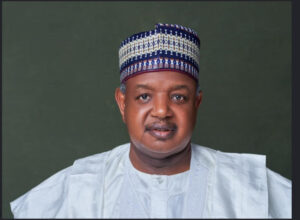
The Minister of Budget and Economic Planning, Senator Abubakar Atiku Bagudu, has urged the media to intensify scrutiny of Nigeria’s budget while providing the public with the context needed to understand the government’s fiscal choices and development priorities.
Bagudu said journalists should thoroughly investigate budget provisions, promote accountability and facilitate informed public debate rather than draw conclusions without sufficient context.
The minister made the call yesterday in Abuja at the Senate Press Corps Capacity-Building Workshop, organised under the theme, “Leveraging Legislative Oversight and Media Collaboration to Safeguard the National Budget from Unlawful Insertion.”
He said effective scrutiny of the national budget should go beyond identifying controversial provisions to examining the constitutional process, the rationale behind budgetary decisions and the development needs such provisions are intended to address.
According to him, Nigeria’s budget conversation must begin with a fundamental question: “What is the national budget, and what should it be?”
Bagudu said Nigeria’s relatively limited fiscal space, compared with its population and development needs, made it necessary to broaden the national conversation on resource mobilisation and the level of public investment required to achieve the country’s development aspirations.
He linked the issue to President Bola Ahmed Tinubu’s Renewed Hope Agenda and the administration’s ambition to build a more prosperous and inclusive economy, noting that Agenda 2050 provides a broader framework for the country’s long-term development decisions.
The minister said the ambition to build a $1 trillion economy requires Nigerians to confront difficult questions about how the country can mobilise resources and finance development.
“Should we continue with a budget that leaves our populace with one of the smallest budgets, or should we consider how we can mobilise more resources?” he asked.
Bagudu said decisions on revenue, expenditure and borrowing could not be separated from public confidence, stressing that citizens’ understanding of fiscal choices was important to the ability of the government and National Assembly to take major decisions.
He also underscored the constitutional role of the National Assembly in the budget process, noting that the legislature has ultimate authority over the national budget within Nigeria’s constitutional democracy.
He called for greater public understanding of the relationship between the Executive and legislature in shaping the budget and urged journalists to strengthen scrutiny through evidence-based reporting.
On alleged budget insertions, Bagudu cautioned against assuming that every unfamiliar provision was necessarily irregular, saying journalists should investigate the origin, purpose and beneficiaries of specific allocations.
He cited examples of provisions that might appear questionable when viewed outside their local context but could address genuine needs in particular communities, including water infrastructure in underserved areas and equipment for fishing communities.
He, however, stressed that such considerations should not diminish the need for vigilance.
“We are dealing with human processes and human errors. Therefore, vigilance is necessary, and the media and legislative oversight should remain vigilant,” he said.
The minister also called for a balanced approach to budget transparency, particularly where the disclosure of sensitive information could have implications for national security or strategic interests.
While affirming the importance of transparency, accountability and the public’s right to know, he urged journalists to recognise that responsible reporting also requires consideration of the wider national interest.
Bagudu also challenged the assumption that capital expenditure was inherently more valuable than recurrent expenditure.
He said spending on security, education, healthcare, human capital and public-sector personnel could have direct developmental consequences and should be assessed based on the outcomes delivered.
He also emphasised the importance of meeting debt-service obligations, noting that failure to honour such commitments could affect borrowing costs and ultimately have consequences for private-sector operators.
The minister urged the media to remain rigorous in holding public institutions accountable while ensuring that budget reporting does not lose sight of Nigeria’s broader development challenges.
“How careful are we to ensure that, while insisting on holding public officials to account, we do not lose sight of the bigger picture?” he asked.
Bagudu said the media had an important role in helping Nigerians understand the choices facing the country, particularly as the government seeks to address historic under-investment in education, security, roads and water.
He maintained that transforming the economy would require not only government action but also public support and public imagination, urging the media to bring these issues to the forefront of national discourse.
Also, the Chairman of the Senate Committee on Media and Public Affairs, Senator Yemi Adaramodu, said the media had a responsibility to scrutinise the budget and monitor its implementation.
Adaramodu, who represented the Senate President, Senator Godswill Akpabio, urged parliamentary journalists to familiarise themselves with legislative processes and procedures to ensure accurate reporting.
He called for balanced reportage to strengthen public confidence in the budget and urged the media to continue acting as a watchdog by exposing waste and promoting the proper utilisation of public funds.
He also cautioned against misinforming the public about budget provisions, stressing that allocations were intended to respond to identified needs in communities.
The workshop was held amid concerns over alleged unlawful budget insertions, including an alleged N1.3 billion allocation to the purported Presidential Foreign Intervention Promotion Council (PFIPC) in the 2026 budget.
The Chairman of the Senate Press Corps, Chief Taiye Odewale, said findings by the corps indicated that the alleged allocation was not part of the N9.853 trillion added by the National Assembly to the N58.47 trillion Executive proposal that produced the N68.32 trillion 2026 budget.
Odewale said the controversy underscored the need for stronger collaboration between legislative oversight institutions and the media to identify questionable budget entries.
He said the workshop was designed to improve journalists’ understanding of budget processes and equip them with tools, including artificial intelligence, for more effective and professional reporting.
In a presentation titled “Critical Scrutiny of Budget Line Items: Preventing ‘Garbage In, Garbage Out’ and Strengthening the Roles of Legislators and the Media,” Mr Ebu Emmanuel, who represented the Executive Director of the Civil Society Legislative and Advocacy Centre (CISLAC), Auwal Musa Rafsanjani, called for greater scrutiny of budget provisions.
He said budget items must be justified, transparent, properly costed and measurable, warning that vague, duplicated or inflated provisions could fuel waste.
Citing findings attributed to the Independent Corrupt Practices and Other Related Offences Commission (ICPC), Emmanuel said about 4,508 inserted or padded projects valued at N434.5 billion and 66 duplicated projects worth N6.43 billion were identified in the 2022 budget.
He urged lawmakers to verify the purpose, implementing agency, location, beneficiaries, cost and expected outcomes of projects before approving budget provisions.
He also called for a clear audit trail covering the entire process, from budget proposal and justification to approval, implementation, monitoring, audit and accountability.
Emmanuel urged journalists to scrutinise budget changes, verify projects and track implementation.
He said reporters should ask what changed, why it changed, who justified the change, how much it would cost, where it would be implemented, who would benefit and how delivery would be verified.
The Director of BudgIT, Oluseun Onigbinde, represented by the Country Director of BudgIT Foundation, Vahyala Kwaga, said legislative budget scrutiny was often focused on appropriation rather than public policy performance.
Onigbinde identified the late submission of the Medium-Term Expenditure Framework and Fiscal Strategy Paper (MTEF-FSP) to the National Assembly as one of the recurring challenges in Nigeria’s budgeting process.
He said delays could result in expenditure projections exceeding credible available resources.
He also identified limited engagement between the National Assembly and Ministries, Departments and Agencies (MDAs) as a factor weakening legislative oversight of budget implementation and performance.
BudgIT recommended that the Federal Government submit its budget proposal to the National Assembly at least 90 days before the end of the financial year to allow lawmakers sufficient time to scrutinise the document.
The organisation also urged the National Assembly to assess previous budget performance by government agencies before approving new allocations and called for greater stakeholder participation in the budget process.
The Managing Director and Publisher of The Eagle Times Newspaper, Mr Ikechukwu Chukwunyere, represented by the newspaper’s Chief Operating Officer, Mr Tabuko Kennedy, said the media needed to strengthen its scrutiny of annual budgets.
Kennedy identified overreliance on headline figures and official statements, poor understanding of budget data, limited follow-up, failure to compare allocations across years and inadequate project verification as weaknesses affecting budget reporting.
He urged journalists to “follow the money” by comparing budget allocations, releases, expenditure, outputs and actual impact.
He also recommended checking previous budgets, audit reports and procurement records, investigating red flags and distinguishing verified facts from official claims.
Kennedy proposed the establishment of a Senate Press Corps Budget Accountability Reporting Desk, a joint budget scrutiny report within 72 hours of budget presentation, a public database of major projects and tracking at least 10 projects from budget document to project site.
Ms Adeola Ademokoya, Nigeria representative of Mass Media LCC Texas Consultant and moderator of the session, said artificial intelligence could strengthen legislative budget oversight and parliamentary journalism.
She said AI could help journalists analyse lengthy budget documents, compare different versions, identify vague project descriptions, detect unusual figures and possible duplication, and generate questions for budget defence sessions.
However, she stressed that AI should remain an assistant and not the final authority.
She urged journalists to verify AI-generated information against official documents, seek responses from relevant authorities and apply editorial judgment before publication.
The workshop brought together lawmakers, government officials, civil society representatives, budget experts and parliamentary journalists to examine ways of strengthening budget scrutiny, legislative oversight and media reporting in Nigeria.
We’ve got the edge. Get real-time reports, breaking scoops, and exclusive angles delivered straight to your phone. Don’t settle for stale news. Join THISTIMES on WhatsApp for 24/7 updates →
Join Our WhatsApp Channel