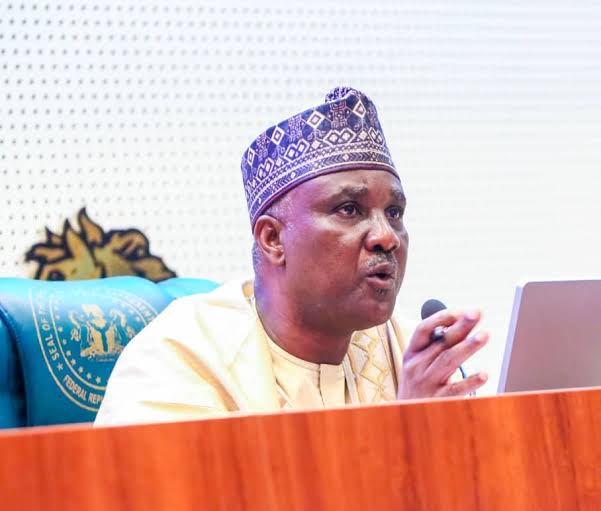
A former minister of State for Power and Steel, Prof. Iyorwuese Hagher, and the Independent Corrupt Practices and Other Related Offences Commission (ICPC) chairman, Dr Musa Adamu Aliyu (SAN), have called for a cultural shift in Nigeria’s fight against corruption.
They made the call yesterday at the ninth edition of the Governance and Integrity Award and unveiling of the Governance 100 Most Outstanding Integrity Champions in Nigeria at the Musa Yar’Adua Centre, Abuja.
Hagher, who was the chairman of the occasion, said the fight against corruption had largely focused on laws, investigations, prosecutions and institutions, stressing that the country must also address the moral dimension of corruption.
He said Nigeria must make integrity honourable and corruption culturally shameful.
According to him, Nigerians must “fight corruption with love as a weapon”, with love expressed through truth, justice, responsibility, restraint, service and protection of human dignity.
Hagher said corruption went beyond the stealing of public funds, noting that it also involved the failure to recognise the human consequences of diverting funds meant for healthcare, education, roads, security and pensions.
“The corrupt official does not merely steal money. He stops seeing the human beings behind the money. He sees figures. He sees allocations. He sees contracts. He sees budgets. And he sees opportunities to steal,” he said.
He described corruption as “violence committed through paperwork”, arguing that defeating it required more than the fear of punishment.
Hagher said integrity and love must be taught and practised in homes, schools, religious communities, public institutions and the political system.
He warned that a society that celebrates wealth without questioning how it was acquired would continue to reproduce corruption.
“A thousand lectures on integrity cannot overcome a political culture that rewards corruption,” he said.
Representing the ICPC chairman, Dr Musa Adamu Aliyu, SAN, at the event, Kupolati Kayode, in the keynote address titled, “The Power of Integrity in National Development: Strengthening Public Institutions, Restoring Trust and Driving Prosperity,” said integrity was not merely a moral virtue but a foundation for national development.
He said corruption had imposed a burden on Nigeria’s prosperity, stressing that the diversion of public resources affected education, healthcare, businesses and other sectors.
He said the commission had prosecuted offenders, recovered assets and reviewed systems since its establishment, but added that prosecution alone could not defeat corruption.
“If we rely solely on the hammer of the law, we will only have a society of fearful people. But if we build a culture of integrity, we will have a society of free and prosperous people,” he said.
He urged Nigerians to move from compliance to a culture of integrity, saying the fight against corruption could not be left to the ICPC alone.
Kayode also charged the media to stop glamorising wealth without questioning its source, while urging religious institutions and parents to promote integrity.
He said public institutions could only be strengthened when systems worked even when nobody was watching, adding that integrity would help create institutions where rules were followed rather than circumvented.
Kayode, while addressing the awardees, said they represented examples of public and private sector actors who had refused to compromise due process and had chosen to uphold integrity.
He urged Nigerians to join the fight against corruption, stressing that every refusal to take a bribe, adherence to rules and commitment to truth contributed to building the country.
“Let us build a Nigeria where integrity is the standard, trust is the norm, and prosperity is shared by all,” he said.
Earlier, Publisher/CEO of Verbatim Print & Broadcast Limited, Mr Tobs Agbaegbu, said the 2025 Ethics and Integrity Compliance Scorecard of the ICPC formed the basis for selecting the 100 public institutions recognised under the Governance 100 Most Outstanding Integrity Champions in Nigeria initiative.
Agbaegbu said the publication’s partnership with the ICPC provided technical guidance and validation of the data used for the initiative, while Verbatim retained editorial responsibility for documenting and communicating the achievements to the public.
He said the initiative was not merely about celebrating institutions but reflected journalism’s responsibility to scrutinise public institutions, hold leaders accountable and recognise excellence and responsible leadership where supported by evidence.
“Our objective is not to praise institutions blindly or to condemn them indiscriminately. It is to document performance, investigate where necessary, recognise good practices and provide credible information to the public interest,” he said.
Agbaegbu said the publication would expand its scrutiny to the private sector, including the oil and gas and extractive industries, banking and financial services, politics and governance, and corporate leadership.
He said the publication would examine institutional governance, transparency, resource management and accountability mechanisms, as well as how institutional decisions affected Nigerians and the national economy.
The publisher also said the publication would continue to uphold the traditions of investigative and public-interest journalism, stressing the need for courage to investigate, discipline to verify, determination to ask difficult questions and commitment to truth.
He congratulated the 100 institutions and their chief executives recognised at the ceremony, urging them to sustain the standards that earned them the recognition.
We’ve got the edge. Get real-time reports, breaking scoops, and exclusive angles delivered straight to your phone. Don’t settle for stale news. Join THISTIMES on WhatsApp for 24/7 updates →
Join Our WhatsApp Channel