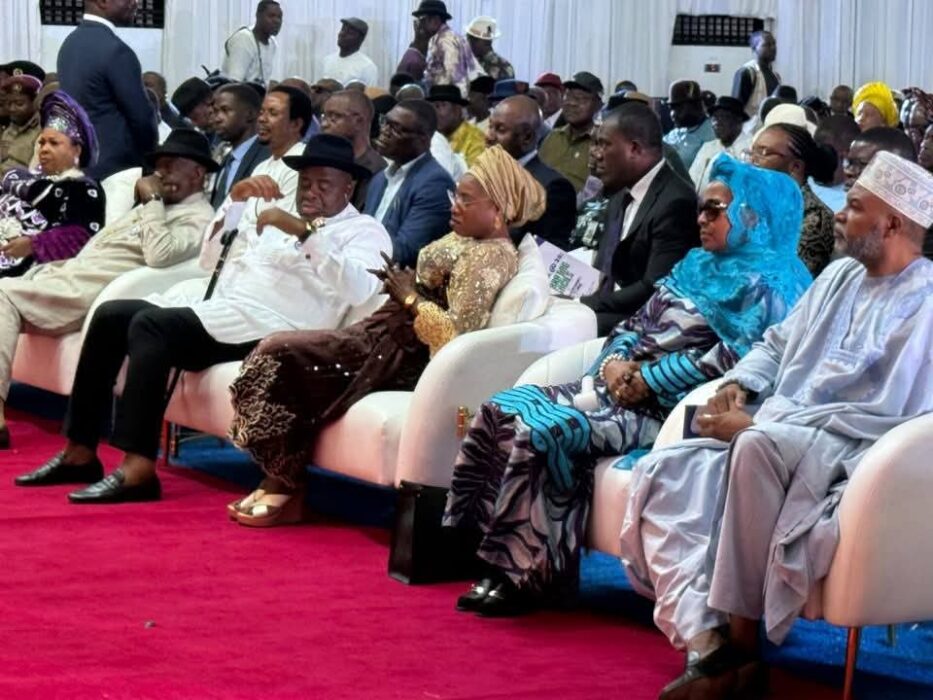
As Bayelsa State marks 30 years of its creation, Governor Douye Diri has called on the people to move beyond the state’s troubled past and build a future driven by knowledge, education and innovation.
Diri, who spoke during the anniversary lecture in Yenagoa, said the milestone provided an opportunity to reflect on the state’s journey, acknowledge its progress and determine what should be achieved in the next 30 years. Bayelsa was created from the old Rivers State on October 1, 1996.
The governor said the creation of the state gave Bayelsans an opportunity to take control of their destiny and prove that the difficult terrain of the Niger Delta could be developed.
He said Bayelsa had moved beyond the period when its people were largely associated with militancy, urging them to embrace what he called “intellectual militancy” through education and knowledge.
“We must now embrace intellectual militancy, driven by knowledge and education,” Diri said.
READ ALSO 2027: Bayelsa APC Rejects Wike’s Rainbow Coalition, Says Party Can Deliver Tinubu
He said his administration had therefore shifted its education policy from an emphasis on certificates to practical learning, with greater attention to science, technical and vocational education.
According to him, several science, technical and vocational schools had been built and equipped, with more projects ongoing, to prepare young Bayelsans for the demands of the future.
Diri also urged Bayelsans to tell their own story, noting that the state had produced scholars, writers, poets and other Nigerians who had made contributions to national development.
The governor said the discovery of oil and gas should not prevent Bayelsa from developing other sectors, even as the state continued to demand a fair share of the resources extracted from its territory.
He reiterated his position that “13 per cent derivation is 87 per cent deprivation”, arguing that Bayelsa’s difficult terrain required additional resources to provide infrastructure and basic services.
Diri cited road construction, schools and other infrastructure as part of efforts to overcome the geographical challenges facing the state.
He particularly highlighted the Nembe-Brass Road, which his administration embarked on after efforts to secure Federal Government support did not produce the desired result.
According to him, the Brass axis remained the only local government headquarters in the state without road access. He said the first phase of the road, involving more than six bridges and culverts, was expected to be completed by the end of the year.
He, however, stressed that the federal government should not abandon its responsibilities to Bayelsa and other states, saying development should not be left entirely to state governments.
The governor also highlighted the state’s monthly financial transparency initiative, under which officials provide information on revenue received and expenditure.
READ ALSO 2027: Grassroots Performance, Not Structure, Will Decide Bayelsa West
Secretary to the State Government, Prof. Nimibofa Ayawei, said the 30th anniversary was an opportunity to reflect on the state’s journey and renew its commitment to a better future.
Ayawei said progress could be seen in infrastructure, human capital development, economic empowerment and improvements in transportation, aviation and electricity.
He cited the international airport, road network and newly commissioned 60-megawatt gas turbine as examples of developments that had changed the face of the state.
He called for continued commitment to peace, unity, justice, inclusion and sustainable development, urging Bayelsans to put the interest of the state above personal interests.
Delivering the anniversary lecture, Professor Godini Gabriel Darah said the history of Bayelsa could not be separated from the wider political and economic history of Nigeria.
Darah, a former chairman of The Guardian’s Niger Delta committee, recalled that when he first visited Bayelsa shortly after its creation in 1996, the state had limited infrastructure and no petrol station.

He said the transformation recorded in three decades was significant, but argued that deeper questions about resource ownership and the structure of Nigeria remained unresolved.
According to him, the federal government’s control of oil and other natural resources had continued to limit the ability of resource-producing states to directly benefit from their resources.
Darah also questioned the country’s continued dependence on oil, arguing that Nigeria needed to develop agriculture, solid minerals, education, science and technology and other sectors.
He urged Bayelsa and other oil-producing states to sustain the campaign for greater resource control while investing in human capital and infrastructure.
The lecturer, however, acknowledged the infrastructure development recorded in Bayelsa, particularly roads around Yenagoa, describing some of the recent projects as evidence of the changes recorded since the state’s creation.
We’ve got the edge. Get real-time reports, breaking scoops, and exclusive angles delivered straight to your phone. Don’t settle for stale news. Join THISTIMES on WhatsApp for 24/7 updates →
Join Our WhatsApp Channel