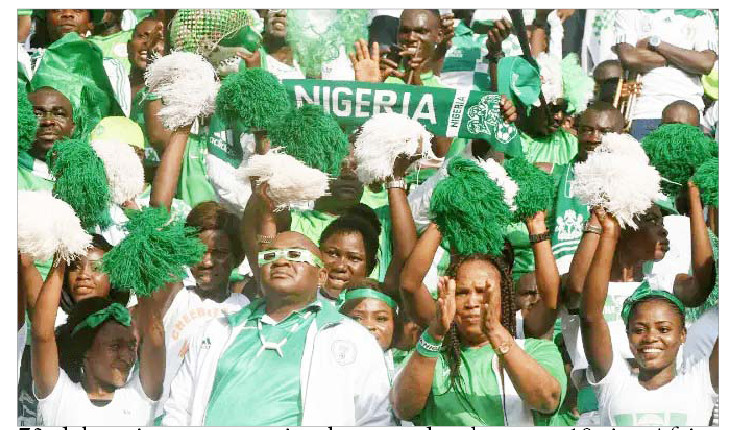
Today, Nigeria marks 66 years of independence from British colonial rule. The flag that went up at midnight in 1960 still flies, but the questions that followed it have grown louder: Has the giant of Africa fulfilled its promise, or merely survived it?
At 66, Nigeria has been resilient and restless, a nation-state that has avoided disintegration but has yet to achieve cohesion.
Nigeria’s longest stretch of unbroken civil rule is now in its 27th year, a feat for a country that has experienced six military coups in its first 39 years.
Still, democracy has not translated into quality governance and enlightened politics. Elections remain fiercely contested and litigated, with voter turnout declining from 69% in 2003 to about 27% in 2023. The 2027 cycle is already heating up, but the conversation is less about ideology and more about survival.
Federalism, as practiced, remains lopsided. States depend on Abuja for over 70% of their revenue, while calls for restructuring, state police and resource control have moved from the fringes to the mainstream. The debate revived by President Tinubu’s 30-day absence from the country last month underscores a deeper constitutional unease: who governs, and from where?
No statistic captures Nigeria’s dilemma better than this: the world’s 6th most populous nation, Africa’s largest oil producer, yet ranked among the world’s poorest.
At independence, Nigeria’s GDP per capita was higher than South Korea’s. Today, South Korea’s is over 20 times larger.
Three policy pillars define the last three years: removal of petrol subsidy, unification of the exchange rate, and aggressive borrowing. The government argues they were necessary corrections.
However, the data shows mixed results: Inflation, which peaked at 34% in 2024, has moderated to around 22% but food inflation remains crushing; The naira has lost over 70% of its value since June 2023, crippling small businesses.
Public debt has crossed N167 trillion, according to the Debt Management Office; 35 million Nigerians face acute food insecurity in 2026, per the World Food Programme, while over 140 million are multi-dimensionally poor.
The subsidy removal freed over N5 trillion annually, but Nigerians are asking: where is the reinvestment in refineries, schools, hospitals and mass transit?
Security crisis
In 1960, Nigeria’s security concern was managing regional rivalries. In 2026, it is managing banditry in the North West, insurgency in the North East, farmer-herder killings in the Middle Belt, separatist agitations in the South East, and kidnapping for ransom nationwide.
Over 2.2 million people remain internally displaced. Despite increased defence spending — N3.4 trillion in the 2025 budget — the security architecture remains overstretched, under-equipped and distrusted locally. The absence of state police and a coherent community policing model continues to leave vast ungoverned spaces.
Human Capital: The Bright Spot And The Burden
Nigeria’s greatest asset remains its people. Over 70% are under 30. Nigerian creatives, tech founders, athletes and academics dominate globally. Remittances hit $20.5 billion in 2025, more than Foreign Direct Investment.
But at home, that demographic is a time bomb. Youth unemployment is above 40%. Out-of-school children are estimated at 10.5 million. Maternal mortality remains the highest in the world — 75,000 deaths in 2023. Only N36 million of N218 billion capital allocation for the health ministry headquarters was released as of mid-2025, according to the Health Minister’s own budget defence.
The health MoU signed with the US in December 2025, promising nearly $2 billion in grants and $3 billion in domestic counterpart funding, highlights both opportunity and anxiety about sovereignty and delivery.
At 66, Nigeria is no longer a young nation. It cannot afford youthful excuses. The generation that witnessed independence is fading. The generation that carries its future was born after the return to democracy and is less tolerant of slogans.
Reacting, the Executive Director Civil Society Legislative Advocacy Centre (CISLAC), Auwal Musa Rafsanjani, believes that at 66 years after independence, Nigeria must move beyond ceremonial celebration to a more difficult national question.
“is democracy improving the lives of citizens? Democracy must mean more than elections and political transitions; it must deliver accountable leadership, strong institutions, security, justice, dignity and economic opportunity. Independence has little meaning if citizens remain trapped by fear, poverty, injustice and exclusion,” he told LEADERSHIP.
Rafsanjani, who also heads Transparency International Chapter in Nigeria, however congratulated Nigerians for their resilience, sacrifice and enduring commitment to the country’s democratic future.
He stressed that that Nigeria’s democratic future depends on building institutions that are stronger than individuals, political parties and powerful interests. Public office must be treated as a public trust, not as an avenue for personal enrichment, patronage or abuse of power.
“The National Assembly must strengthen oversight, anti-corruption agencies must act without political interference, the judiciary must remain independent, and law-enforcement and regulatory institutions must be professional and accountable.
“The rule of law must apply equally to the poor, the politically connected and the most powerful public officials. A democracy where powerful people are above accountability is a democracy weakened from within.
“Nigeria must also confront corruption, insecurity and injustice as direct threats to democratic stability. Corruption deprives citizens of schools, hospitals, roads, clean water, jobs and social protection, while impunity destroys public confidence in government. At the same time, terrorism, banditry, kidnapping, communal violence and abuse by security institutions continue to undermine the right of citizens to live without fear. “
He said government must therefore combine effective security with accountability, human-rights protection, conflict prevention and access to justice. There can be no meaningful democracy without peace, no sustainable peace without justice, and no justice where corruption and impunity are allowed to thrive.
He further warned that democracy will remain fragile as long as millions of Nigerians are excluded from economic prosperity.
The flag will be hoisted, parades will be held, and speeches will speak of hope. But hope at 66 must look less like a prayer and more like a plan.
The giant has survived. The question for the next decade is whether it will finally stand.
We’ve got the edge. Get real-time reports, breaking scoops, and exclusive angles delivered straight to your phone. Don’t settle for stale news. Join THISTIMES on WhatsApp for 24/7 updates →
Join Our WhatsApp Channel