Nigerian entrepreneurs continue to build products, assemble teams and pitch investors, but raising the capital needed to grow remains a challenge for many businesses.
The challenge is not always the quality of the idea. It can come down to something more fundamental: whether the business is structured to receive capital in the first place.
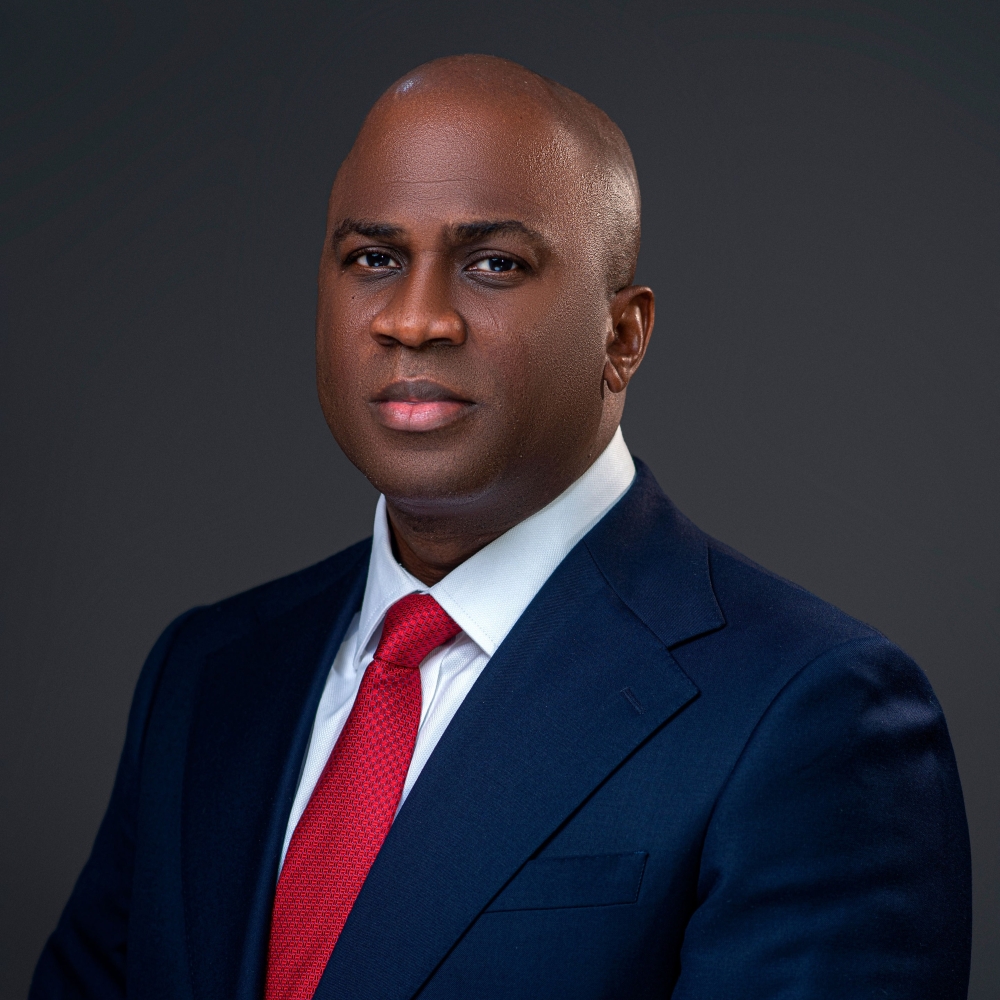
That is a distinction Temitope Runsewe has seen repeatedly in more than two decades of advising, financing and investing in businesses.
As Managing Director of Sage Grey Finance, a CBN-licensed financial institution, he has worked with businesses across technology, manufacturing, infrastructure and other sectors.
His conclusion is that the difference between businesses that attract significant capital and those that struggle to raise it is not simply profitability or innovation, but whether the business is genuinely investable.
A good product gets a company into the conversation, he says, but it does not write the cheque.
In this interview with Nairametrics, Runsewe sets out the questions investors ask before backing Nigerian businesses, why a strong product alone may not be enough, and why founders need to prove something before trying to prove everything.
Nairametrics: After more than 20 years advising and financing businesses in Nigeria, what separates companies that can attract significant capital from those that struggle to raise it?
Temitope Runsewe: After more than 20 years working with businesses as an adviser, financier and investor, I have come to believe that the fundamental difference is investability rather than simply profitability or innovation.
There are many good Nigerian businesses. There are far fewer businesses that are structured to receive significant external capital.
Investors are ultimately asking a number of basic questions: Is there a sufficiently large market? Does the company have a compelling product or service? Is there evidence that customers actually want it? Can the business scale? Are the economics sustainable? Is the management team credible? Is the governance adequate? Can the investor understand how the capital will be deployed and ultimately how the investment will generate a return?
The businesses that attract significant capital tend to answer those questions clearly.
One mistake entrepreneurs sometimes make is to approach fundraising primarily from the perspective of how much money their company needs. Investors look at the transaction differently. They are asking what the capital will achieve and what risk-adjusted return they can reasonably expect from deploying it. That distinction is extremely important.
I also think Nigerian businesses need to become much better at institutionalising themselves. A company that is completely dependent on its founder may be a successful entrepreneurial venture, but it is considerably more difficult to finance institutionally. Investors want businesses with systems, financial reporting, governance, management depth and processes that can survive beyond one individual.
At Sage Grey, whether we are looking at credit, equity or strategic investments, we therefore look beyond the immediate transaction. We want to understand whether capital can actually transform the business.
Nairametrics: How important is having a strong product when investors assess a business? Is a genuinely good product enough to attract capital, or do investors increasingly look beyond the product when deciding which businesses to fund?
Temitope Runsewe: A good product is extremely important, but a good product is not the same thing as a good investment. This distinction is particularly important in technology.
Through our investments in technology businesses, we have seen very impressive products that solve genuine problems. But an investor has to ask additional questions: Who will pay for the product? How much will they pay? What does it cost to acquire that customer? How frequently will the customer use it? What prevents another company from replicating it? Can the business distribute the product efficiently? And ultimately, can the company generate sustainable cash flows?
I would actually say that distribution is becoming almost as important as product. You can build exceptional software and still fail commercially because you cannot acquire customers economically. Conversely, a business with a very good product and an exceptional distribution network can become extremely valuable.
Investors therefore increasingly evaluate what I would describe as the complete commercial architecture of the business:
Product + Market + Distribution + Management + Governance + Unit Economics + Scalability. The product gets you into the conversation. The rest determines whether somebody writes the cheque.
This is one lesson we have learnt from investing in technology. We increasingly spend as much time thinking about how a product reaches millions of potential users as we do thinking about the technology itself.
Nairametrics: What is preventing more institutional investment from reaching productive private businesses in Nigeria, and what would need to change for pension funds, insurers and other long-term investors to play a larger role?
Temitope Runsewe: This is one of the most important capital-market questions facing Nigeria. Nigeria does not necessarily have a shortage of capital. We have a shortage of appropriately structured investable assets.
Nigeria’s pension industry alone has accumulated tens of trillions of naira in assets, yet historically a very significant proportion has been invested in Federal Government securities. There are understandable reasons for that: regulation, liquidity, risk management and the fiduciary responsibility pension managers have towards contributors.
But Nigeria also needs significantly more long-term domestic capital financing productive assets. The challenge is that you cannot simply instruct institutional investors to finance private businesses. Their primary responsibility is to protect their beneficiaries’ capital.
We therefore need to make private investment more investable. That means better corporate governance, audited accounts, credit enhancement, guarantees, properly structured private-credit funds, infrastructure funds, private-equity vehicles, securitisation and other instruments that allow institutional capital to participate without assuming risks it was never designed to take.
Regulation is already evolving in this direction, and recent changes have expanded the potential participation of pension capital in private markets. But regulation alone cannot manufacture bankable investments. I believe one of Nigeria’s biggest opportunities is therefore financial engineering around productive assets.
Rather than asking a pension fund to lend directly to 500 businesses, for example, those exposures can potentially be aggregated into a professionally managed vehicle with diversification, first-loss protection, guarantees, appropriate governance and transparent reporting.
That transforms hundreds of individual corporate risks into an institutional asset class. Development finance institutions can also play an important catalytic role by providing guarantees, subordinated capital or first-loss positions that allow Nigerian institutional investors to participate at acceptable risk levels.
If we get this right, Nigeria can increasingly finance Nigerian development with Nigerian long-term capital.
Nairametrics: Looking across different sectors, where do you believe Nigeria is currently underinvested despite having commercially viable opportunities, and what types of businesses do you think investors are overlooking?
Temitope Runsewe: I believe Nigeria is significantly underinvested in businesses that solve what I would call structural inefficiencies. Technology receives considerable attention, but some of Nigeria’s biggest investment opportunities sit at the intersection of technology and traditional industries.
For example, I see substantial opportunities in logistics and supply-chain infrastructure, distributed energy, recycling and circular economy businesses, healthcare, specialised manufacturing, agricultural processing and storage, affordable housing infrastructure and technology that improves the efficiency of traditional businesses.
These are not always fashionable businesses, but many address enormous markets. We are particularly interested in businesses where technology is an enabler rather than necessarily the entire proposition.