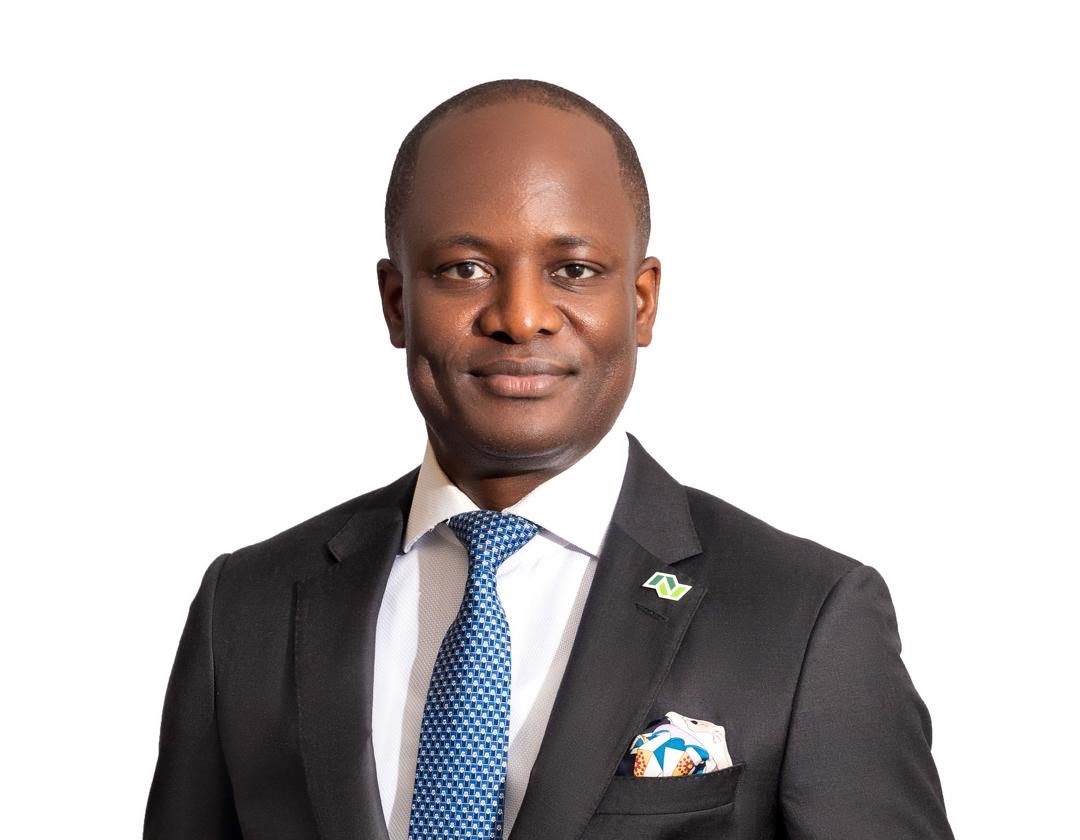
Nigeria’s capital market is undergoing a structural shift, driven by stronger domestic participation, expanding digital distribution and increased capacity to mobilise capital at scale. These developments are strengthening the market’s role in financing businesses and broadening participation in ownership, according to Temi Popoola, Group Managing Director and Chief Executive Officer of NGX Group.
The banking recapitalisation exercise, which saw 33 banks raise N4.65 trillion, and the Dangote Petroleum Refinery IPO have provided important demonstrations of the market’s capacity to mobilise capital and connect issuers with a broader investor base.
In this interview with Nairametrics, Popoola discusses the structural changes driving Nigeria’s capital market, the growing contribution of domestic investors, the role of technology in widening access to investment opportunities, lessons from the banking recapitalisation exercise, the reforms needed to deepen international participation, strengthen cross-border investment and attract a broader pipeline of high-quality listings.
Nairametrics: Domestic investors accounted for about 95% of total NGX transactions in August 2026, while retail investors contributed N552.88 billion. What are the key factors driving this stronger domestic participation, and what could a deeper domestic investor base mean for the resilience and development of Nigeria’s capital market?
Temi Popoola: The growth in domestic participation suggests that the Nigerian market is developing a stronger internal base of capital and this reflects a combination of factors. The broader stabilisation of the macroeconomic environment has helped improve investor confidence, while increased investor awareness, improved access to market information, expanding digital distribution and a wider range of investment opportunities are also contributing to stronger participation.
This is important for the long-term development of the market. A deeper domestic investor base provides a more diversified source of capital and can reduce reliance on any single pool of investors, particularly during periods when global capital flows are volatile.
The bigger opportunity is to translate this participation into sustained investment. Nigeria has significant pools of domestic savings, and the challenge is to channel more of those savings into productive investment that supports businesses and economic growth.
A market supported by strong domestic participation is ultimately more resilient and can also become more attractive to international investors. The objective should be to build a market in which domestic and international capital reinforce each other, rather than being viewed as alternatives.
Nairametrics: The banking recapitalisation exercise was a significant test of the Nigerian capital market’s ability to mobilise capital at scale, while also introducing new ways for investors to access primary market offers. What did that experience reveal about the future of capital formation in Nigeria, and how can the market build on it to finance businesses and economic growth at an even greater scale?
Temi Popoola: The banking recapitalisation exercise demonstrated that Nigeria has significant capacity to mobilise capital domestically when regulation, market infrastructure, issuers and investors work together.
Over the two years, 33 banks raised N4.65 trillion in fresh capital. But the significance was not only the amount raised. The exercise demonstrated that Nigeria can mobilise capital at scale and distribute investment opportunities to a much wider pool of investors when the right market infrastructure and channels are in place.
NGX Invest was an important part of that evolution. Launched in 2024 following regulatory approval by the Securities and Exchange Commission, the platform supported the digital distribution of public offers through participating market intermediaries, facilitating approximately N2.8 trillion of the capital raised.
The broader lesson is that capital formation is not only about the availability of capital; it is also about how efficiently capital can be connected to investment opportunities. Technology can expand distribution, reach investors at greater scale and reduce some of the friction historically associated with participating in public offers.
The opportunity now is to build on that experience across the wider economy. The capability demonstrated during the recapitalisation exercise can help support future capital raising across sectors and strengthen the role of the capital market as a source of long-term funding for Nigerian businesses and economic growth.
Nairametrics: Nigeria has taken important steps to improve market accessibility and global competitiveness, including the transition to T+1 settlement, at a time when the market is receiving renewed attention from global index providers such as FTSE Russell and S&P Dow Jones Indices. What more needs to be done to strengthen Nigeria’s investability, deepen international participation and attract global capital, while continuing to build the strong domestic investor base that has increasingly supported the market?
Temi Popoola: The opportunity is to build a market that is strong on both fronts. A deeper domestic investor base provides resilience and a sustainable foundation for capital formation, while international participation brings additional pools of capital, global connectivity and diversity to the market.
Nigeria has made important progress in strengthening the overall market environment. The transition to T+1 settlement brings the market more closely in line with global practices, while renewed recognition from global index providers can improve Nigeria’s visibility within the international investment community.
But these developments should be viewed as part of a broader journey towards greater investability. Global investors consider the depth and liquidity of the market, the quality of investable assets, the efficiency of execution and settlement, and importantly, the ability to exit and repatriate capital.
Continued progress is therefore required in areas such as liquidity, corporate governance, disclosure, foreign exchange liquidity and capital mobility, alongside greater consistency in the policy and regulatory environment. These are issues that require sustained collaboration across the market ecosystem and the wider economic policy environment.
At the same time, Nigeria has significant pools of domestic savings that can be mobilised more effectively into productive investment. Ultimately, we want a market where domestic capital provides a strong foundation, international capital can participate with confidence, and Nigerian businesses have access to deeper and more diverse pools of long-term funding.
Nairametrics: You have described the Dangote Petroleum Refinery IPO as significant not only for its scale, but for what it demonstrates about the evolution of Nigeria’s capital market. Having spent the last three years strengthening the market’s digital infrastructure and distribution rails, what has this transaction revealed about Nigeria’s capacity to connect issuers with a broader investor base, and how do you see that infrastructure reshaping capital formation in the years ahead?
Temi Popoola: The Dangote Petroleum Refinery IPO demonstrates what becomes possible when large-scale Nigerian businesses meet deep capital markets, modern distribution capabilities and a broader investing public.
Over the past three years, NGX Group has focused strategically on strengthening the capabilities required to support capital formation at greater scale. The objective has been to contribute to a market environment in which quality businesses can access deeper pools of capital and a broader range of investors can participate in those opportunities.
NGX Invest is part of that evolution. Through API-based connectivity, it now connects more than 180 distribution channels, including stockbrokers, banks, fintechs and other financial institutions, to primary-market offers. This has been a collective effort of the capital market ecosystem and the significance of this is not simply the technology itself, but the ability to expand the reach of the capital market through channels that investors already use.
Importantly, technology is not replacing the role of regulated intermediaries. Rather, it is helping the broader market ecosystem extend its reach and make participation more accessible while preserving the structures required for investor protection and regulatory oversight.
What is particularly significant is that these capabilities have value beyond any single transaction. The distribution capacity developed through recent capital-raising exercises can support future public offers, other issuers and, ultimately, a broader pipeline of capital raising.
That matters because broadening ownership requires broadening access. Nigerians already participate in the economy as consumers, employees, entrepreneurs and savers. The capital market should increasingly provide opportunities for them to participate as owners in businesses creating value across the economy.
That is where I see the longer-term impact. If we can continue to connect quality businesses with deeper pools of capital while making participation easier for a broader investor base, we can strengthen the way capital formation works in Nigeria.
Nairametrics: As technology and new distribution channels make the capital market accessible to a broader pool of investors, how do we ensure that investor education and protection evolve so that broader participation translates into informed decision-making, investor confidence and sustained engagement with the market?
Temi Popoola: Access and understanding have to develop together. Technology can make it significantly easier for people to participate in the capital market, but widening access must be accompanied by the knowledge and safeguards that allow investors to make informed decisions.
Investor education and protection are therefore critical to the continued development of the market. As participation expands, investors need to understand the opportunities available to them, the risks involved and how to identify legitimate and regulated investment channels.
Across the ecosystem, the responsibility is to ensure that greater access is accompanied by reliable information, trusted channels and appropriate safeguards. This is essential if increased participation is to translate into lasting confidence in the market.
Technology can play an important role here. The same broader digital infrastructure that is making the market more accessible can also help investors access relevant information, identify verified channels and receive clearer guidance at the point of participation.
Ultimately, sustainable participation is built on trust. The objective should not simply be to bring more people into the market, but to ensure that they have the information, protection and confidence required to remain active participants over the long term.
Nairametrics: You have repeatedly argued that African businesses should increasingly be financed by African capital. What would have to change, technologically, institutionally and regulatorily, for an investor in Lagos, Nairobi, Johannesburg or Gaborone to participate more seamlessly in opportunities across African markets?